
The Gap Between DIY and Industrial Grade Solutions for A3 UV Varnish DTF Printer Machine Label Printer
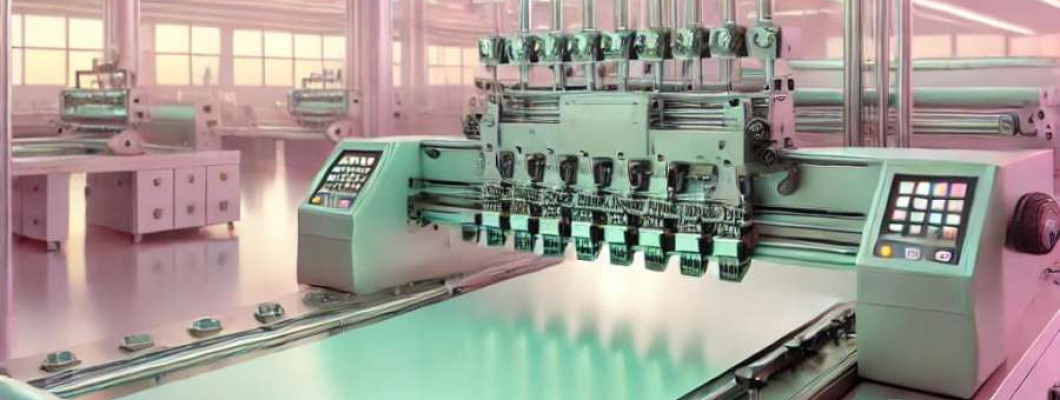
The Industrial Reality of Moving Beyond DIY UV Varnish DTF Printers
In many print production environments, small-scale or hobbyist-grade Direct to Film (DTF) printers have dominated entry-level label printing tasks. These setups typically offer limited substrate compatibility, constrained resolution capabilities, and intermittent throughput. Transitioning from such equipment to industrial-grade A3 UV varnish DTF printer machines entails confronting critical challenges—mechanical stability, ink curing performance, printhead longevity, and workflow integration. For instance, DIY solutions often lack consistent UV power output and precision varnishing controls, leading to varnish pooling or insufficient curing that impacts label durability and appearance.
Industrial plants processing hundreds of square meters daily must address these bottlenecks under stringent uptime demands. The A3 UV Varnish DTF Printer Machine Label Printer offers a platform designed to reduce operational variability and increase print fidelity at scale. However, operators face a learning curve in managing high-performance UV curing lamps (typically requiring 100 to 250 W/cm power density), increased maintenance complexity, and integration of automation protocols. Balancing these factors impacts profitability, employee training, and equipment utilization.
Moreover, the transition reveals hidden infrastructure demands such as upgraded ventilation for UV ozone extraction and consistent power supply to maintain stable electrical parameters for printhead function. The environmental factor also introduces compliance requirements for UV safety, necessitating physical shielding and sensor interlocks to protect operators against harmful exposure.
Technical Deep-Dive into Industrial A3 UV Varnish DTF Printer Capabilities
Printhead Configuration and Ink Deposition Precision
The A3 UV Varnish DTF Printer Machine typically incorporates piezoelectric printheads with nozzles ranging from 180 to 360, ejecting ink droplets sized between 7 to 12 picoliters (pl). This nozzle density enables resolutions nearing 1200 dpi, critically exceeding consumer-grade devices that average 300-600 dpi. The printhead assembly integrates advanced waveform control circuits to optimize droplet shape and landing accuracy on varied substrates.
UV Curing Lamp Specifications and Varnish Polymerization
Effective UV varnish curing demands lamps emitting in the 395-405 nm range, with power densities adjusted to substrate speed. For an A3 width (~297 mm), the arrangement typically uses multiple LED arrays delivering uniform irradiance. The curing time per pass is mathematically estimated by t = d / v, where t is exposure time, d is effective UV exposure length (e.g., 350 mm coverage), and v is substrate velocity (mm/s). Industrial systems calibrate v to maintain a curing dose ≥1000 mJ/cm² to ensure full polymer crosslinking, which promotes scratch resistance and adhesion. DIY units often fail to reach this dose consistently.
Hardware Durability and Asset Longevity Considerations
Industrial-grade printers are built with precision linear motion guides and servo motors rated for continuous operation cycles of 24/7 uptime, typically surpassing 20,000 operational hours before major overhaul. Frame stability is critical at sub-0.01 mm vibration limits to prevent micro-register errors in multi-pass varnishing. Conversely, consumer models use less rigid frameworks prone to mechanical drift impacting print registration and varnish uniformity.
Comparative Table of Key Parameters: Industrial vs DIY UV Varnish DTF Printers
| Parameter | Industrial A3 UV Varnish DTF Printer | DIY/Entry-Level DTF Printer |
|---|---|---|
| Max Resolution (DPI) | Up to 1200 dpi | 300 - 600 dpi |
| UV Lamp Power Density | 100 - 250 W/cm | Below 50 W/cm |
| Ink Droplet Size (pl) | 7 - 12 | 10 - 20 |
| Frame Stability (vibration) | < 0.01 mm | > 0.05 mm |
| Service Interval | 20,000+ hours | 1,000 - 3,000 hours |
Infrastructure Integration and Safety Compliance
Incorporation of industrial-grade A3 UV varnish printers requires electrical systems capable of handling 5-10 kW peak loads with regulated power quality to avoid printhead errors caused by voltage fluctuations. HVAC systems must accommodate heat dissipation of the UV lamps plus ozone extraction (typically 90-110 mg/m³), a crucial environmental mitigation step. Safety engineering includes interlocked enclosures to meet OSHA UV exposure limits, protecting operators from skin and ocular hazards. These requirements exceed the capacities of most DIY setups and represent critical enablers for stable production.
Scenario Analysis of Business Use Cases with A3 UV Varnish DTF Printer Deployment
Small Label Production Facility Scaling Throughput
For a startup producing 5000 labels per day, replacing a DIY printer with the industrial A3 UV Varnish DTF Printer yields throughput increases from approximately 4 m²/hr to 12 m²/hr. The enhanced curing speed reduces drying bottlenecks, enabling a threefold output increase without compromising print quality. The initial capital expense is offset by lowered labor due to automation and fewer reprints.
Packaging Manufacturer Requiring High Durability Varnished Labels
A packaging company printing food-safe labels must meet scratch and chemical resistance standards. The industrial printer delivers verified curing doses ensuring varnish integrity tested against ASTM D4060 abrasion standards. The guaranteed adhesion reduces rejects by over 20% compared to prior lower-grade varnishes from DIY equipment, improving compliance and customer retention.
Artisanal Brand Focused on Precision and Color Fidelity
High-end brands demand micron-level precision in varnish layering to accentuate textures. The 7-12 pl droplet control with servo-guided printhead motion enables sub-10 micron registration accuracy. This precision supports complex varnish effects such as spot gloss and matte finishes, unattainable on lower-tier machines, creating unique packaging appeal.
Expert FAQ Addressing Advanced Technical Questions
How does UV energy dose correlate with varnish adhesion and curing quality?
The UV energy dose, measured in mJ/cm², correlates directly with the polymerization depth and crosslink density of the varnish. Sub-threshold doses result in under-cured surfaces prone to tackiness and poor abrasion resistance. Industrial systems consistently deliver doses above 1000 mJ/cm², ensuring full cure.
What role does droplet size variation play in printhead maintenance?
Smaller droplets (7-12 pl) enable finer resolution but increase susceptibility to nozzle clogging from ink viscosity shifts. Maintaining stable ink chemistry and routine printhead cleaning protocols are critical to avoid print defects and prolong printhead life.
Can industrial UV varnish DTF printers handle substrates beyond synthetic films?
Yes. These systems support substrates including coated papers, PET, polycarbonate, and polyolefin films. The adjustable curing intensity and varnish chemistry allow adherence tuning, though substrate surface energy parameters must be validated during setup.
What are common failure modes under industrial stress conditions?
Mechanical misalignment due to prolonged vibration, UV lamp power degradation, and ink resin separation can cause print defects. Preventive maintenance and real-time sensor feedback are essential to detect early failure signs.
How does the printer integrate with enterprise production lines?
Industrial models offer standard communication protocols (Ethernet, USB, GPIO) for integration with automation conveyors, vision systems, and pre/post-processing equipment, enabling scalable workflow orchestration.
Strategic Verdict and Recommendation for Industrial-Grade A3 UV Varnish DTF Printing
After rigorous technical assessment, the A3 UV Varnish DTF Printer Machine Label Printer stands as a definitive solution bridging the gap between hobbyist equipment and industrial production demands. The machine’s precision printhead engineering, reliable UV curing system, and robust mechanical design create a foundation for scalable, high-fidelity label manufacturing. Organizations seeking throughput scaling, compliance adherence, or superior varnish quality find this equipment aligns tightly with those goals.
Prospective adopters must anticipate infrastructure investments for electrical capacity and environmental safety, but these are balanced by significant gains in output quality and operational uptime. This printer's modular design supports maintenance and integration into complex production lines, minimizing lifecycle costs.
In summary, we formally recommend the A3 UV Varnish DTF Printer Machine Label Printer as an industrial-grade, technically advanced platform suitable for businesses intent on transitioning from DIY or semi-professional label printing to full-scale industrial applications.