
The Gap Between DIY and Industrial Grade Unveiled for A4 Roll DTF Printer
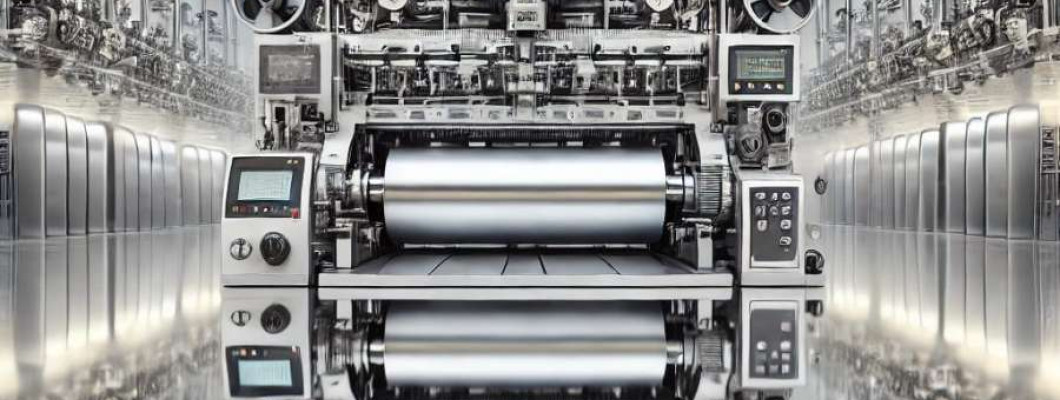
The Industrial Reality
In environments where precision, consistency, and throughput define operational success, the divide between DIY printing solutions and genuine industrial-grade systems becomes starkly apparent. Consider a textile printing workshop transitioning from desktop-scale direct-to-film (DTF) methods to rolling production demands. The challenges escalate rapidly: small-scale printers falter under continuous operation, ink delivery inconsistencies emerge, and substrate handling introduces frequent jams and quality degradation. Industrial-grade equipment must resist these setbacks through robust mechanical design, optimized thermal management, and fine-tuned printhead synchronization.
The A4 Roll DTF Printer enters this context as more than a tool; it is a bridging infrastructure component engineered to address core industrial bottlenecks. Its roll-to-roll configuration and precision-engineered mechanisms aim to maintain operational flow at scales well beyond home setups. The real test lies in throughput sustainability, print quality fidelity, and maintenance overhead reduction across tightly scheduled production windows.
From a technical perspective, the transition from DIY to industrial-grade involves controlling micro-scale variables such as ink droplet size uniformity, film tension stability, and thermal conditions affecting ink adhesion. Operationally, it demands predictable service intervals and reduced downtime. The printing ecosystem must harmonize software control, hardware robustness, and consumable quality to meet industrial-grade expectations.
Hardware Architecture and Printhead Engineering
The A4 Roll DTF Printer integrates advanced piezoelectric printhead technology delivering droplet sizes in the range of 3-5 picoliters (pl). This nano-scale ejection precision supports detailed image reproduction with minimal bleeding and feathering on transfer films. Compared to desktop printers employing thermal bubble heads with droplet sizes exceeding 10 pl, the piezo-driven printheads facilitate smoother gradations and sharper edges.
Additional mechanical elements include a tension-controlled roll feeding system ensuring substrate alignment within ±0.1 mm tolerance. This precision is critical for layering white underbase ink followed by CMYK overprint without registration errors exceeding 0.2 mm, which would manifest as ghosting.
Thermal management in the printhead assembly prevents nozzle clogging by maintaining a stable internal temperature around 40°C, balancing ink viscosity and evaporation rates. Proprietary heaters and temperature sensors modulate this parameter dynamically during operation, providing uptime that can exceed 20 hours of continuous print without scheduled stops, a substantial improvement over DIY systems.
Ink Chemistry and Flow Dynamics
Industrial DTF printing demands consistent ink rheology to maximize adhesion and colorfastness on varied fabrics. The inks used in the A4 Roll DTF Printer feature engineered polymer binders and pigment concentrations optimized for film transfer durability and washing resistance. The flow system includes microfilters (3 micron rating) to capture particulate contaminants, reducing nozzle blockage incidents.
Ink circulation pumps maintain steady flow rates of approximately 200 µL/min through the printhead channels, minimizing air bubble formation and sedimentation. This contrasts with less sophisticated DIY units, which often rely on passive ink feed leading to pressure fluctuations and droplet inconsistency.
Operational Cost and Asset Depreciation Modeling
From a total cost of ownership standpoint, the A4 Roll DTF Printer optimizes consumable usage and maintenance interventions. For example, printhead replacement costs are amortized over 500 liters of ink throughput versus 150 liters typical in DIY models due to lower thermal stress and controlled ink chemistry exposure.
Depreciation schedules modeled over a 5-year lifecycle reflect salvage values approximately 30% higher than consumer-grade equipment because of durable frame construction and modular component design facilitating targeted repairs rather than complete replacements.
Throughput Comparisons and Quality Metrics
| Metric | DIY DTF Printer | A4 Roll DTF Printer |
|---|---|---|
| Max Print Speed (m²/h) | 1.8 | 8.2 |
| Color Reproduction Accuracy (ΔE) | 5.5 | 2.1 |
| Printhead Lifespan (hours) | 350 | 1200 |
| Maintenance Downtime (%) | 20% | 7% |
| Substrate Registration Tolerance (mm) | ±0.5 | ±0.1 |
Scenario Analysis with Specific Use-Cases
Small Textile Workshop Scaling Production
A growing garment decoration business moving from manual transfers to automated production requires a printing solution supporting daily volumes around 60 m². The A4 Roll DTF Printer’s speed and reliability ensure job completion within 8-10 hours, freeing labor for finishing tasks rather than machine oversight. Precision roll alignment reduces spoilage rates below 3% compared to 12% experienced on desktop setups.
Custom Sportswear Manufacturer Needing Consistent Color Matching
For clients demanding strict color adherence across batch runs, the printer’s accurate color reproduction capability (ΔE ≈ 2) guarantees uniform results. Integrated temperature sensors and controlled ink flow eliminate color shifts common in less stable systems, enabling confident batch-to-batch consistency crucial for brand reputation.
Print Service Provider Handling Diverse Substrates
Variable fabric types such as cotton blends, polyester, and nylon require versatile transfer performance. The adjustable film tension and piezoelectric ink control within the A4 Roll DTF Printer enable optimized droplet placement on different substrates. This minimizes post-transfer peeling or fading, assuring durable end products with minimal rework.
Expert FAQ
What measures ensure printhead longevity under industrial operation?
Printhead longevity is preserved through dynamic thermal regulation maintaining optimal ink viscosity, anti-cavitation ink pumps preventing bubble damage, and micron-scale filtration reducing clogging. Additionally, automated nozzle checks and cleaning cycles prevent ink residue buildup, extending printhead life to over 1200 operational hours.
How does substrate tension impact image registration accuracy?
Substrate tension directly affects mechanical alignment; fluctuations greater than ±0.1 mm cause misregistration visible as color ghosting or blurry edges. The printer’s tension-controlled feeding stabilizes substrate placement, critical for multi-layer ink applications and sharp detail retention in transfer films.
Can the printer handle continuous production without overheating?
Yes, integrated temperature sensors monitor printhead assembly, and internal heaters calibrate thermal levels to prevent overheating. Cooling fans and heat sinks dissipate excess energy, allowing uninterrupted operation for over 20 hours before scheduled maintenance is recommended.
What are the key ink flow parameters to prevent printing defects?
Steady ink circulation at approximately 200 µL/min prevents sedimentation and air entrainment. Microfiltration at 3 microns removes impurities, and maintaining ink temperature around 40°C ensures optimal viscosity. These combined parameters eliminate common defects such as banding and droplet coalescence.
How does the industrial printer reduce maintenance downtime compared to DIY options?
Modular hardware design allows targeted repairs, and automated diagnostics detect issues early before failures occur. Reduced nozzle clog frequency and longer-lasting printheads minimize service interventions, cutting downtime from 20% to approximately 7% during heavy use cycles.
Strategic Verdict and Recommendation
Evaluating the A4 Roll DTF Printer through the lens of industrial-grade capability versus DIY alternatives showcases a decisively engineered solution fit for scalable, high-precision textile printing workflows. The advanced printhead technology combined with robust mechanical feed systems and controlled ink chemistry underpins sustained throughput and superior output quality.
For manufacturing entities prioritizing consistent registration, enhanced color fidelity, and minimal operational interruptions, this device represents a transformative upgrade. Businesses moving beyond artisanal output to structured production lines will find the printer’s maintenance profile and asset longevity financially advantageous over time.
Industrially tuned, built for rigorous environments, and optimized for diverse substrate compatibility, the A4 Roll DTF Printer stands as a decisive choice for enterprises seeking an elevated printing infrastructure with measurable performance benefits.