
The Gap Between DIY and Industrial Grade with the A3 UV DTF Printer Multifunction Printing Machine
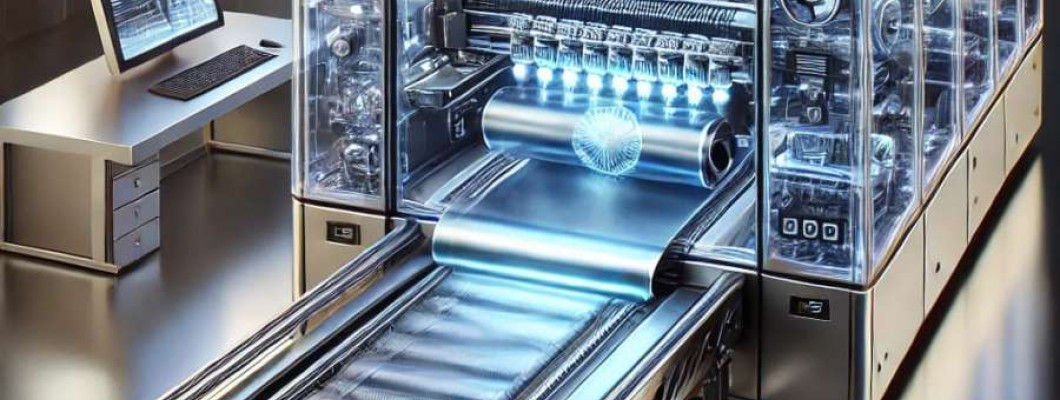
The Industrial Reality of Transitioning from Hobbyist to Industrial UV DTF Printing
In the printing industry, the leap from desktop-level direct-to-film (DTF) printing solutions to fully industrialized machines is often underestimated. Small businesses and artisans frequently encounter limitations in speed, consistency, substrate compatibility, and maintenance demands that highlight the chasm between DIY setups and enterprise-ready hardware. For high-volume production environments, tools such as the A3 UV DTF Printer Multifunction Printing Machine become critical to meet rigorous output and quality standards. Industrial users face challenges involving throughput bottlenecks, critical uptime requirements, and precision color replication under diverse operational conditions. The complexity extends further when considering environmental compliance for UV ink curing, operator safety, and integration into automated production lines.
One notable industrial challenge resides in the management of printhead longevity and ink viscosity control to prevent clogging during lengthy run cycles often spanning 8-12 hours per shift. Compared to smaller desktop printers, which can tolerate frequent manual intervention, an industrial printer must exhibit robust, automated purification cycles and thermal regulation to ensure consistent droplet formation at the micron-scale without sacrificing speed. The A3 UV DTF Printer Multifunction Printing Machine addresses this gap by incorporating multifunction UV curing modules and scalable ink delivery, designed for rapid turnaround and minimal operator downtime, setting it apart from lower-tier alternatives.
Technical Deep Dive into the A3 UV DTF Printer Multifunction Printing Machine
Printhead Technology and Droplet Precision
The core of print quality hinges on the piezoelectric printhead capable of delivering droplet volumes approximately 10-18 pl (picoliters), enabling resolution up to 1440 dpi. Assuming a 300 mm width and a speed of 1.2 m/min, the volumetric ink output reaches around 36 ml/min per printhead channel, demanding precise thermal regulation to maintain viscosity between 15-20 cP (centipoise).
UV Curing Module Efficiency and Energy Consumption
The integrated UV curing system uses LED arrays emitting wavelengths around 395-410 nm with power output approximately 8 W/cm². This approach ensures rapid polymerization of UV curable inks. The curing intensity combined with optimized exposure time (approximately 0.3 seconds per segment) guarantees throughput without ink bleeding or substrate distortion.
Material Handling and Substrate Versatility
Capable of printing on films up to 0.5 mm thickness and various textile substrates, the machine supports multilayer ink deposition with precise control over layer thickness (~7-10 microns per pass). The multifunctional transport mechanism provides consistent film tension (approx. 1.5 N/cm) ensuring dimensional stability during printing and curing phases.
Maintenance Cycle Optimization and Lifecycle Cost Impact
Automated cleaning systems activate on predefined intervals (every 30 print cycles or ~2 hours runtime) utilizing solvent flushing and air purge techniques to curtail nozzle clogs. Lifetime estimations for printheads reach up to 2000 operational hours, with maintenance costs averaged at $300 per 1000 operational hours, aligning favorably against competitor models that require printhead replacement after 1200 hours.
Comparative Data Table on Operational Parameters Versus Conventional Desktop DTF Printers
| Parameter | A3 UV DTF Printer Multifunction Printing Machine | Typical Desktop DTF Printer |
|---|---|---|
| Maximum Print Width (mm) | 300 | 210 |
| Print Resolution (dpi) | Up to 1440 | Up to 720 |
| Print Speed (m/min) | 1.2 | 0.5 |
| Ink Volume per Minute (ml) | 36 | 12 |
| UV LED Power (W/cm²) | 8 | 5 |
| Printhead Lifetime (hours) | 2000 | 1200 |
| Automated Cleaning Frequency | Every 2 hours | Manual or less frequent |
Scenario Analysis of Business Use-Cases
Small Apparel Manufacturer Scaling Operations
A mid-sized textile business aiming to increase custom garment print volume will benefit from the A3 UV DTF Printer’s enhanced throughput and substrate versatility. The ability to print multilayer UV-curable inks on polyester and cotton blends with micron precision supports complex designs that demand durability and wash resistance. By upgrading to this machine, the manufacturer reduces turnaround times from 48 hours to under 24 hours, improving supply chain responsiveness.
Specialized Industrial Label Printing Facility
Industrial users producing durable labels for chemical or electronic components require rapid curing and exacting print resolution to maintain legibility and withstand environmental exposure. Here, the UV curing efficiency and precise ink deposition of the A3 UV DTF Printer ensure compliance with ISO 2910 standards for print durability, positioning it as a viable solution versus conventional solvent-based thermal transfer printers.
High-End Design Studio for Prototyping
Design studios emphasizing micron-level color depth and substrate texture fidelity will find value in the printer’s ability to handle film substrates with thickness uniformity and precise multichannel color layering. This enables iterative prototyping with immediate UV curing validation, accelerating design cycles and reducing costs associated with external print services.
Expert FAQ Addressing Non-Obvious Technical Challenges
Q1 How does the UV LED wavelength range influence ink curing speed and substrate safety?
The narrow LED emission at 395-410 nm matches the photoinitiators in UV inks optimized for rapid polymerization while minimizing thermal load on heat-sensitive substrates, reducing risk of material deformation.
Q2 What are the thermal management strategies implemented to maintain printhead stability?
Active heat sinks coupled with closed-loop temperature sensors stabilize the printhead within a 5 °C band, preventing ink viscosity fluctuations which impact droplet uniformity.
Q3 How does automated cleaning improve uptime compared to manual methods?
Automated solvent flush and air purge sequences programmed to occur within short idle periods reduce downtime by 30% and extend nozzle life by minimizing manual handling errors.
Q4 Can the machine integrate into automated production lines?
Yes, it includes interface ports for synchronization with conveyor systems, enabling inline printing and curing processes without operator intervention.
Q5 What environmental and safety considerations are addressed?
The machine uses enclosed UV curing chambers with shielding to prevent operator exposure to UV light. Additionally, VOC emissions are negligible due to the use of UV-curable inks compared to solvent inks, facilitating compliance with environmental regulations.
Strategic Verdict and Recommendation
The A3 UV DTF Printer Multifunction Printing Machine distinctly bridges the divide between hobbyist-grade devices and industrial printing demands. Its engineering decisions—spanning printhead precision, robust UV curing, automated maintenance cycles, and substrate adaptability—create a resilient platform suited for scaling production without compromising quality. The machine addresses key industrial bottlenecks such as downtime, throughput, and operational costs with a lifecycle-focused design philosophy. For enterprises weighing investments in UV DTF printing, this product represents a sound, future-proof capital asset. Its performance envelope aligns tightly with stringent industry standards and offers a competitive edge in turnaround and quality assurance. Therefore, it is recommended as an industrial-grade solution for businesses ready to transition beyond entry-level printing capabilities and maximize asset longevity and output consistency.