
The Gap Between DIY and Industrial-Grade A2 Plus UV Printers in Embossed Glossy Printing
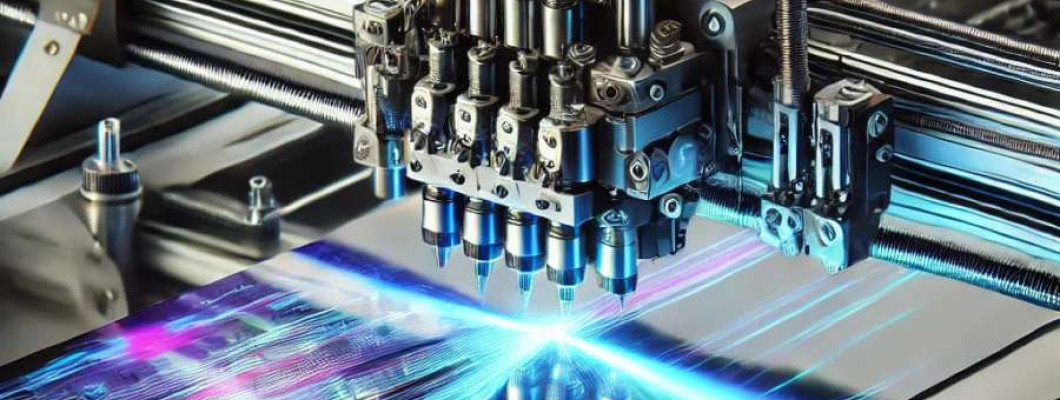
The Industrial Reality of Industrial-Grade A2+ UV Printing
In the realm of high-precision embossed glossy printing, the divide between DIY or small-scale UV printers and true industrial-grade machines is stark. Enterprises aiming for scalable, reliable, and repeatable print quality encounter significant challenges when transitioning from entry-level setups to professional systems. The A2+ Size UV Printer Embossed Glossy Printing platform embodies this transition, foregrounding bottlenecks that become critical in operational environments where throughput, consistency, and maintenance rigidity define business viability.
Consider a print shop shifting from manual layering techniques with standard desktop UV printers to a semi-automated industrial UV printer that must consistently deliver embossed effects on glossy substrates without defects such as color bleed, embossing misalignment, or inconsistent gloss levels. Here, the DIY approach struggles with substrate warping due to uneven UV curing, inaccurately aligned embossing modules, and prolonged downtime for recalibration and nozzle cleaning. The real-world consequences include wasted substrate costs, poor time-to-market ratios, and ultimately compromised client trust.
In industrial settings, every component from printhead precision to UV lamp power calibration affects the final embossed texture and gloss uniformity across A2+ formats (typically 420 mm x 594 mm). This size is large enough to pose challenges in maintaining flatness, UV curing homogeneity, and imprint sharpness, especially when print speeds increase. The gap to close is therefore not just about scaling size but about integrating repeatable engineering solutions into substrate handling, ink chemistry, and inline quality monitoring.
Maintenance regimes tailored for high-volume print runs further differentiate industrial-grade printers. Whereas hobbyist machines rely heavily on manual interventions and simple software presets, industrial systems incorporate sensor networks for predictive wear analysis on printheads and embossing plates, dramatically reducing unplanned downtime. UV lamp lifetime and intensity decay monitoring factors into the operational control software to adjust exposure dynamically, preventing overcure or undercure that can degrade gloss levels or embossing depth.
From a business perspective, understanding these operational realities is foundational when deciding between an off-the-shelf DIY printer and a robust industrial model designed for embossing glossy large-format prints. The resulting cost and labor savings from minimized rework and enhanced output quality underline the economic and technical chasm that the A2+ Size UV Printer Embossed Glossy Printing aims to address.
Technical Deep-Dive Into Industrial Grade Embossed Glossy UV Printing
Printhead Mechanics and Precision Engineering
Industrial UV printers leverage piezoelectric or thermal inkjet technology with nozzle diameters typically ranging from 10 to 30 pl droplet size. For embossed glossy printing on A2+ substrates, a fine droplet size of approximately 10 pl allows micron-level detail necessary for embossed effect sharpness. Printhead linear accuracy must reach 0.02 mm tolerance to ensure embossing layers align perfectly with glossy printing layers. Low-tolerance accumulative errors in x-y axis mechanics often lead to embossing misregistration, a flaw absent in industrial-grade machines due to advanced servo motor positioning and closed-loop feedback systems.
UV Curing Dynamics and Lamp Power Management
Embossed glossy finishes require precise UV curing that balances rapid polymerization of UV inks with preservation of embossing relief depth. Industrial-grade systems employ high-intensity LED or mercury vapor UV lamps with output power ranging 80 to 120 W/cm. The curing velocity mathematically relates to lamp irradiance×exposure time, ensuring full ink curing without substrate overheating or gloss degradation.
For instance, assuming a 100 W/cm lamp irradiance and a conveyor speed of 3 m/min (0.05 m/s), the exposure time per unit length is 20 seconds, providing 2,000 J/cm2 total energy dose. This energy range is optimal to fully cure thick UV inks used in embossed layers while maintaining substrate integrity.
Substrate Handling and Flatness Control
The A2+ size (420 mm x 594 mm) demands robust fixture and platen flatness within 0.05 mm deviation to avoid embossing errors. Industrial printers incorporate vacuum platens and adjustable height leveling systems. In contrast, DIY alternatives often lack dynamic leveling, causing warping from heat and curing shrinkage, which disproportionately affects embossed glossy print uniformity and gloss consistency.
Ink Chemistry and Adhesion Properties
Industrial UV inks formulated for embossed glossy prints contain proprietary photoinitiators and oligomers optimized for high build layers and glossy surfaces. These inks demonstrate adhesion strength above 5 MPa when tested with cross-hatch tape tests on common substrates such as acrylic or coated paper. Additionally, they maintain gloss levels exceeding 85 gloss units (GU) measured at 60° angle, ensuring the characteristic sheen expected from embossed prints.
Inline Monitoring and Predictive Maintenance Tools
Advanced systems include sensors monitoring nozzle health, lamp irradiance, and substrate feed tension, feeding data into real-time analytics dashboards. Predictive algorithms calculate mean time between failures (MTBF) for components like printheads and embossing plates, often extending operational uptime by over 20% relative to non-monitored systems. This capability transforms routine maintenance from reactive to prescriptive, critical for industrial scalability.
| Feature | DIY UV Printer | Industrial A2+ UV Printer |
|---|---|---|
| Nozzle Droplet Size | 30-50 pl | 10-15 pl |
| Printhead Accuracy | 0.1 mm | 0.02 mm |
| UV Lamp Power | 40-60 W/cm | 80-120 W/cm |
| Substrate Flatness Control | Manual | Vacuum platen, auto-leveling |
| Ink Adhesion Strength | 3-4 MPa | 5+ MPa |
| Maintenance | Reactive | Predictive & Sensor-Driven |
Scenario Analysis of Business Use Cases
High-Volume Commercial Printing Facility
For a commercial printer handling large volumes of embossed glossy promotional materials, throughput and uptime dominate the decision matrix. The A2+ Size UV Printer's predictive maintenance and rapid curing UV lamps reduce downtime and substrate waste. The tight printhead tolerances minimize embossing defects, enabling continuous batch runs with minimal operator intervention.
Specialty Packaging Producer
Packaging companies requiring premium embossed effects on small runs benefit from the printer's micron-level precision and ink adhesion. Gloss consistency across irregular substrate batches remains stable due to the vacuum platen system and dynamic UV power modulation, crucial for maintaining luxury brand appearance standards.
Fine Art Reproduction Studio
Artisans who produce limited edition prints value the device's high-resolution droplet size and substrate versatility. The system supports varying media thicknesses while delivering embossed textures with exacting detail. Despite a lower throughput need, the industrial reliability ensures each print meets museum-grade quality without post-print correction cycles common in lower-tier equipment.
Expert FAQ
What is the critical tolerance for printhead alignment in embossed glossy UV printing?
Alignment must be within 0.02 mm to ensure embossing layers align precisely with color layers, preventing visible misregistration and ensuring embossed texture integrity.
How does UV lamp output variability affect gloss levels?
Inconsistent lamp power causes uneven curing, leading to gloss level fluctuations. Maintaining power within ±2% of nominal irradiance is essential to preserve consistent surface sheen.
Why is vacuum platen flatness control crucial for the A2+ format?
The larger print area increases susceptibility to substrate warping. Vacuum platen ensures consistent substrate-flat contact with the printhead and embossing plates, preventing embossing depth errors.
How does predictive maintenance extend printhead life?
By monitoring nozzle health and printing parameters in real time, the system schedules cleaning cycles before failures occur, reducing mechanical stress and ink clogging that degrade printhead lifespan.
Are these industrial inks compatible with all substrates?
While formulated for broad adhesion, industrial UV inks perform optimally on coated substrates like acrylic, PVC, and treated paper. Uncoated or highly porous substrates may require pre-treatment to ensure adhesion and gloss retention.
Strategic Verdict and Recommendation
Considering the technical complexity and operational demands of embossed glossy printing at A2+ scale, the A2+ Size UV Printer Embossed Glossy Printing distinctly positions itself as a viable industrial-grade solution bridging the gap between underpowered DIY systems and high-demand commercial environments. Its precision engineering, advanced UV curing control, and predictive maintenance architecture offer substantial return on investment by minimizing material waste, maximizing uptime, and ensuring superior print quality.
The product's architecture aligns perfectly with industrial throughput requirements and high-fidelity embossed texture reproduction. Businesses invested in premium product packaging, fine arts, or commercial print production with embossed glossy demands will find this solution delivers the requisite technical robustness and consistent output necessary for sustainable scalability.