
The Gap Between DIY and Industrial-Grade A2+ Size UV Printer Embossed Glossy Printing for The High-End Artisan
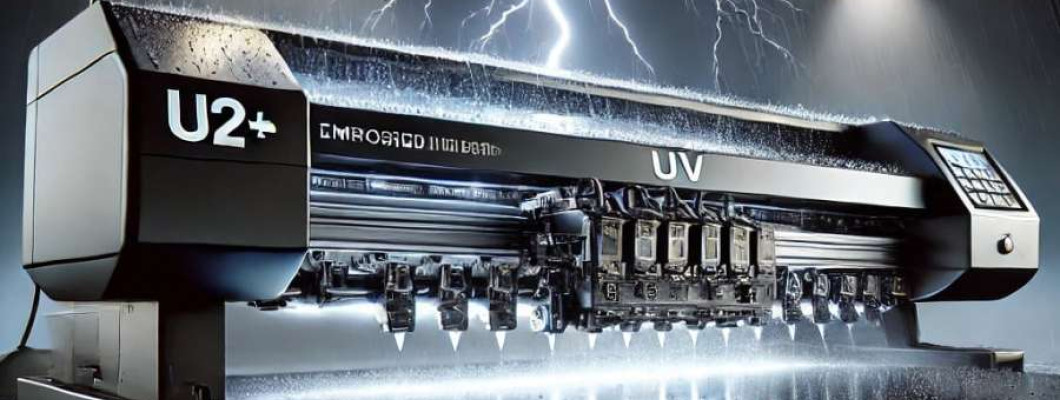
The Industrial Reality of Embossed Glossy Printing at A2+ Scale
In the arena of specialized printing, an A2+ size UV printer with embossed glossy printing capabilities confronts unique operational challenges that expose the limits separating DIY setups from true industrial-grade solutions. High-end artisans demand precision not only in color depth but in maintaining uniform embossing and gloss textures across large surface areas without compromising fine detail or substrate integrity. When scaling up to A2+ dimensions, maintaining micron-level accuracy in multilayer UV ink deposition while simultaneously controlling gloss uniformity becomes a critical bottleneck. Variability in ink viscosity, UV curing intensity, and substrate flatness introduces wave-like inconsistencies that DIY or semi-professional setups are ill-equipped to mitigate. Adding embossed texturing further complicates the optical and tactile finish, requiring ultra-fine print head control and advanced ink chemistry.
Operational stability is also a significant challenge. Manual and small-scale printers often experience printhead clogging or misalignment issues during extended runs, increasing downtime and labor intervention. Industrial-grade solutions resolve these issues through rigorous lifecycle maintenance regimens, hardware redundancy, and integrated environmental controls. Furthermore, high-end artisans frequently work with diverse substrates, from coated papers to rigid plastics, necessitating adaptable hardware profiles and versatile ink formulations. The reality remains that many off-the-shelf or entry-level UV printers, even if marketed with embossing capabilities, fail to deliver consistent scalability or repeatability at the demanding A2+ size and texture resolution required by professional studios.
Technical Deep Dive Into UV Embossed Glossy Printing Hardware
Printhead Mechanics and Micron-Level Accuracy
Industrial A2+ printers deploy piezoelectric printheads capable of ejecting droplets as small as 3 picoliters (pl), essential for maintaining fine embossing outlines and layered gloss effects. The printhead alignment accuracy must be maintained within ±10 microns across the entire 420 mm x 594 mm print bed to avoid banding or positional drift. Hypothetically, even a 15-micron deviation can distort embossed features, causing light diffraction anomalies and tactile inconsistency.
Ink Chemistry and Layered Curing
UV inks designed for embossed glossy printing feature tailored photoinitiators that cure uniformly under variable UV intensities. The curing kinetics can be estimated via reaction rate equations integrating intensity (I, mW/cm²) and exposure time (t, seconds), where incomplete cure at lower intensities results in surface tackiness and reduced gloss retention. Furthermore, multi-layer deposition requires controlled rheological properties to prevent interlayer mixing. Viscosity, η, measured in centipoise (cP), is optimized between 15-25 cP to balance flow and adhesion.
Substrate Interface and Flatness Control
Maintaining a ±0.2 mm flatness tolerance over the A2+ substrate area minimizes focal plane variance that can cause printhead-to-substrate distance fluctuations, directly influencing droplet landing precision. Industrial-grade printers incorporate vacuum-held flatbed systems with automated thickness sensing and real-time Z-axis compensation to uphold this standard.
Hardware Redundancy and Lifecycle Maintenance Costs
Contrasting DIY models, industrial UV printers feature multiple redundant printheads (often 2-4 per color channel), allowing hot-swappable operation to sustain uninterrupted throughput. Maintenance cycles for these printheads average 1,000 runtime hours, with replacement costs factored into lifecycle budgeting. Automated nozzle health diagnostics and cleaning routines reduce manual labor and downtime, critical for high-end artisan workflows where throughput and reliability directly impact project margins.
Comparing Industrial Grade to DIY Costs and Outputs
| Feature | Industrial-Grade A2+ UV Printer | DIY/Semi-Professional Setup |
|---|---|---|
| Printhead Resolution | Up to 1440 dpi with ±10 micron accuracy | 600-900 dpi with ±25 micron variability |
| Ink Viscosity Range | 15-25 cP, optimized for multi-layer curing | Variable, ~30-45 cP, limited layering |
| Substrate Flatness Control | Vacuum hold with ±0.2 mm tolerance and Z-axis compensation | Manual flat placement without compensation |
| Maintenance Interval | 1,000 runtime hours with automated cleaning | 300-500 hours, manual cleaning |
| Throughput (A2+ prints/hour) | 8-12 prints/hour with embossing | 2-4 prints/hour with visible inconsistencies |
Scenario Analysis on Business Use Cases
Luxury Packaging Design Studios
Studios producing limited-run luxury packaging require ultra-high fidelity in embossed textures combined with glossy finishes that enhance brand perception. The industrial-grade A2+ UV printer’s precise droplet control ensures consistent emboss depth and gloss uniformity that aligns with premium expectations. Throughput capacity allows meeting multiple client deadlines without quality degradation. Conversely, DIY printers risk uneven embossing, potential substrate damage, and ongoing rework costs increasing labor input.
High-End Art Reproduction and Limited Editions
Artisans creating limited edition prints demand micron-level color layering and gloss effects that replicate original artwork tactileness. The printer’s advanced ink chemistry and multi-layer UV curing preserve pigment fidelity while embossing adds dimensionality. The controlled substrate flatness ensures printhead precision crucial to avoiding image distortion. An industrial solution minimizes print failures and ensures legacy asset longevity.
Custom Interior Design Panels
Interior designers specifying custom panels benefit from the printer’s ability to print on rigid substrates with consistent embossed glossy textures across larger areas. The vacuum flatbed system assures adhesion and finish uniformity on various materials such as acrylic or composite boards. This capability translates into repeatable production and scalable throughput, which small-scale units cannot sustain due to hardware limitations and maintenance interruptions.
Expert FAQ on A2+ UV Embossed Glossy Printing
What is the precise droplet size required to maintain embossed detail?
Typically, printheads eject droplets around 3 picoliters (pl). Droplets larger than 5 pl risk losing fine emboss edges while smaller droplets under 2 pl decrease throughput and may exacerbate clogging.
How does substrate flatness affect embossing quality?
A deviation greater than ±0.2 mm alters the relative distance to the printhead, causing inconsistent droplet placement and emboss depth. This results in gloss irregularities and tactile variance.
What maintenance strategies optimize uptime for industrial UV printers?
Automated nozzle health diagnostics, scheduled printhead cleaning every 100 print runs, and using redundant printheads for hot swapping minimize downtime. Lifecycle replacement after 1,000 hours balances maintenance cost and reliability.
How do UV ink rheological properties influence embossed glossy finishes?
Viscosity between 15-25 cP supports stable multi-layer application without ink flow or mixing issues, critical for distinct embossed layers to maintain surface texture and gloss.
Why is multi-layer UV curing necessary in embossed printing?
Sequential curing stabilizes each ink layer, avoiding interlayer blending and maintaining high relief emboss shapes, while ensuring full polymerization to maximize gloss durability.
Strategic Verdict and Recommendation
The A2+ Size UV Printer Embossed Glossy Printing platform presents a definitive industrial-grade solution that closes the persistent gap between DIY experimentation and professional artisanal demands. Its finely calibrated printhead mechanics, advanced UV ink chemistry, and robust substrate handling elevate embossing and gloss finishing to levels unattainable by semi-professional equipment. The embedded maintenance automation and hardware redundancy further ensure sustainable throughput and operational continuity. For high-end artisans striving for micron precision, repeatable color depth, and versatile substrate compatibility at scale, this printer sets a new standard. While investment in such hardware mandates upfront CAPEX considerations, the resulting quality, reliability, and output velocity unequivocally justify the premium. Adopting this printer technology is a strategic move to position business offerings at the forefront of tactile, visual, and production excellence in specialized UV embossed printing on A2+ substrates.