
The Gap Between DIY and Industrial-Grade A3 Edible Food Printers From an IT Infrastructure Perspective
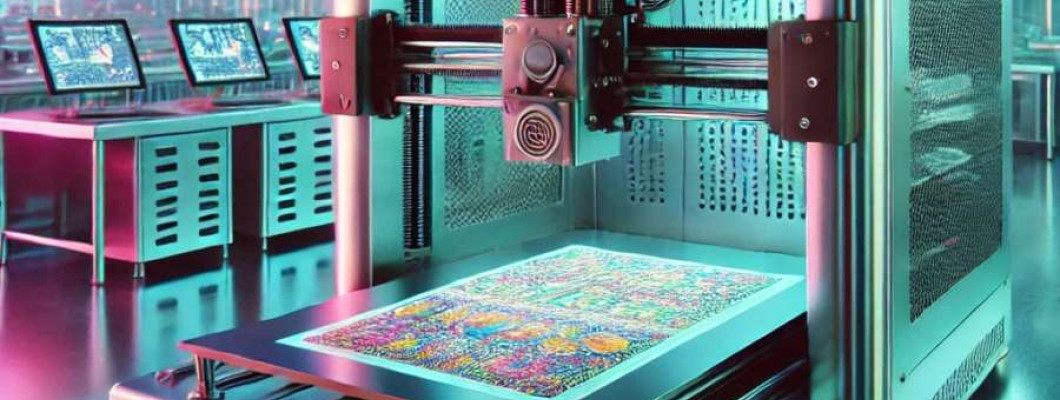
The Industrial Reality of Deploying A3 Edible Food Printers in Commercial Kitchen Environments
Industrial food production facilities aiming to integrate edible printing technology on cakes and cookies confront a crucial operational divide between consumer-grade and industrial-grade equipment. The transition to an A3 edible food printer designed for enterprise-level throughput introduces multiple challenges, particularly in IT and infrastructure management. Unlike DIY printers, industrial food printers demand precise thermal management due to heat dissipation from continuous operation, substantial power requirements, and rigorous compliance with food safety standards.
Managing the thermal envelope around printheads and power electronics becomes critical to maintaining micron-level print precision and color fidelity during extended runs. An overlooked aspect is the integration of these printers into existing kitchen automation stacks and server monitoring systems, which impacts uptime reliability and throughput. Additionally, the industrial environment's typically elevated humidity and rapid temperature fluctuations amplify the risk of printhead nozzle clogging and electronic component stress, impacting long-term asset longevity.
From a deployment scenario, the IT and infrastructure management must address rack density and power footprint, especially where multiple units are installed for scaling production. Inadequate space planning or cooling infrastructure leads to operational bottlenecks manifesting as print errors or downtime, which are costly in fast-paced food production chains. Furthermore, balancing the ambient conditions to comply with food safety without compromising electronics’ performance is an intricate engineering trade-off.
These challenges highlight why a technically robust, industrial-grade solution is necessary rather than relying on DIY or semi-professional alternatives that cannot sustain rigorous operational demands or compliance in a commercial setting.
Hardware Architecture and Thermal Management Fundamentals
The core hardware of an A3 edible food printer consists of high-resolution inkjet printheads, proprietary edible ink systems, precise substrate handling mechanisms, and a control interface that often interfaces with enterprise-grade monitoring setups. Industrial-grade models incorporate multiple printheads, often piezoelectric, capable of resolutions exceeding 1200 dpi, depositing droplets as small as 5 picoliters (pl) for high color depth and fine detail.
Thermal management is paramount since printheads operate optimally between 25°C and 40°C. Exceeding this range due to continuous printing or environmental heat causes ink viscosity variation, resulting in blurred images or color shifts. The heat load from printheads and associated drivers can accumulate to approximately 150 Watts per unit under peak operation.
Active cooling solutions, such as embedded micro-fans or Peltier thermoelectric cooling modules, are often employed in industrial units. Passive heat sinks alone are insufficient due to spatial constraints in kitchen environments. The printer’s chassis must be designed with airflow channels facilitating heat exchange without exposing the edible prints to contaminants.
Printhead Physics and Nozzle Reliability
Printheads eject ink droplets via precise mechanical pulses. The nozzle diameters are typically 20-30 micrometers. Clogging is a frequent failure mode, accelerated by ink drying or particulate contamination common in food production settings. Maintaining ink chemistry stability, including pH and viscosity, in edible inks is complex because of their organic nature.
Redundancy in nozzle arrays and automated nozzle health checks are characteristic of industrial-grade systems, enabling rapid switching to functional nozzles to avoid print defects. Conversely, DIY printers lack this resilience, causing operational disruptions and increased maintenance demands.
Power Infrastructure and Integration Challenges
Industrial edible printers, particularly the A3 format, require stable power inputs in the range of 100-240 VAC with surge suppression and UPS backup to prevent data corruption or mid-print failures. Managing power harmonics is essential to avoid interference with adjacent electronic food processing equipment.
Interfacing with kitchen automation networks often requires custom drivers or APIs that allow centralized job queuing, print status monitoring, and maintenance alerts, often integrated within enterprise resource planning (ERP) software.
Material Handling and Substrate Compatibility
The printer must accommodate various edible substrates including fondants, rice papers, and cookie dough. Precision in substrate feeding mechanisms, typically +/- 0.1 mm positional accuracy, is critical to multi-pass printing to avoid misalignment. Industrial models employ sensors and servo-motors for continuous calibration, unlike DIY units, which rely on manual adjustments.
| Feature | DIY/Semi-Pro | Industrial-Grade A3 Edible Printer |
|---|---|---|
| Print Resolution (dpi) | 300-600 | 1200+ |
| Printhead Droplet Size (pl) | 20-50 | 5-10 |
| Nozzle Redundancy | None | Yes, automatic switching |
| Thermal Management | Passive | Active cooling with airflow design |
| Power Requirements | Low, no UPS | Stable supply with UPS integration |
| Substrate Handling Accuracy | Manual adjustment | Servo-driven, sensor feedback |
| Integration Capability | Standalone | ERP and automation network ready |
Scenario Analysis for Three Business Use Cases
Small Boutique Bakery Scaling Production
A boutique bakery moving from manual cake decoration to automated edible printing would benefit from an industrial-grade printer with precise color layering and substrate versatility to maintain artisanal quality at scale. The printer's integration with order management software reduces labor costs while ensuring consistent output. The advanced thermal controls minimize printhead failures during long runs.
Large Commercial Cookie Manufacturer
High volume cookie manufacturers require rapid throughput and minimal downtime. The industrial A3 printer’s printhead redundancy and servo-driven substrate handling enables continuous operation across multiple shifts. Integration with factory floor monitoring systems allows predictive maintenance scheduling, preventing costly unexpected stoppages.
Event Catering Enterprises with Custom Orders
Event caterers demand flexibility for rapid design changes and diverse edible substrates. The printer’s high dpi and color depth enable photorealistic images on a variety of edible films, improving client satisfaction. Network integration allows remote job submission and progress tracking, essential for dynamic event environments.
Expert Frequently Asked Questions
How does thermal management influence printhead reliability in continuous operation?
Maintaining printhead temperature within optimal ranges (25-40°C) prevents ink viscosity shifts that cause nozzle clogging and misfiring. Active cooling extends printhead life and ensures consistent droplet deposition during extended production runs.
What are the challenges in integrating edible printers into existing IT infrastructure?
Edible printers require stable power with UPS backup and low electrical noise to avoid interfering with other devices. Software integration needs custom drivers or APIs for centralized monitoring and job scheduling. Network security protocols must be adapted as printers often connect to internal networks.
Why is nozzle redundancy critical in industrial edible printers?
Nozzle redundancy enables the printer to bypass clogged nozzles by switching to functional ones, maintaining print quality and reducing downtime. This level of resilience is absent in DIY units, which often halt or produce defects when nozzles clog.
How do edible ink properties affect printer maintenance?
Edible inks have variable pH, viscosity, and organic content that can dry or degrade quickly, necessitating frequent cleaning and ink system checks. Industrial systems are designed for easier maintenance and optimized ink flow paths, minimizing clogs and downtime.
What substrate handling precision is required for multi-pass printing?
Multi-pass printing demands substrate positional repeatability within +/- 0.1 mm to ensure accurate layering of colors and details. Industrial printers use servo motors and sensors for real-time adjustments, improving print alignment and consistency.
Strategic Verdict and Recommendation
The evaluated printing technology represented by the A3 Edible Food Printer For Printing Cakes Cookies clearly occupies the industrial-grade segment vital for commercial food production facilities. Its advanced thermal management, printhead design, and robust substrate handling distinguish it from DIY equipment, enabling superior print consistency, higher throughput, and seamless infrastructure integration.
From an IT and infrastructure management standpoint, this printer addresses critical operational bottlenecks common in scaling edible printing technologies. Its compliance with power stability requirements, network integration, and maintenance protocols positions it as a technologically sound investment for scalable enterprise workflows.
We recommend this printer for businesses seeking to elevate edible printing from artisanal craft to industrial productivity without sacrificing quality or compliance. It offers a viable, future-proofed solution aligned with stringent commercial and regulatory demands.