
The Gap Between DIY and Industrial-Grade A3 Edible Food Printing for Cakes and Cookies
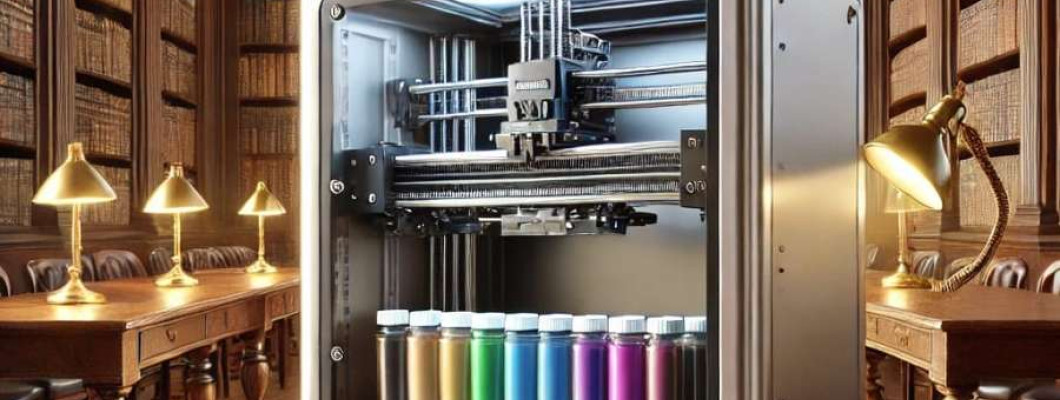
The Industrial Reality of Transitioning to Industrial-Grade Edible Food Printing
In the highly specialized domain of edible printing, the divide between consumer DIY devices and industrial-grade solutions is pronounced. The A3 Edible Food Printer for Printing Cakes Cookies presents a critical case study in bridging this gap, particularly in commercial bakery and confectionery production environments. Unlike typical consumer models designed for infrequent use and limited substrate range, industrial environments demand robust throughput, strict reproducibility, and adherence to food safety standards. For instance, a mid-sized bakery producing 500 decorated cakes daily requires not only precise high-resolution imagery but also minimal downtime, consistent ink deposition, and substrates management across different confectionery textures like fondant, sugar sheets, or cookie icing.
One key industrial challenge lies in maintaining micron-level accuracy amidst frequent substrate changes and thermal variations inherent in bakery settings. Ambient temperature fluctuations (range typically 18–28°C) and humidity shifts affect edible ink viscosity and printhead performance, directly impacting color fidelity and print sharpness. Moreover, stringent hygiene compliance necessitates materials and components that tolerate frequent cleaning cycles without compromising mechanical tolerances. Such multidimensional operational factors often expose DIY food printers to failure points such as nozzle clogging, mechanical misalignment, and inconsistent ink flow.
Integrating an industrial-grade A3 edible printer into an existing bakery workflow involves overcoming bottlenecks related to throughput calibration, substrate loading ergonomics, and maintenance schedules. Downtime due to maintenance or recalibration results in substantial lost production time and operational inefficiencies. The printer’s software ecosystem must support workflow automation with advanced color profiling and recipe management to minimize human error, further differentiating it from DIY devices. Consequently, the transition from DIY setups to industrial-grade printers is not merely a scale-up but a paradigm shift in system resilience, precision engineering, and operational integration.
Technical Deep-Dive into Industrial-Grade Edible Printing Technologies
Printhead Architecture and Failure Mitigation
The A3 printer employs piezoelectric drop-on-demand printheads designed for variable droplet sizes, typically in the 2–8 picoliters (pl) range. This fine granularity supports high-fidelity image rendering with resolutions up to 1200 dpi. Industrial-grade heads incorporate redundant nozzle arrays to mitigate local clogging, with real-time pressure sensors enabling active flushing sequences. The thermal tolerance of printhead elements is optimized to withstand continuous operation at up to 50°C substrate surface temperatures without degradation.
Edible Ink Chemistry and Rheological Control
Edible inks formulated for industrial systems balance pigment concentration, viscosity, and drying kinetics. Typical ink viscosities range from 6 to 12 centipoise (cP) at 25°C, maintained through temperature-controlled reservoirs to prevent phase separation and settling. The A3 system implements microfluidic ink circulation to ensure homogenous pigment dispersion and prevent nozzle clogging due to particulate aggregation.
Substrate Versatility and Feeding Mechanism
The feeder mechanism accommodates substrates from 150 mm × 150 mm up to the full A3 size (297 mm × 420 mm), supporting materials like fondant sheets (1.0 mm thickness), rice paper (0.3 mm), and edible wafer sheets (0.5 mm). Precision stepper motors control transport with positional accuracy down to 0.1 mm, critical for multicolor layering and complex pattern registration.
Print Speed and Throughput Calculations
At maximum resolution (1200 dpi), the printer achieves a throughput of approximately 3 A3 sheets per minute. Throughput can increase to 7 sheets per minute at 600 dpi with minor resolution trade-offs. Calculating operational output for a mid-sized bakery:
| Parameter | 1200 dpi Mode | 600 dpi Mode |
|---|---|---|
| Print Speed (sheets/min) | 3 | 7 |
| Daily Output (8hr shift) | 1440 | 3360 |
| Average Cake Prints Needed | 500 | 500 |
| Utilization (%) | 35% | 15% |
This data affirms that operational parameters can be optimized depending on color depth needs versus production volume requirements.
Maintenance Cycles and Lifecycle Cost Modelling
Industrial-grade maintenance includes daily nozzle cleaning, biweekly printhead zeroing, and monthly ink reservoir cleaning. Based on component wear rates, printheads have a specified lifecycle of approximately 2000 operational hours before performance degradation requires replacement. Predictive maintenance algorithms reduce unexpected failures by monitoring ink flow and piezo element impedance in real-time.
Scenario Analysis Highlighting Business Impacts
Scenario One: Artisan Bakery with Limited Print Volume but High Precision Needs
An artisan bakery specializing in bespoke wedding cakes requires ultra-high color fidelity and micron precision to replicate intricate designs on fondant surfaces. Using the A3 Edible Food Printer allows them to achieve 1200 dpi print quality with minimal color drift due to advanced ink rheology control. The substrate versatility permits switching between sugar paste and royal icing sheets, expanding their design capabilities without additional hardware investment.
Scenario Two: Medium-Sized Cookie Manufacturer Pursuing Volume Efficiency
A cookie manufacturing firm producing 5,000 cookie packs daily prioritizes throughput over maximal resolution. By deploying the A3 printer at 600 dpi, they increase print throughput by 133% compared to full-resolution mode. The integration of automated substrate feed and recipe switching reduces labor costs by 20%, improving overall operational efficiency.
Scenario Three: Food Service Enterprise with Night-Shift Continuous Operation
A food service provider running 24/7 operations implements staggered maintenance cycles on two redundant A3 printers. Real-time diagnostic insights enable zero unexpected downtime over a 30-day period, while thermal management systems ensure constant print quality despite environmental shifts in industrial kitchen conditions.
Expert FAQ Addressing Advanced Technical Concerns
Q1: How does the A3 printer manage edible ink drying without heating substrates beyond 50°C?
It employs a controlled airflow drying system with precise ambient air temperature regulation to accelerate pigment fixation without thermal damage to sensitive substrates.Q2: What are the fail-safes against nozzle clogging in continuous operation?
Redundant nozzle arrays coupled with automated flushing cycles triggered by inline pressure sensors minimize printhead downtime and maintain print continuity.Q3: Can the printer handle layered multi-pass printing for enhanced color depth?
Yes, with registration accuracy of 0.1 mm ensured via encoder feedback loops, multiple passes are feasible for vivid color layering on various edible substrates.Q4: What software capabilities support industrial workflow automation?
The printer integrates with color management software featuring ICC profile import/export, recipe batch processing, and remote operation via secure APIs.Q5: How is food safety compliance achieved at the hardware level?
All food-contact components are manufactured from FDA-approved, corrosion-resistant materials and designed for rapid disassembly to facilitate rigorous sanitization protocols.
Strategic Verdict and Recommendation
The A3 Edible Food Printer For Printing Cakes Cookies stands out as a definitive industrial-grade solution that closes the operational and technical chasm between amateur DIY food printing and enterprise demands. Its precise printhead technology, advanced ink modulation, and substrate versatility are engineered to meet rigorous throughput and hygiene standards within professional bakery and confectionery settings. For businesses requiring micron-level print accuracy combined with scalable output, this system balances cost, reliability, and print fidelity seamlessly.
Integrating this technology offers measurable reductions in manual labor, enhanced print uniformity, and resilient maintenance workflows through predictive diagnostics. Complete with modular software integration and robust hardware architecture, the A3 Edible Food Printer For Printing Cakes Cookies is the recommended investment for enterprises striving for industrial performance in edible printing operations.