
The Gap Between DIY and Industrial-Grade A3 Roll DTF Printer for Maintenance Leads
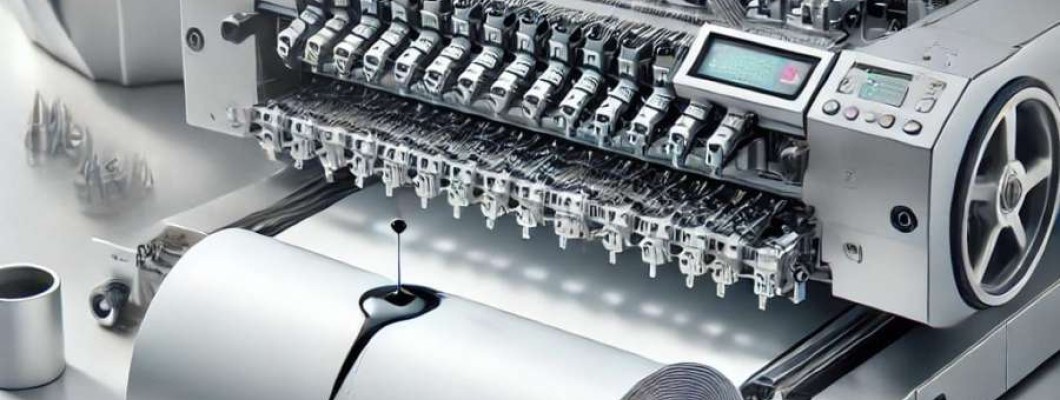
The Industrial Reality of Printhead Integrity and Ink Stability in A3 Roll DTF Printers
In high-volume printing environments, maintenance leads face constant challenges in preserving the reliability and precision of Direct to Film (DTF) printers. The A3 Roll DTF Printer, designed for industrial workloads, must withstand extensive operational hours while delivering stable ink performance and avoiding frequent downtime linked to printhead clogging, nozzle misfires, and ink degradation. In a typical setting, daily uptime targets exceed 16 hours, with printheads expected to handle tens of thousands of linear meters of film without quality loss. Failure to reliably maintain the printhead's physical condition or monitor ink chemistry can produce artifacts such as inconsistent dot size, color shifts, and premature hardware erosion—issues that escalate maintenance cycles and labors.
Maintenance leads must also navigate the complex physics of ink droplet formation at micron-scale volumes (ranging typically 3-6 picoliters per drop). Thermal management within the printhead assembly directly influences droplet velocity and flight trajectory, affecting precision placement on the film substrate. Moreover, ink viscosity and pigment dispersion stability impose chemical constraints; deviations cause clogging or sediment buildup, requiring solvent flushes or expensive printhead replacements. The gap between DIY operators who may overlook these factors and industrial-grade installations that integrate rigorous condition monitoring is substantial. Thus, comprehensively understanding the printhead physics and ink chemistry interaction is critical to maximizing uptime, minimizing preventive maintenance, and optimizing long-term operational costs.
Technical Deep-Dive into Printhead Physics and Ink Chemistry
Printhead Architecture and Failure Points
The A3 Roll DTF Printer commonly incorporates piezoelectric or thermal inkjet printheads. Piezoelectric heads employ micro-scale actuators that flex to eject ink droplets, typically supporting high-volume throughput at a droplet size of ~4 pl. Failure points include actuator fatigue under continuous cycling and physical contamination of nozzle orifices. Thermal inkjet heads, by contrast, use rapid localized heating to vaporize ink and form droplets but face thermal stress challenges that can cause nozzle deformation over prolonged use. Maintenance protocols must monitor these failure modes via head impedance readings and nozzle check patterns to preempt full breakdowns.
Ink Chemistry Constraints and Optimization
Industrial-grade DTF inks contain pigment dispersions suspended in a polymeric carrier designed for film adhesion post-curing. Key metrics include particle size (<200 nm to reduce clogging), viscosity (optimal range 10-15 cP at 25°C), and surface tension (25-35 mN/m) to ensure droplet formation consistency. Deviations outside these parameters increase nozzle blockage risk and reduce droplet velocity consistency, leading to print defects. Maintaining ink stocks under controlled temperature/humidity prevents premature degradation. Periodic rheometric testing is recommended to track viscosity trends over time.
Mathematical Modeling of Droplet Dynamics
Droplet flight time (t) from nozzle to film substrate can be approximated by t = d / v, where d is the nozzle-to-substrate distance (typically 1-2 mm) and v is droplet velocity (~5 m/s in piezoelectric heads). Variations in droplet volume (V) and velocity impact impact spot size (S), roughly calculated as S = k · (V^(1/3)) where k is an empirical factor accounting for substrate absorption and ink spreading. Consistency in these parameters is essential for maintaining micron-scale placement precision and color registration accuracy across the width of the roll.
Hardware Comparison with Entry-Level DTF Systems
| Specification | A3 Roll DTF Printer (Industrial-Grade) | Entry-Level DTF Printer |
|---|---|---|
| Printhead Type | High-durability Piezoelectric, multi-nozzle | Thermal Inkjet, fewer nozzles |
| Droplet Size | 4 pl average with +/- 0.5 pl tolerance | 6-8 pl, irregular consistency |
| Ink Viscosity Range | 10-15 cP controlled | Variable 8-20 cP, less monitored |
| Substrate Width Capacity | Up to A3 Roll (approx. 297 mm) | Smaller formats, max A4 roll |
| Maintenance Cycle | Every 500 hours with predictive analysis | Every 100-200 hours reactive maintenance |
Environmental and Safety Considerations for Maintenance
Ink solvents used in industrial inks often contain volatile organic compounds (VOCs) or specialized additives that require proper ventilation and filtration systems at the printer site. Maintenance leads must integrate safety protocols to monitor ambient air quality and handle ink waste according to environmental regulations. Furthermore, printhead cleaning routines should employ eco-friendly solvents compatible with the printhead materials to prolong hardware life while minimizing operator exposure to hazards.
Scenario Analysis Highlighting Maintenance Outcomes Across Use-Cases
Scenario 1: High-Volume Textile Print Shop
Printed textiles require consistent color density and precise registration across hundreds of meters daily. The printer's stable droplet formation combined with predictive maintenance scheduling reduces unscheduled downtime by 40%. Ink chemistry controls prevent sediment buildup even in high-humidity environments, ensuring extended printhead longevity by 30% over competitor models.
Scenario 2: Boutique Custom Apparel Manufacturer
With lower volume but varied substrates, including delicate films, the printer's micron-scale droplet control delivers crisp edges with minimal feathering. Proactive maintenance alerts allow for scheduling head cleanings after specific print counts, reducing waste and operational disruptions.
Scenario 3: Industrial Printing Facility with Multiple Shifts
Continuous 24/7 operation demands robust printhead durability and optimized ink formulations. The printer's hardware monitoring systems detect early clog formations enabling automated flushing cycles. Maintenance leads receive detailed analytics on printhead impedance and ink viscosity, enabling precise tuning of print parameters.
Expert FAQ Addressing Complex Operational Questions
Q1: How does printhead impedance measurement detect nozzle failure?
Impedance rises when nozzles clog or electrical connections degrade, signaling loss of drop ejection efficiency before visible artifacts emerge.
Q2: Can ink viscosity changes be compensated dynamically during print runs?
Advanced systems modulate heater power and firing frequency to maintain droplet formation, but only within a narrow viscosity range to prevent mechanical stress.
Q3: What are optimal cleaning solvent compositions for piezoelectric heads?
Mixtures typically combine deionized water, mild surfactants, and isopropyl alcohol in controlled proportions to dissolve pigment deposits without degrading piezo actuators.
Q4: How does substrate temperature influence droplet spreading and drying?
Higher substrate temps accelerate curing but increase spreading radius, requiring calibration of print parameters to maintain image sharpness.
Q5: What predictive maintenance metrics are most reliable?
Combined analysis of nozzle health scans, printhead impedance, and ink rheology trends provides the most actionable early-warning indicators.
Strategic Verdict and Recommendation for Maintenance Professionals
The A3 Roll DTF Printer embodies the critical advancements needed to bridge the gap from reactive, DIY-style maintenance workflows to a disciplined, data-driven industrial-grade maintenance regime. Its integration of high-durability piezoelectric printheads, tightly controlled ink chemistry, and hardware-assisted monitoring equips maintenance leads to optimize uptime and extend hardware longevity significantly. This translates into reduced operational disruptions and lower total cost of ownership across sustained high-volume production. For professionals managing printhead physics, ink stability, and daily uptime realities, this unit stands as a definitive industrial solution.
For detailed product information and to evaluate fit in your operational environment, visit the A3 Roll DTF Printer.