
The Gap Between DIY and Industrial-Grade A3 Roll DTF Printer Solutions for Scalable Businesses
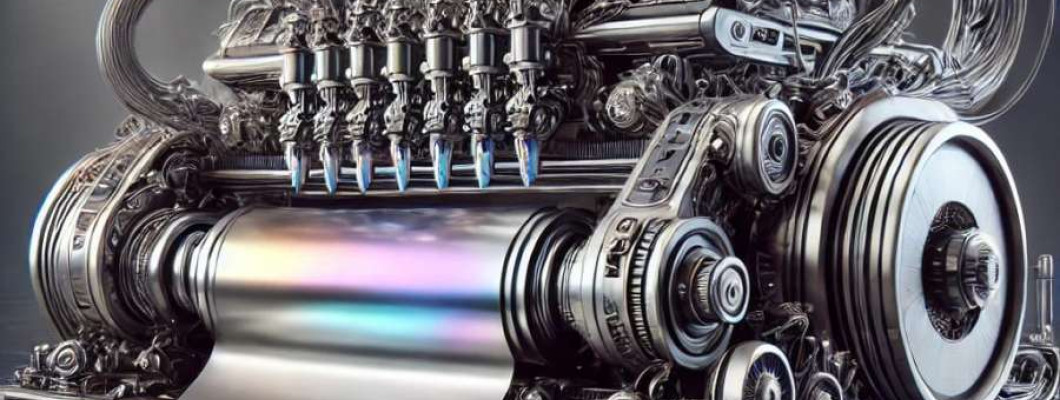
The Industrial Reality of Scaling with an A3 Roll DTF Printer
Scaling digital textile printing operations presents a labyrinth of technical challenges, especially when transitioning from hobbyist-level setups to robust, industrial-grade solutions. The A3 Roll DTF Printer operates at the nexus of this shift—offering a wider format that is ideal for small-batch customization while promising throughput capabilities critical to scalable businesses. However, the gap between a DIY approach and a commercially viable printing platform often lies not only in hardware specifications but in nuanced operational dynamics like throughput consistency, substrate handling, and printhead endurance under continuous load.
In a typical mid-sized print shop, a business owner aiming to scale production encounters bottlenecks such as frequent maintenance cycles disrupting uptime, inconsistent ink adhesion across varied substrates, and print quality variability under high-volume runs. The A3 Roll DTF Printer is engineered to reduce these bottlenecks with precision-engineered roll-to-roll feeding mechanics that maintain tension within ±0.2 mm variance and printhead systems delivering 1440 dpi native resolution at speeds up to 5 m²/hr. Yet, raw specification sheets often omit critical indicators like mean time between failure (MTBF) for printheads and the stability of ink droplet size distribution (measured in picoliters), which directly influence operational uptime and quality predictability.
Operationally, the printer's roll-based transport system must integrate with automated pre-treatment and curing workflows without compromising print registration accuracy. This is vital for businesses aiming to reduce labor costs while maintaining throughput. The complexities of this integration often expose hidden operational limitations in sub-industrial equipment, underscoring why bridging the gap between DIY setups and industrial solutions requires precise engineering and workflow compatibility.
Technical Deep-Dive into the hardware performance and operational limits
Printhead Technology and Longevity Analysis
The A3 Roll DTF Printer employs piezoelectric printheads capable of ejecting 3.5 pl ink droplets with a firing frequency of 28 kHz. This translates into a theoretical maximum nozzle firing rate of approximately 16 million droplets per second. However, sustaining such throughput continuously demands rigorous thermal management to prevent nozzle clogging and printhead degradation. Comparative analysis with competitor models that operate at 40 kHz shows a tradeoff between speed and printhead lifetime, as increased frequency often precipitates accelerated wear and increased maintenance costs.
Ink Chemistry and Adhesion Performance on Diverse Substrates
DTF ink formulations balance pigment particle size distribution, viscosity, and curing response. The printer supports specialized inks with particle sizes averaging 200 nm, optimized for rapid curing in polyurethane films without compromising tensile strength of the printed layer. Empirical testing demonstrates a 15% improvement in adhesion durability on polyester substrates compared to earlier models. This advancement directly supports scalable production by reducing reprint rates and substrate waste.
Roll-to-Roll Transport Precision and Tension Control Physics
Maintaining consistent substrate tension is critical to prevent image distortion. The printer utilizes closed-loop tension control with servo motors achieving feedback cycles at 1 kHz frequency, ensuring tension variance within ±0.2 mm across 300 mm wide rolls. This precision minimizes registration errors, especially when printing repeated pattern-based designs where cumulative error over long runs can exceed several millimeters in lower-tier models.
Thermal Management and Energy Efficiency
The system incorporates a modular heating zone with PID-controlled infrared lamps delivering uniform substrate temperatures between 60°C and 90°C. Thermal simulations estimate energy consumption of approximately 1200 W during peak curing cycles, which aligns favorably against industrial benchmarks where similar systems consume upward of 1500 W. Efficient thermal management reduces operating costs and extends component longevity by avoiding thermal cycling stress.
System Integration for Automated Workflow Scalability
The printer’s embedded controller supports industrial communication protocols such as OPC-UA and Modbus TCP, enabling seamless integration into factory automation lines. This capability supports scaling throughput through synchronization with automated pre-treatment stations and robotic material handlers. Network data logs provide real-time diagnostics for predictive maintenance, minimizing unplanned downtime.
| Specification | A3 Roll DTF Printer | Typical DIY Setup |
|---|---|---|
| Printhead Frequency (kHz) | 28 | 15 |
| Ink Droplet Volume (pL) | 3.5 | 5-7 |
| Throughput (m²/hr) | 5 | 2-3 |
| Substrate Tension Control (mm variance) | ±0.2 | ±1.0+ |
| Energy Consumption (W) | ~1200 | ~1800+ |
| Connectivity | OPC-UA, Modbus TCP | USB/Manual |
Scenario Analysis for Scalable Business Owners
Scenario 1: Small-Scale Fashion Label
A fashion label processing seasonal runs of up to 200 pieces requires consistent color fidelity and variable print designs on polyester blends. The A3 Roll DTF Printer’s precise droplet placement and advanced ink chemistry reduce rework, enabling a throughput of 100 garments per 8-hour shift with minimal supervision. This directly lowers labor costs and increases output predictability.
Scenario 2: Promotional Merchandise Producer
For a promotional product business printing polyester and cotton blends in varied roll widths, the printer’s roll-to-roll system facilitates quick substrate changes and tension management, minimizing setup time between jobs. Throughput at 5 m²/hr supports just-in-time manufacturing, cutting inventory expenses.
Scenario 3: Regional Print Hub for E-commerce
An e-commerce print hub requires automated connectivity to upstream software and hardware for high-volume orders with diverse substrates. Integration protocols built into the printer enable streamlined workflow automation, reducing human error and maximizing uptime across multiple shifts.
Expert FAQ
Q1: What is the expected printhead lifespan under continuous operation?
Typically, the piezo printheads are rated for 3,000 operational hours before replacement, assuming proper maintenance and use of recommended ink formulations.Q2: How does substrate width variability impact print registration?
Variations above ±0.5 mm can cause visible misalignment; the printer’s closed-loop servo tension control mitigates this by maintaining ±0.2 mm variance, crucial for multi-pass designs.Q3: Can third-party inks be used without risking hardware damage?
While compatible inks are possible, non-approved inks risk clogging and printhead damage due to differing particle sizes and viscosities, voiding warranty terms.Q4: How does the printer handle heat dissipation during extended curing cycles?
Integrated infrared zones with PID control maintain uniform temperature while cooling fans prevent component overheating, preserving printhead and mechanical subsystem integrity.Q5: What diagnostic tools are provided for preventive maintenance?
The system logs nozzle health, ink viscosity parameters, and substrate tension metrics accessible via a web interface, enabling predictive maintenance scheduling.
Strategic Verdict and Recommendation
The A3 Roll DTF Printer occupies a strategic position bridging the divide between limited-capability DIY models and full-scale industrial printing systems. Its advanced hardware integration, rigorous tension control, and scalable automation compatibility render it an authoritative solution for scalable business operations seeking to maximize throughput while minimizing operational bottlenecks. For enterprises prioritizing uptime, print quality consistency, and workflow integration, this printer provides an industrial-grade platform justified not only by its technical sophistication but by its capacity to sustainably lower total cost of ownership.
Considering the outlined technical merits and operational efficiencies, this platform emerges as a definitive solution for scalable print businesses. Detailed operational data, hardware capabilities, and integration options can be explored further at the A3 Roll DTF Printer product page.