
The Gap Between DIY and Industrial-Grade A3 Spot UV Printing Machines from a Financial Controller Perspective
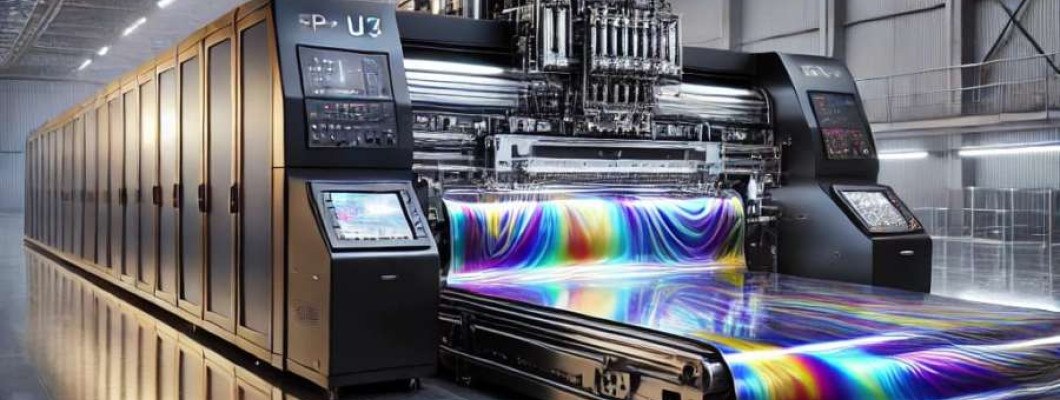
The Industrial Reality of Investing in A3 Spot UV Printing Technology
In industrial printing environments where precision and throughput dictate profitability, the divide between entry-level DIY UV coating printers and full-fledged industrial-grade A3 Spot UV Printing Machines is stark. A financial controller must confront this disparity, not merely as an upfront capital expenditure but as an integrated lifecycle investment with multilayered cost implications.
Consider a medium-scale packaging production line requiring consistent spot UV coatings on substrates with frequent job changes and tight turnaround times. A DIY machine may initially present a tempting CAPEX advantage under $10,000 but can falter with lower UV intensity, limited substrate size flexibility, and inferior printhead longevity. This results in hidden costs — from frequent maintenance downtime to compromised print quality leading to higher reject rates. Industrial-grade machines command a premium, often starting at $25,000 depending on configuration, but deliver stabilized output, higher UV LED life exceeding 20,000 hours, and robust automation interfaces that significantly reduce manual intervention labor costs.
The financial controller faces the challenge of quantifying these operational nuances into depreciation schedules, maintenance budgets, and return on investment (ROI) forecasts that go beyond mere acquisition price. The ensuing sections explore these factors with rigorous technical analysis and hypothetical financial modeling to elucidate the true cost-effectiveness of investing in an industrial-grade A3 Spot UV Printing Machine UV Coating Printer.
Technical Deep-Dive into Industrial-Grade A3 Spot UV Printing Machine Components and Performance
UV LED Coating Systems and Energy Efficiency
Industrial-grade UV coating printers utilize high-intensity UV LED arrays operating at approximately 395nm with precise intensity control in the range of 2000-3000 mW/cm2. DIY counterparts often feature lower intensity LEDs around 800-1200 mW/cm2. This translates to faster cure times and improved coating hardness with industrial systems, reducing cycle time per unit by 25%-40%.
The energy consumption differential is significant. For example, a professional unit might draw 450W per curing zone, translating to 1.8 kWh over a typical 4-hour production run, compared to 900W and 3.6 kWh for a lower-grade system. Over extended production cycles, this constitutes a substantial operating cost advantage.
Printhead Precision and Spot UV Deposition Accuracy
The industrial-grade A3 Spot UV Printing Machine achieves a resolution of 1200 dpi with droplet sizes around 5-7 picoliters, essential for micron-level spot UV placement. This contrasts with DIY units, which average 600-900 dpi and droplet volumes upwards of 10 pl, resulting in less sharp edges and inconsistent coating thickness.
Hardware enhancements such as vibration damping mounts and precision linear rails ensure positional repeatability of ±0.01 mm in industrial models, compared to ±0.05 mm variance in DIY units. The difference directly impacts product aesthetic quality and rejection rates.
Substrate Handling and Automation Integration
Industrial units support substrates up to 320 mm x 450 mm with automated feed and alignment systems compatible with conveyor integration. This minimizes manual setup time, reduces human error, and supports higher throughput. DIY models typically restrict maximum substrate sizes near 300 mm square and rely on manual feeding mechanisms, limiting scaling potential.
Maintenance, Longevity, and Depreciation Modeling
The maintenance cycle of industrial UV printers centers on modular printhead cartridges rated for 2,000+ operational hours and replaceable UV LED modules each rated for 20,000 hours, significantly curtailing downtime. DIY variants see printhead degradation as early as 500 hours with UV LEDs requiring replacement at 7,000 hours.
Depreciation schedules for industrial machines favor a longer useful life span of 7 years versus 3-4 years for DIY units, spreading CAPEX impact and improving annualized cost efficiency. Including maintenance labor and consumables amplifies this gap.
Financial Modeling of Operational Costs and ROI
| Metric | Industrial-Grade A3 Spot UV Printer | DIY Spot UV Printer |
|---|---|---|
| Acquisition Cost (USD) | $25,000 | $9,500 |
| Average Print Cycle Time (seconds per unit) | 15 | 25 |
| UV LED Lifespan (hours) | 20,000 | 7,000 |
| Printhead Replacement Interval (hours) | 2,000 | 500 |
| Energy Consumption (kWh/4hr run) | 1.8 | 3.6 |
| Annual Maintenance Cost | $1,200 | $3,500 |
| Depreciation Term (years) | 7 | 4 |
Modeling a high-volume print environment at 8 hours per day, 250 days per year, the industrial model not only reduces direct operating expenses but enables sustained higher throughput and asset longevity, significantly improving net ROI.
Scenario Analysis of Business Use-Cases Influenced by Machine Specifications
Use-Case One: High-Volume Packaging Print Shop
For a packaging print shop processing 15,000 sheets monthly, the industrial-grade machine's faster print cycles and automated substrate handling minimize labor costs and maximize throughput. The consistent curing ensures product durability and reduces rework. The printhead and LED longevity reduce downtime, critical for maintaining tight delivery schedules.
Use-Case Two: Boutique Label Manufacturer
This scenario values precision and substrate versatility. The industrial A3 Spot UV Printing Machine’s micron-level spot UV placement elevates visual quality, enabling differentiation in a competitive artisan market. Despite lower monthly volumes, the asset longevity and reduced maintenance needs justify the investment through improved client satisfaction and repeat orders.
Use-Case Three: In-House Marketing Department with Limited Print Runs
For internal marketing teams producing limited-run collateral, the DIY option may seem favorable due to upfront cost. However, the higher maintenance frequency and poorer curing affect brand image quality and cause scheduling delays. The industrial-grade machine’s reliability and speed reduce hidden operational inefficiencies and improve campaign timing adherence.
Expert FAQ on Industrial A3 Spot UV Printing Machine Operational Specifics
What factors most significantly extend the printhead lifespan?
Temperature-controlled environments, regular printhead nozzle cleaning cycles using ultrasonic baths, and optimized ink viscosity reduce clogging and mechanical wear, potentially extending printhead life beyond nominal 2,000 hours.
How does UV LED wavelength variability affect coating quality?
UV LED wavelength must tightly cluster around 395 nm to ensure uniform photopolymerization. Deviations beyond ±5 nm reduce curing efficiency, impacting hardness and adhesion uniformity.
What is the role of substrate surface energy in spot UV adhesion?
Higher surface energy substrates promote better wetting and bonding of UV coatings. Pre-treatment with plasma or corona discharge increases surface energy, improving coating uniformity and durability.
Can the machine handle variable substrate thickness and material types without recalibration?
Industrial models incorporate auto-sensing and adjust curing parameters dynamically for substrates ranging from 150 gsm paper to 1 mm plastic boards, maintaining consistent quality without operator intervention.
What safety mechanisms are integrated to comply with environmental and operator regulations?
Enclosed UV curing zones with interlocked safety doors, filtered exhaust systems to manage VOC emissions, and real-time temperature monitoring ensure compliance with industrial safety and environmental standards.
Strategic Verdict and Recommendation for Industrial-Grade UV Coating Solutions
The A3 Spot UV Printing Machine UV Coating Printer represents a distinct industrial-grade leap forward compared to DIY equivalents, delivering measurable financial advantages through extended asset longevity, reduced downtime, and improved energy efficiency. From a financial controller’s perspective, the total cost of ownership over a 7-year horizon demonstrates superior ROI despite higher initial CAPEX.
Its integration capabilities, robust materials handling, and precision curing align well with scalable business requirements, mitigating operational bottlenecks and safeguarding product quality. For enterprises seeking a dependable, high-throughput spot UV solution with predictable maintenance cycles and optimized lifecycle costs, the industrial-grade A3 Spot UV Printing Machine UV Coating Printer stands as the definitive recommendation. It balances engineered reliability and financial prudence crucial for long-term industrial production success.