
The Gap Between DIY and Industrial-Grade A3 Spot UV Printing Solutions for Scalable Businesses
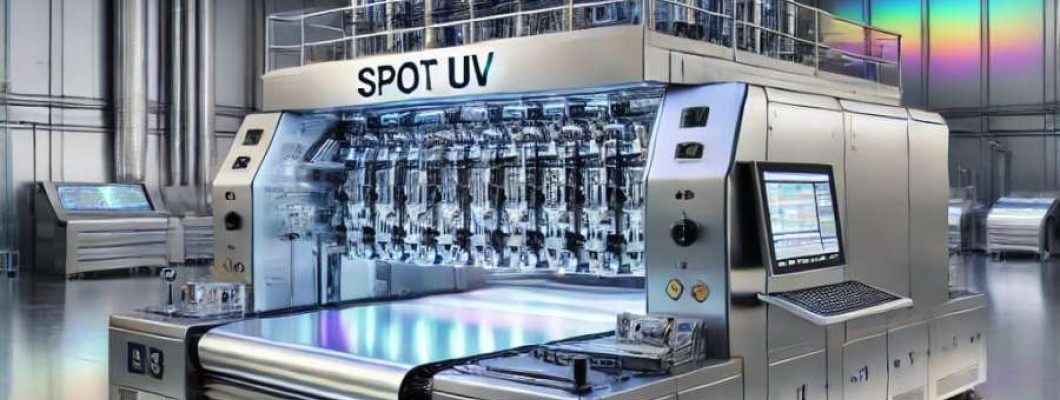
The Industrial Reality of Scaling Spot UV Printing
In the competitive printing industry, transitioning from small-scale, do-it-yourself (DIY) spot UV techniques to industrial-grade solutions presents concrete technical challenges. An A3 Spot UV Printing Machine designed for UV coating must contend with throughput demands, automation complexity, labor cost optimization, and substrate handling precision not typically encountered in casual or artisanal operations.
Consider a mid-sized print shop aiming to scale production of high-gloss UV coating embellishments on brochures, packaging, or promotional materials up to A3 size (297mm x 420mm). The primary bottlenecks arise from inefficient substrate feeding, limited curing system output, and frequent downtime caused by manual adjustments to coating thickness. Unlike manual spot UV varnishing, which has unpredictable layer uniformity and throughput limitations under 100 sheets/hour, industrial-grade UV coating printers must sustain continuous runs exceeding 300 sheets/hour while maintaining micron-level coating precision and avoiding bottlenecks that raise labor touchpoints.
Moreover, the thermal management of UV LEDs or UV lamps within the printer chassis under constant operation becomes critical to avoid instability in coating viscosity and curing polymerization rates. Without industrial cooling solutions, printhead or lamp overheating could induce variable coating thickness, delayed curing, and ultimately, higher reject rates with non-uniform gloss finish.
Human factors also play a decisive role. Labor-intensive machine setups and calibrations lead to longer downtime windows and operator fatigue, reducing overall equipment effectiveness (OEE). An industrial-grade A3 Spot UV Printing Machine that automates substrate registration, coating thickness calibration, and curing exposure time adjustment is essential to close the gap between DIY and scalable production environments.
Technical Deep-Dive on Scaling the A3 Spot UV Printing Machine
1. Throughput and Automation Versus Manual Setup
DIY spot UV methods typically achieve throughput rates below 100 sheets/hour due to manual varnish application, imprecise curing control, and substrate handling. In contrast, industrial spot UV printers prioritize automated feeding systems capable of handling stacks of 500+ sheets with servo-driven transport mechanisms. The transition from batch to continuous mode is critical for increasing overall throughput. For instance, a servo feeder with a speed of 5m/min on a 420mm wide substrate yields an estimated throughput of approximately 357 sheets/hour:
Throughput (sheets/hour) = (Speed m/min / Sheet length m) x 60
= (5 / 0.297) x 60 ≈ 357 sheets/hour
2. UV Coating Thickness Control and Sensor Feedback
Industrial-grade machines integrate optical or ultrasonic thickness sensors providing real-time feedback to PID controllers adjusting micro-pump dispensing rates or roller pressure. Precise control ensures consistent coating layer thickness in the range of 10-20 microns, critical for gloss uniformity and adhesion. DIY methods rarely measure coating thickness, resulting in 30%+ variability and inconsistent finish quality.
3. Thermal Management for UV Light Sources
Spot UV machines employ either UV LED arrays or traditional mercury lamps. LEDs provide rapid on/off cycling and longer lifespan but require active liquid or forced-air cooling to maintain operating temperature below 45°C to prevent polymerization rate reduction. Industrial machines typically consume 150-300 Watts per curing head with dedicated heat sinks and cooling circuits. The A3 Spot UV Printing Machine's ability to maintain stable curing temperatures ensures consistent cross-linking, critical for adhesion and resistance properties.
4. Substrate Size and Registration Accuracy
A3 substrates present a challenge due to their larger area, demanding mechanical accuracy better than ±0.1mm for spot UV registration to avoid misalignment or halo effects. Industrial printers use vacuum belt feeders, precision encoders, and servo drives to hold registration within strict tolerances. Manual or semi-automated setups have registration errors upwards of ±0.5mm.
5. Comparative Analysis Table of DIY Versus Industrial-Grade A3 Spot UV Printing
| Feature | DIY Spot UV | Industrial A3 Spot UV Printing Machine |
|---|---|---|
| Throughput (sheets/hour) | <100 | 350-400+ |
| Coating Thickness Control (microns) | ±10-15 (uncontrolled) | ±2-3 (sensor feedback) |
| UV Light Source | Mercury lamp, no cooling | UV LED with active cooling, 150-300W |
| Registration Accuracy (mm) | ±0.5 or greater | ±0.1 |
| Substrate Handling | Manual feeding | Servo-driven vacuum belt feeder |
| Automation Level | Low | High (computer controlled) |
Scenario Analysis With A3 Spot UV Printing in Scalable Businesses
Scenario 1 Industrial Packaging Printer
For packaging companies producing custom boxes and sleeves, the ability to coat 350 sheets per hour with micro-thin consistent spot UV layers provides a competitive advantage in turnaround time and finish quality. The precise registration capability supports complex designs requiring multiple layers of coating. The operational automation reduces labor needs by 40%, improving margins despite higher initial capital expenditure.
Scenario 2 Promotional Materials for Marketing Agencies
Marketing agencies requiring rapid prototyping and fast batch runs benefit from the machine's flexible substrate handling and quick job changeover capability. Accurate coating thickness control ensures premium gloss finish that enhances perceived brand value. Controlled curing reduces rejects and rework, critical for meeting tight deadlines.
Scenario 3 Print Shops Serving Mixed Media Clients
Print shops with widely varying jobs benefit from the industrial-grade machine’s capability to handle diverse substrates including coated paper, cardboard, and synthetic sheets up to A3 size. The automated calibration system shortens setup times, enabling profitable short runs while maintaining industrial quality standards typical of larger operations.
Expert FAQ on Industrial A3 Spot UV Printing Technology
Q1 What are the critical failure points in high-throughput UV coating machines?
Key failure points include UV lamp overheating, substrate feeding jams due to static build-up, sensor miscalibration leading to coating thickness deviations, and roller bearing wear causing registration drift. Preventative maintenance on cooling systems and sensor recalibration every 1000 operating hours is recommended.
Q2 How does the coating viscosity affect print quality and machine performance?
Coating viscosity influences flow dynamics and curing uniformity; viscosity that is too low results in excessive spreading and uneven layers, while viscosity that is too high causes poor adhesion and potential roller clogging. Maintaining coating viscosity between 200-300 cP at 25°C is optimal for achieving uniform 10-20 micron layers.
Q3 Can the A3 Spot UV Printing Machine accommodate custom coating patterns?
Yes, supported by digitally controlled micro-valves and pattern control software, the machine can apply spot UV in complex shapes and variable thicknesses, enabling creative finishes and functional coatings such as tactile effects.
Q4 What are the maintenance requirements for the UV LED curing system?
LED arrays require cleaning to prevent dust accumulation, periodic thermal interface material replacement, and electronic driver firmware updates. Typical lifespan exceeds 10,000 hours, significantly reducing downtime compared to mercury lamps.
Q5 How does the machine manage environmental compliance related to UV emissions?
Industrial machines utilize enclosed curing chambers with UV-blocking materials and exhaust ventilation to capture ozone and VOC emitted during curing, ensuring operator safety and compliance with OSHA and local regulations.
Strategic Verdict and Recommendation for Scalable Businesses
The A3 Spot UV Printing Machine UV Coating Printer stands as a definitive solution to bridge the operational and quality gap between low-volume DIY spot UV methods and the demands of scalable, industrial-grade print production. Its automation, precise control over coating thickness and substrate registration, robust thermal management, and flexibility in substrate handling equip scalable businesses with a capable tool to increase throughput while reducing labor costs.
For businesses targeting sustainable growth in the spot UV finishing market, this machine reduces downtime through predictive maintenance capabilities and raises finished product quality to enterprise standards. The integration of this machine facilitates a predictable return on investment by optimizing operational expense relative to throughput gains.
Detailed technical specifications and purchase inquiries can be found by visiting the official product site: A3 Spot UV Printing Machine UV Coating Printer. This solution represents a reliable infrastructure upgrade for scalable business owners committed to high-precision, high-output UV coating production.