
The Gap Between DIY and Industrial-Grade A3 UV Varnish DTF Label Printing Machines Explored for Scalable Business Owners
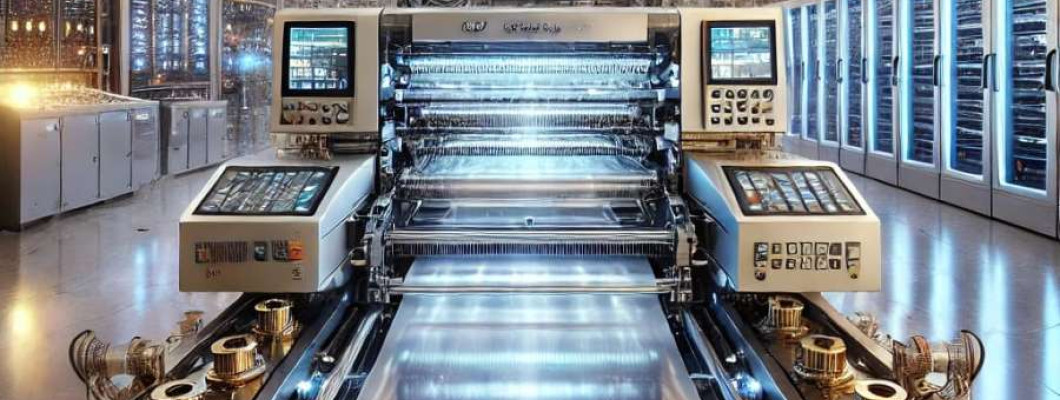
The Industrial Reality of Scaling Label Printing with A3 UV Varnish DTF Technology
Label printing, particularly when scaling production from boutique to industrial levels, presents numerous technical challenges that often go unnoticed until bottlenecks emerge. For a scalable business owner, shifting from desktop or semi-professional DIY printers to industrial-grade machinery such as the A3 UV Varnish DTF Printer Machine Label Printer introduces a critical transition point where throughput demands, material handling, and operational consistency intersect.
Labor costs, cycle time per print, downtime due to maintenance, and substrate versatility become more than just operational considerations—they dictate the business’s ability to compete and scale effectively. Reliance on lower-end or DIY-grade printers typically results in increased manual intervention to adjust settings for different media, limited color and varnish precision, and frequent maintenance interruptions, all of which directly reduce output capacity. The industrial printing environment demands equipment that can reliably meet high volumes with minimal quality degradation while integrating efficiently into existing workflows.
The introduction of UV varnishing combined with direct-to-film (DTF) printing technology allows enhanced durability and aesthetic finishing, critical for premium product labeling. However, this technology requires precise thermal and curing management to prevent substrate warping and maintain micron-level registration accuracy—challenges often underestimated in less robust equipment. Misalignment or inconsistent varnish layering can cause product rejections and increase waste, directly impacting profitability.
Simultaneously, the shift to industrial-scale demands greater attention to asset depreciation, maintenance scheduling, and lifecycle operational costs—factors where DIY machines commonly fall short. This makes the choice of a scalable, industrial-grade A3 UV Varnish DTF printer vital not just for throughput but also for operational economics.
Technical Deep-Dive on Bridging DIY to Industrial Printing with the A3 UV Varnish DTF Printer
Print Engine and Resolution Capabilities
The A3 UV Varnish DTF Printer typically supports print resolutions in the range of 600 to 1200 dpi, providing sharp, high-fidelity output critical for detailed label graphics. Compared to DIY printers limited to 300–600 dpi, this doubling of resolution allows finer halftoning and smoother gradients, essential for premium packaging applications.
Printhead technology often utilizes piezoelectric drop-on-demand nozzles with droplet volumes between 3 to 6 picoliters. Smaller droplet sizes correlate directly to higher defect control and reduced dot gain, enhancing micron-level precision. The hardware architecture integrates inline UV LED curing modules, calibrated for uniform intensity (typically 100–150 mW/cm2) across the platen width to ensure instantaneous varnish polymerization, minimizing smear and drying delays.
Substrate Handling Systems
Substrate versatility is enabled through advanced media feed mechanisms with programmable tension control, accommodating films from 80 to 350 microns thickness. This range supports flexible packaging films, synthetic labels, and coated papers. The transport system employs servo motors with positional accuracy within 0.05 mm per pass, crucial for maintaining registration between successive varnish and color layers.
UV Varnishing Control and Accuracy
Varnish application employs digitally controlled piezo nozzles capable of variable coating thicknesses between 2 and 10 microns. Combined with precise curing timing, this produces a consistent gloss or matte finish. Heat management strategies include active platen cooling and modulated curing duty cycles to prevent substrate deformation, a challenge prevalent in lower-tier systems lacking thermal regulation.
Operational Throughput and Automation
Standard cycle time per A3 sheet typically ranges between 60 and 90 seconds, depending on resolution and varnish density. Automation features such as batch queueing, remote monitoring via Ethernet-connected control panels, and automated nozzle cleaning reduce labor intervention and increase uptime. Compared to DIY counterparts with manual settings and minimal automation, these features translate to a 30–50% increase in effective throughput and a substantial reduction in operator fatigue.
Maintenance and Lifecycle Considerations
Daily maintenance routines include automated printhead purging, varnish reservoir inspection, and UV LED module status diagnostics. The modular design facilitates rapid replacement of wear components, reducing downtime to under 15 minutes per intervention. Expected mean time between failures (MTBF) for critical components such as printheads and curing units is approximately 2000 operating hours, a significant improvement over DIY models with MTBFs under 1000 hours. Depreciation modeling suggests an operational lifespan of 5–7 years with proper preventive maintenance.
| Specification | DIY Printer Typical | A3 UV Varnish DTF Industrial Printer |
|---|---|---|
| Max Resolution | 300-600 dpi | 600-1200 dpi |
| Droplet Volume | 8-12 pl | 3-6 pl |
| Substrate Thickness Range | 60-150 microns | 80-350 microns |
| UV Curing Intensity | Not available/Manual | 100-150 mW/cm2 |
| Cycle Time per A3 Sheet | 2-3 minutes | 60-90 seconds |
| Mean Time Between Failures | Below 1000 hours | ~2000 hours |
| Automation Features | Manual controls | Batch queueing, remote monitoring |
Scenario Analysis Illustrates Real-World Impact of Advanced UV Varnish DTF Printing
Scenario 1: Mid-Sized Label Manufacturer Scaling Production
A label manufacturer transitioning from small-run orders to large batches finds that manual media adjustments and slow drying cause production delays. Leveraging the A3 UV Varnish DTF Printer’s automated tension controls and rapid UV curing reduces setup time by 40%, enabling a shift to fully automated batch printing. Reduced substrate waste and consistent varnish finish improve customer satisfaction through better durability and visual appeal.
Scenario 2: Consumer Goods Brand Enhancing Packaging With Premium Effects
A consumer brand seeking to enhance shelf impact uses the printer’s high resolution (up to 1200 dpi) and precise varnish layering (2–10 microns) to create tactile gloss effects on labels. The micron-level registration precision ensures no misalignment between color and varnish layers, critical for maintaining brand integrity in mass production. Faster cycle times enable doubling of daily output without increasing labor.
Scenario 3: Contract Printer Integrating Multiple Substrate Types
A contract printing service handling varied substrates from synthetic films to coated papers benefits from the printer’s adaptable feed system and broad substrate thickness range. Servo-controlled substrate handling reduces misfeeds and print defects. The modular maintenance design allows quick turnaround between jobs, minimizing downtime and maximizing machine utilization in a multi-job workflow.
Expert FAQ Answers Key Industrial-Grade UV Varnish DTF Technical Inquiries
1. How does droplet size variation affect print durability and detail?
Smaller droplets (3-6 pl) reduce dot gain and allow sharper edges in printed graphics, which is critical for fine text and detailed images on labels. This precision also reduces ink and varnish overlap inconsistencies, improving abrasion resistance and longevity of the finish.
2. What thermal management techniques prevent substrate warping during UV curing?
Active platen cooling via integrated heat sinks combined with modulated UV LED pulsing prevents heat accumulation. This balances polymerization speed with substrate temperature, crucial for maintaining dimensional stability especially on thin or heat-sensitive films.
3. How are maintenance intervals optimized to reduce downtime?
Automated printhead purging and varnish residue monitoring enable predictive maintenance rather than reactive, allowing scheduled interventions before print defects occur. Quick-release modules further shorten component replacement time.
4. Can this printer accommodate both matte and gloss varnish finishes in a single run?
Yes, digital control of varnish deposition thickness and selective curing allows variable finish application within the same print job. This facilitates complex designs with mixed finishes, enhancing packaging aesthetics without manual finishing post-print.
5. How does the machine integrate with existing enterprise production lines?
Equipped with Ethernet and optional industrial protocol support (e.g., OPC UA), the A3 UV Varnish DTF Printer can be integrated into automated workflows with centralized job management, reducing human error and providing real-time production analytics.
Strategic Verdict and Recommendation for Enterprise Adoption
Industrial-scale label printing demands equipment that transcends the limitations of DIY or semi-professional machines, especially when throughput, substrate diversity, and finish quality are non-negotiable. The A3 UV Varnish DTF Printer Machine Label Printer offers a robust solution calibrated for these challenges, featuring advanced UV varnishing, precise media handling, and automation designed to optimize operational efficiency and output consistency.
For the scalable business owner, the capital investment in this technology is balanced by significantly reduced operational bottlenecks and lower labor overhead through automation. Maintenance regimes and hardware longevity further support a strong ROI profile, with minimized downtime and predictable lifecycle costs. Its ability to deliver micron-level precision and consistent finishes across a wide range of substrates ensures competitiveness in high-end labeling markets.
In conclusion, this product represents a definitive step up to industrial-grade reliability and productivity. The detailed specifications and operational advantages warrant its adoption for businesses aiming to scale effectively without compromising quality. For more technical details and acquisition options, review the full specifications and resources at the A3 UV Varnish DTF Printer Machine Label Printer product page.