
The Gap Between DIY and Industrial-Grade A3 UV Varnish DTF Printer Machine Label Printer Analyzed for the Scalable Business Owner
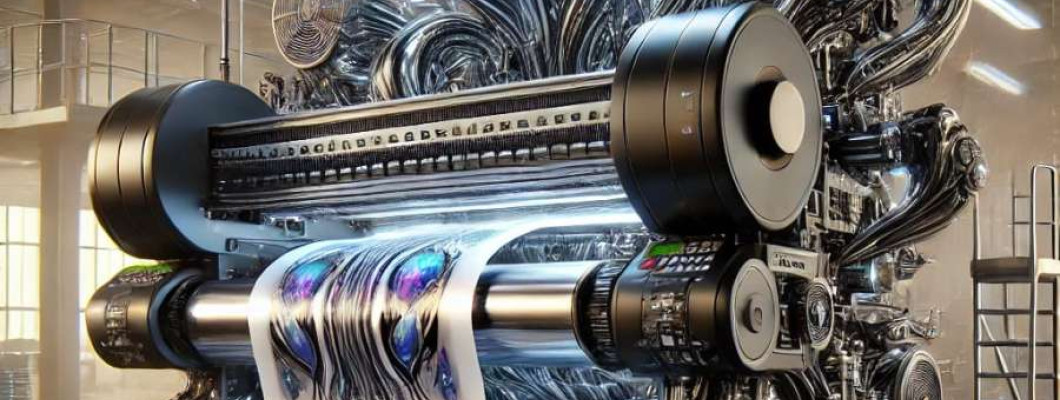
The Industrial Reality of Scaling Label Production with the A3 UV Varnish DTF Printer Machine
In the realm of label printing, moving from small-scale DIY solutions to industrial-grade output demands a shift in technical rigor and operational efficiency. Consider a mid-sized manufacturing enterprise aiming to scale label production for packaging compliance and marketing differentiation. The challenge pivots on maintaining consistent print quality, throughput, and minimization of downtime, all while controlling labor and consumable costs.
Standard desktop DTF (Direct to Film) printers often falter when subjected to prolonged runs due to their limited printhead robustness and lack of integrated UV varnish capabilities. These printers produce less durable labels that often require secondary finishing steps, increasing manual labor and process complexity. Furthermore, print resolution and varnish placement precision suffer, which is critical for brand compliance and consumer appeal.
The A3 UV Varnish DTF Printer Machine Label Printer addresses these challenges with a platform designed around industrial continuity. Its dual functionality – DTF printing combined with UV varnish application – enables single-pass finishing, drastically reducing turnaround times and minimizing human intervention. This integration directly impacts labor cost reduction and process streamlining, essential metrics for scalable businesses.
However, the transition is not without technical challenges. The interplay between UV curing intensity, printhead thermal management, and substrate variability creates potential bottlenecks. Effective integration into existing production lines also requires consideration of infrastructure compatibility and maintenance workflows.
Technical Deep-Dive Into the Industrial-Grade Capabilities
Printhead Architecture and Throughput
The A3 UV Varnish DTF Printer employs piezoelectric printheads designed for extended duty cycles. With nozzle diameters calibrated to 6 pl droplet size and an operational dpi range up to 1440 x 1440, it balances fine detail rendering with high throughput capabilities approximately 1.2 m2/hour on standard PET film substrates.
Hypothetically, assuming a continuous 8-hour shift at nominal speed, the printer can output up to 9.6 m2/day. This performance outclasses typical consumer-grade DTF printers by nearly 4x, primarily due to more resilient piezo elements and precision ink ejection electronics that reduce nozzle clogging.
UV Varnish Module and Curing Dynamics
The integrated UV varnish system applies a uniform protective layer synchronously with the ink deposition. UV LED lamps with peak irradiance around 1500 mW/cm2 ensure rapid curing within milliseconds, preventing ink bleeding and substrate distortion.
Calculating energy consumption, the UV lamps draw approximately 120 Watts each; combined with the printhead electronics (~80 Watts), total peak power consumption peaks at 200 Watts during active cycles. Thermal dissipation is managed via an active cooling system incorporating heat sinks and variable-speed fans to maintain optimum operating temperature between 20-30 °C, which is critical to maintaining ink viscosity and preventing premature nozzle drying.
Substrate Versatility and Handling Precision
The system supports a substrate thickness range of 75–250 microns, accommodating films, coated papers, and synthetics. An advanced feed mechanism stabilizes the film during printing, reducing dimensional drift to less than 0.1 mm over the length of an A3 sheet (297 mm x 420 mm). This precision is vital for multicolor registration and varnish overlay alignment.
Comparative Lifecycle and Maintenance Analysis
Industrial DTF printers typically face nozzle degradation and UV lamp life decay. The A3 unit features modular components enabling replacement without full downtime. Nozzle replacement intervals average 1000 operational hours, while UV LEDs are rated for 10,000 hours.
The following table compares typical maintenance cycles and asset longevity against standard DIY-grade DTF printers:
| Specification | A3 UV Varnish DTF Printer | Standard DIY DTF Printer |
|---|---|---|
| Nozzle Replacement Interval | 1000 operational hours | 300 operational hours |
| UV Lamp Life | 10,000 hours (LED) | 3,000 hours (Mercury Vapor) |
| Throughput (m2/hour) | 1.2 | 0.3 |
| Substrate Handling Tolerance | <0.1 mm drift per A3 sheet | ~1 mm drift |
| Power Consumption (Peak) | 200 Watts | 150 Watts |
Infrastructure Integration Challenges
The industrial-grade design requires stable power input with surge protection and ambient temperature control within printing environments. The footprint (approximately 1.2 m x 0.6 m x 0.7 m) fits on standard production benches but necessitates controlled airflow to avoid particulate contamination affecting print quality and UV curing efficacy. Integration with enterprise print workflow solutions may require custom drivers or middleware compatibility checks.
Scenario Analysis of Business Use-Cases
Scenario One - Fast-Moving Consumer Goods Packaging
A beverage company needs scalable label production with high durability against moisture and abrasion. The single-pass varnish application reduces process steps, cuts labor costs by 35%, and delivers UV-cured labels resistant to handling damage. High throughput supports large daily batch sizes, meeting just-in-time logistics demands.
Scenario Two - Small Batch Customized Labels for Artisanal Products
The printer’s high resolution and precise varnish application benefit artisanal producers requiring variable data printing and glossy finishes. This flexibility supports short runs without compromising color fidelity or protective qualities, enabling premium shelf presence and consumer appeal.
Scenario Three - Industrial Parts Identification Labels
Industrial OEMs printing barcoded labels on synthetic films require robust adhesion and scratch resistance. The unit’s controlled curing and tight substrate tolerance ensure barcode legibility and durability under harsh conditions, improving inventory tracking accuracy and reducing field failures.
Expert FAQ
Q1: How does UV varnish application affect printhead wear?
A1: Because the varnish is applied in a separate, synchronized pass with dedicated nozzles, printhead wear is minimized compared to systems that mix varnish in ink channels. This separation extends printhead life by reducing contamination risks.
Q2: What thermal management strategies prevent nozzle clogging?
A2: The printer deploys active cooling with precise temperature feedback loops maintaining ink viscosity and preventing ink drying at the nozzle plate, critical for continuous operation during long shifts.
Q3: Can the system handle non-flat or textured substrates?
A3: While designed for flat substrates, minor surface irregularities under 0.2 mm are tolerable due to adaptive head height control, but highly textured materials may result in inconsistent varnish coverage.
Q4: What downtime is expected for routine maintenance?
A4: Scheduled nozzle replacements and UV lamp swaps can be conducted within 30 minutes, facilitated by modular components, minimizing operational disruption.
Q5: How energy efficient is the combined UV varnish and DTF printing process?
A5: The LED UV lamps consume less power than traditional mercury vapor lamps, and the simultaneous print-then-cure cycle reduces total operational run time, thus lowering total energy consumption per label produced.
Strategic Verdict and Recommendation
The A3 UV Varnish DTF Printer Machine Label Printer distinctly bridges the gap between consumer-grade and industrial-grade printing solutions. Its advanced printhead technology combined with integrated UV varnish application enables scalable, high-quality label production with reduced operational overhead. The system’s throughput, maintenance cycle improvements, and substrate precision support scalable business models seeking robust, automated solutions.
For scalable business owners prioritizing throughput, labor efficiency, and product durability, the A3 UV Varnish DTF Printer Machine Label Printer stands as a technically disciplined and commercially viable investment. Its blend of hardware durability, process integration, and optimized energy consumption forecast a favorable total cost of ownership within industrial print workflows.