
The Gap Between DIY and Industrial-Grade A3 UV Varnish DTF Printer Machine Label Printer for Scalable Business Owners
The Industrial Reality of Transitioning from DIY to Industrial-Grade Printing
The challenge of scaling printing operations from small, manual setups to a fully automated industrial-grade environment is substantial. In the context of label printing, especially using Direct to Film (DTF) technologies combined with UV varnish finishing at A3 size, the technical and operational demands escalate rapidly. Many businesses initially rely on DIY or semi-professional printers which lack the throughput, precision, and automation necessary for scalable throughput, increasing labor overhead and introducing quality variability. The mechanical robustness and print consistency required at industrial scale expose hidden bottlenecks such as inconsistent varnish curing, substrate handling errors, and frequent downtime due to maintenance complexity. High labor dependency impairs cost competitiveness. Conventional UV printers often struggle to balance high-speed output without degrading micron-level precision or substrate versatility, which is critical to diverse label production. This gap results in a growth ceiling for many print service providers.
Scalable business owners must consider operational continuity where equipment interfaces seamlessly with automated material feeders, supervisory control systems, and post-processing stages. A pivotal technical challenge is the integration of UV varnish curing with DTF printing without compromising the substrate's dimensional stability or causing head clogging that plagues DIY machines. Furthermore, the ability to handle varied label substrates—from matte films to high-gloss synthetics—requires precise control over ink deposition and varnish thickness, which directly influences product durability and tactile quality.
Ultimately, bridging the gap demands an industrial-grade printer that can sustain high-volume runs exceeding 500 prints per shift with an uptime exceeding 90%. This requirement demands a sturdy mechanical framework, industrial-grade stepper motors or servo systems with precision feedback, and an embedded control system permitting real-time diagnostics and predictive maintenance alerts. The A3 UV Varnish DTF Printer Machine Label Printer addresses these challenges by focusing on automation, robust print engine design, and advanced curing technology.
Technical Deep Dive into the A3 UV Varnish DTF Printer Capabilities
Printhead and Ink Chemistry Interaction
The A3 UV Varnish DTF Printer employs piezoelectric printheads with droplet volumes adjustable between 4 and 10 picoliters, enabling micro-scale precision critical for fine label details. UV-curable inks formulated for DTF are optimized to polymerize rapidly upon UV exposure, mitigating ink spread and ensuring edge sharpness near 720 dpi horizontal resolution. The varnish layer applies a controlled thickness between 2 to 5 microns, enhancing abrasion resistance without compromising flexibility. The integration of UV LED curing units positioned immediately post-print prevents ink droplet coalescence, a common print defect in slower curing systems, thus maintaining micron-level registration crucial for multi-layer label prints.
Mechanical Architecture and Substrate Handling
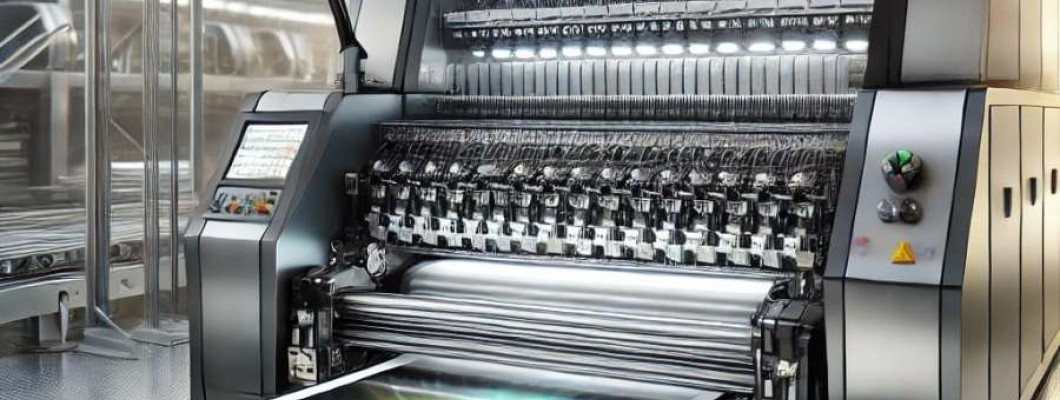
The printer chassis utilizes precision linear guides with minimum backlash (<0.02 mm), driven by closed-loop servo motors featuring optical encoders at 5000 pulses per revolution. This ensures positional accuracy within 15 micrometers, essential for registration alignment during multi-pass varnish applications. The substrate transport system integrates vacuum belts with adjustable tensioning, accommodating material thicknesses from 80 to 300 microns. This enables consistent feeding of various flexible films and synthetic substrates without slippage or skewing, a recurrent issue in lower-grade equipment. The dual-roll system supports continuous feeding, reducing manual labor and increasing throughput efficiency.
UV Varnish Curing System and Thermal Management
The UV LED array outputs a tightly controlled spectrum at 395 nm with adjustable irradiance up to 1500 mW/cm2. This intensity balance prevents substrate overheating, crucial for heat-sensitive films. The system incorporates an active cooling module combining Peltier elements and heat sinks to maintain printhead temperature below 40°C during extended runs. Thermal sensors continuously monitor the curing zone, feeding back to a controller that modulates LED power dynamically, preserving varnish polymerization quality while extending component lifespan.
Control Electronics and Software Integration
The embedded controller operates on a real-time OS with 32-bit ARM Cortex-M7 microprocessor processing print commands at 300 MHz. It features dual-channel communication for printhead drive and UV curing synchronization, reducing cycle latency below 5 ms. The printer supports industry-standard RIP software and can integrate via Ethernet or USB for remote monitoring and job scheduling—ideal for scaled operations with automated workflow. Diagnostic protocols provide predictive maintenance warnings based on motor current analytics, varnish pump pressure, and UV LED runtime counters.
Comparing Industrial and Semi-Professional Paths
| Feature | DIY/Semi-Professional Printers | A3 UV Varnish DTF Printer Machine Label Printer |
|---|---|---|
| Print Resolution | Up to 540 dpi, variable droplet size | 720 dpi, 4-10 pl droplet size with precision calibration |
| Substrate Thickness Range | 50 - 150 microns, manual feeding | 80 - 300 microns, vacuum belt automated feeding |
| UV Curing System | Broad spectrum UV bulb, inconsistent intensity | 395nm LED array with dynamic irradiance control |
| Throughput per Shift | 100 - 200 prints, frequent downtime | 500+ prints, >90% uptime |
| Maintenance | Manual cleaning, no predictive alerts | Automated diagnostics, predictive maintenance alerts |
| Automation Level | Manual roll feeding and output | Dual-roll automated feeding and take-up |
Scenario Analysis for Scalable Business Owners
Scenario 1: High-Volume Label Production for FMCG Packaging
The requirement is rapid turnaround of 1000+ labels daily with consistent quality on synthetic matte substrates. The A3 UV Varnish DTF Printer’s automated feeding, rapid UV curing, and micron-level print precision minimize downtime and rework rates below 3%, reducing labor costs traditionally spent on manual inspections and corrections. The wide substrate range accommodates packaging variations without operational adjustments.
Scenario 2: Short-Run Custom Label Jobs with Variable Data
Brands demanding frequent variable data application require flexibility without compromising speed. The printer’s real-time control and software integration allow swift job changes with negligible reconfiguration time. UV varnish enhances label durability, critical for small batch premium products, ensuring industrial-grade quality at short run economics.
Scenario 3: Integration into Fully Automated Packaging Lines
For businesses seeking to embed printing within continuous packaging workflows, the printer’s networked control and dual-roll automated input/output facilitate line synchronization. Its thermal management ensures no overheating under continuous operation, preserving uptime and preventing production halts due to hardware failure, essential for meeting just-in-time delivery commitments.
Expert FAQ
Q1: How does the varnish layer thickness affect label flexibility on films below 100 microns?
A1: Varnish layers exceeding 5 microns can reduce flexibility, leading to cracking during label application. The A3 UV Varnish DTF Printer’s varnish application precision ensures layer thickness stays between 2-5 microns, preserving substrate flexibility and preventing delamination.
Q2: What maintenance strategies extend printhead lifespan given UV ink chemistry?
A2: Scheduled purge cycles combined with real-time nozzle health monitoring reduce clogging risk. The printer’s closed-loop pressure regulation and ink recirculation minimize sedimentation and UV ink polymerization within nozzles, extending operational longevity beyond 2000 running hours between cleanings.
Q3: Can the printer handle unsupported flexible substrates with no carrier films?
A3: Yes, the vacuum belt transport system dynamically adjusts to substrate stiffness, preventing distortion. However, extremely thin films (<80 microns) may require additional carrier layers for optimal feed consistency.
Q4: How does thermal management impact printing speed limits?
A4: Effective dissipation of heat from the printhead and curing zones prevents thermal drift and ink drying inconsistencies. This printer maintains stable temperatures enabling continuous operation at 20 m/min without print quality degradation.
Q5: What protocols ensure calibration stability across multi-shift operations?
A5: The printer incorporates automated calibration routines using optical sensors and reference prints every 5000 cycles. Real-time alignment correction algorithms compensate for mechanical drift, ensuring consistent color registration and varnish overlay precision.
Strategic Verdict and Recommendation
For scalable business owners seeking to transition from semi-professional or DIY printing solutions to industrial-grade operations, the A3 UV Varnish DTF Printer Machine Label Printer offers a compelling balance of throughput, precision, substrate versatility, and automation. Its technical design resolves critical industrial bottlenecks, particularly in substrate handling and UV varnish curing integration, while dramatically reducing labor overhead through automation and remote diagnostics.
The printer's robust mechanical architecture, advanced UV LED curing, and intelligent control electronics combine to deliver sustained high-quality output, making it a viable solution for businesses targeting expansion into mass market or high-mix label production. Investment in this equipment provides a quantifiable increase in uptime and print consistency, supporting a faster return on capital expenditure versus alternative semi-professional models prone to frequent failures.
In conclusion, this printer stands as a definitive industrial-grade solution that closes the productivity and quality gap faced by scalable label businesses. It is recommended for enterprises aiming to elevate their printing capabilities without sacrificing precision or increasing operational complexity.