
The Gap Between DIY and Industrial-Grade A4 Roll DTF Printer Surfaces for Scalable Business Owners
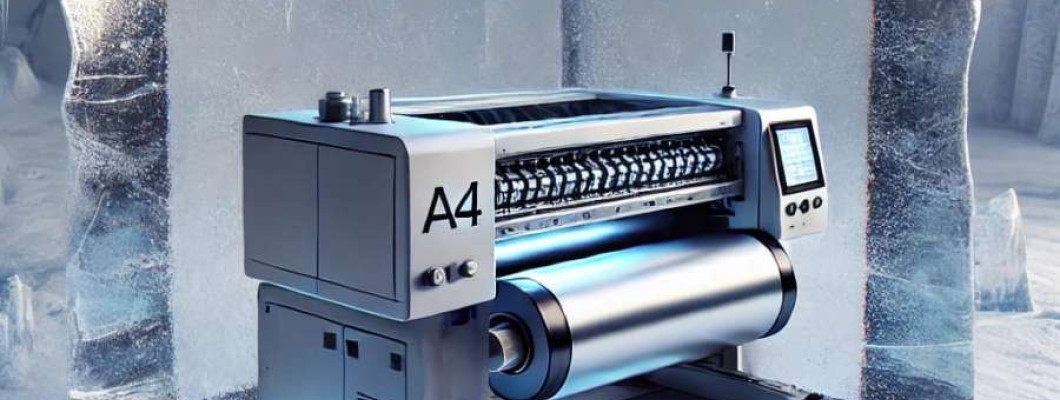
The Industrial Reality of Integrating A4 Roll DTF Printers in Scalable Businesses
Envision a mid-sized textile printing company seeking to scale operations without escalating labor costs or throughput bottlenecks. The adoption of an A4 Roll DTF (Direct to Film) printer often reveals a stark contrast between hobbyist-level devices and industrial-grade machinery designed for continuous high-volume output. The critical challenge lies in balancing print speed with quality, substrate versatility, and automated roll handling, all while maintaining manageable maintenance intervals to ensure uptime.
Industrial environments demand a printer that can operate reliably on extended shifts, handle wide substrate variety, and maintain consistent color fidelity to meet client specifications. A commonplace scenario involves rapid turnaround orders requiring micron-level print precision for complex artwork on polyester and cotton blends. Here, the printer’s ability to process continuous rolls at stable temperatures without heat-induced deformation or color drift becomes a deciding factor. Labor costs escalate when manual intervention is needed to realign rolls or recalibrate printheads frequently, highlighting the operational bottlenecks inherent in under-engineered DIY alternatives.
Moreover, printhead longevity and ink chemistry compatibility impact daily uptime and overall lifecycle costs. An A4 Roll DTF printer optimized for such production environments must integrate automated cleaning cycles and advanced ink circulation systems to prevent clogging — failures that can cascade into costly downtime.
Technical Deep-Dive into the Hardware and Operational Limits of A4 Roll DTF Printers
Printhead Technology and Resolution Precision
The typical A4 Roll DTF printer employs piezoelectric printheads calibrated for 720 to 1440 dpi output. High-end industrial models push these boundaries with adaptive waveform control for droplet size modulation ranging from 3 picoliters to 10 pl. This enables sharp edge rendering while maintaining ink consumption efficiency. Hypothetically, considering a 300 dpi baseline and a print speed of 1.5 m/min on a 210 mm width roll, throughput calculates to approximately 0.315 m2/min. Increasing resolution to 1440 dpi can reduce throughput by nearly 40% unless printheads are synchronized with rapid-fire firing frequencies (up to 14 kHz).
Ink Chemistry and Adhesion Dynamics
Industrial DTF inks differ from consumer-grade by employing advanced pigment particle stabilization and adhesive resin concentrations optimized for polyester and cotton blends. The curing process involves precise infrared or hot-air drying stages post-printing, with temperature control tightly regulated between 90–120°C to avoid substrate shrinkage. Inefficient drying cycles increase the risk of film detachment or color bleeding — a critical bottleneck in scalable workflows.
Roll Handling and Media Tension Control Mechanisms
Automated roll feeders in industrial printers utilize tension sensors and servo motors to maintain consistent substrate alignment. A poorly regulated tension can cause image skew, leading to registration errors exceeding 0.5 mm, which in high-precision graphics can render prints unusable. Comparison of low-end manual feed versus servo-controlled systems illustrates a 15-20% reduction in scrap rates with automated tension control.
Thermal Management and Power Consumption Metrics
Extended print runs generate significant heat from LED curing lamps and printhead electronics. Industrial-grade A4 Roll DTF printers incorporate heat sinks and active airflow systems to stabilize internal temperatures around 45–50°C. Excessive temperature beyond 60°C risks compromising electronic lifespan and ink viscosity, affecting droplet consistency. Average power consumption ranges from 400 W in idle modes to 2.2 kW during peak operation, necessitating industrial-grade electrical circuits to prevent performance dips.
Maintenance Cycles and Component Wear Analysis
Printhead nozzle clogging constitutes the primary failure point, accelerated by pigment sedimentation and adhesive residue build-up. Automated nozzle check and cleaning cycles every 12 hours in industrial units contrast with manual cleaning every 2-4 hours in lower-tier devices. Mean Time Between Failures (MTBF) for printheads in industrial models can reach 1000 operational hours versus 300 hours in DIY products. Consumable replacement intervals for wiper blades and capping stations factor heavily into lifecycle cost assessments.
| Specification | Industrial A4 Roll DTF Printer | DIY/Home-Grade Alternative |
|---|---|---|
| Printhead Resolution | 720–1440 dpi with droplet size control (3-10 pl) | 360–720 dpi fixed droplet size (8-12 pl) |
| Roll Handling | Servo-controlled tension system with sensors | Manual feed, no tension regulation |
| Ink Type | Stabilized industrial pigment with adhesive resin | Basic pigment inks, lower adhesion |
| Maintenance Interval | Automated cleaning every 12 hrs | Manual cleaning every 2–4 hrs |
| Power Consumption | 400 W idle, up to 2.2 kW peak | 150 W idle, up to 600 W peak |
Scenario Analysis Illustrating A4 Roll DTF Printer Impact on Scalable Business Outcomes
Scenario One: High-Volume Sportswear Production
In a business focused on polyester jerseys with sublimation-resistant DTF inks, high throughput with precise color layering is essential to meet seasonal bulk orders. An industrial A4 Roll DTF printer with automated roll feeding and rapid curing reduces production time by 30%, directly cutting labor hours and enabling just-in-time delivery.
Scenario Two: Boutique Print-On-Demand Customization
Small batch print shops demand substrate versatility, including cotton blends and synthetic fabrics. The printer’s ink adhesion dynamics and micron-level precision ensure vibrant, durable prints even at slower speeds. This flexibility supports premium pricing and client retention.
Scenario Three: Scaling From Prototype to Full Production Line
New market entrants testing DTF technologies benefit from modular printer architectures allowing incremental throughput upgrades. The industrial-grade A4 Roll DTF printer’s automated maintenance and real-time diagnostics reduce equipment downtime, ensuring reliable transition from prototype to scalable production without costly retooling.
Expert FAQ on A4 Roll DTF Printer Industrial Implementation
Q1: How do temperature variations affect print consistency over long runs?
Precise temperature control within ±2°C stabilizes ink viscosity and curing, minimizing color drift and substrate deformation.Q2: What are common failure modes for printhead nozzles?
Clogging from pigment sedimentation and adhesive build-up, mitigated by automated cleaning and optimized ink circulation.Q3: How does servo-controlled tension improve print registration accuracy?
It maintains substrate alignment within 0.1 mm tolerance, preventing skew and misregistration especially during long roll feeds.Q4: What is the expected maintenance downtime per 1000 operational hours?
Typically under 8 hours including cleaning, parts replacement, and calibration, outperforming DIY models requiring significantly more frequent intervention.Q5: Can power supply fluctuations impair printer electronics?
Yes, stable industrial-grade power input with surge protection is critical to avoid electronic failures and printhead damage.
Strategic Verdict and Recommendation for the A4 Roll DTF Printer
The A4 Roll DTF printer stands out as a definitive industrial-grade solution that bridges the operational gap between DIY and high-volume textile production environments. Its integration of advanced printhead technology, precise roll tension control, stabilized ink chemistry, and automated maintenance cycles positions it as a scalable asset for businesses prioritizing labor efficiency and high throughput without sacrificing print quality.
For scalable business owners aiming to optimize print workflows while minimizing operational bottlenecks, investing in this class of printer is a strategic decision that safeguards asset longevity and production consistency. Detailed technical features and performance benchmarks reaffirm its viability as an enterprise-ready machine. Interested stakeholders should evaluate the A4 Roll DTF Printer for incorporation into their digital textile printing infrastructure.