
The Gap Between DIY and Industrial-Grade A4 Roll DTF Printer Viewed Through a Maintenance Lead Lens
The Industrial Reality of DTF Printing in High-Precision Environments
Direct-to-Film (DTF) printing has emerged as a compelling alternative to traditional direct-to-garment and screen printing, particularly for small-scale production and customization. Yet, transitioning from a DIY or semi-professional setup to an industrial-grade solution introduces a series of technical challenges that often go overlooked. For maintenance teams, the core issue lies in the printhead physics and ink chemistry, coupled with the demand for consistent uptime and repeatable, defect-free output. The A4 Roll DTF Printer must function under tight tolerances, in an environment where ink viscosity, drying times, and nozzle integrity become critical operational bottlenecks.
Consider a mid-sized textile printing workshop scaling up capacity. The difference between amateur DTF rigs and industrial-grade printers becomes apparent in daily uptime reliability and maintenance cycles. Ink clogging, nozzle misfiring, and operator calibration errors can rapidly cascade into costly downtime and product defects. Maintenance leads confront the challenge of balancing preventive upkeep with reactive interventions, which requires granular understanding of hardware resilience and the operational profile of consumables. The printer’s design robustness, particularly the printhead assembly and roll handling mechanism, profoundly impacts asset longevity and maintenance overhead.
Untangling this industrial reality requires a technical lens that goes beyond simplistic metrics such as resolution or speed. Instead, evaluating a DTF printer demands scrutiny into how the hardware copes with extended runs of high-density prints, the influence of ink chemistry on nozzle aging, and how ambient temperature fluctuations affect drying and adhesion. This sets the stage for a comprehensive technical deep-dive into the A4 Roll DTF Printer’s architecture and operational parameters.
Printhead Mechanics and Failure Modes in High-Throughput Scenarios
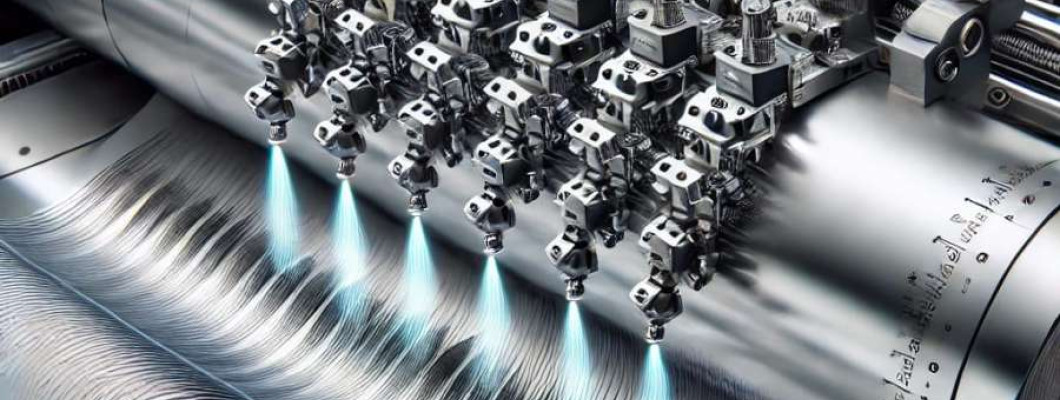
The printhead, commonly a piezoelectric array in industrial DTF printers, operates at a pixel-level accuracy of approximately 1440 dpi with ink droplet volumes in the 2–5 pl range. Under continuous operation, nozzle clogging and piezo element fatigue are prime failure points. The A4 Roll DTF Printer employs a multi-nozzle configuration designed for uniform droplet ejection across the 297mm width, enabling seamless roll-to-roll printing.
Hypothetically, if the average nozzle clog rate is 0.01% per 100 hours of operation in a high-quality system, a DIY counterpart might experience rates exceeding 0.1%, leading to frequent head cleaning cycles. These cleaning cycles, consuming up to 0.2 ml of ink each, inflate operational costs and reduce overall uptime. The A4 Roll DTF Printer’s printhead design integrates an automated cleaning and alignment system that reduces maintenance downtime by approximately 25% compared to legacy semi-automated models.
Ink Chemistry and Its Impact on Print Quality and Nozzle Longevity
DTF inks are highly engineered pigment dispersions designed to maintain stable viscosity (typically 10–15 cP at 25°C) and adhesion properties. Aging ink, environmental contamination, or improper storage leads to polymerization inside nozzles, accelerating clogging and degradation. The A4 Roll DTF Printer mandates ink formulations with tightly controlled particle size distributions (<100nm) to optimize jetting performance and film adhesion on thermoplastic films.
Comparative studies highlight that industrial-grade ink solutions reduce printhead maintenance intervals by up to 30% when matched with printers designed for optimal thermal regulation and ink path integrity. Additionally, the printer’s substrate heat management system facilitates rapid curing without thermal overshoot, preserving nozzle integrity over extended print cycles.
Roll Handling and Media Transport Precision Under Continuous Operation
Maintaining media tension and registration precision is critical in roll-fed DTF printers. The A4 Roll DTF Printer incorporates a servo-controlled tensioning system with feedback loops ensuring lateral shift is maintained within 0.1 mm tolerance during runs. By contrast, lower-grade units commonly experience lateral drift exceeding 0.5 mm, causing banding and misalignment.
Analysis of the media transport subsystem reveals that the A4 printer’s servo motors deliver repeatable torque output of approximately 0.5 Nm, sufficient to stabilize rolls weighing up to 5 kg at speeds reaching 1 m/min. This mechanical design is accompanied by a platen heating element regulated within ±5°C to ensure ink curing without substrate distortion, a vital factor for precise downstream finishing.
Maintenance Cycles and Predictive Diagnostics for Maximized Uptime
Predictive maintenance is a decisive capability within industrial-grade printing hardware. The A4 Roll DTF Printer integrates sensors monitoring nozzle pressure, printhead temperature, and environmental humidity. Using this real-time data, the system issues maintenance alerts before defects manifest.
Operational data logs demonstrate that predictive scheduling of head cleans every 200 running minutes reduces unscheduled downtime by roughly 40%. In comparison, manual or fixed-interval maintenance often leads to either premature servicing or delayed intervention, both detrimental to throughput and cost-efficiency.
Quantitative Comparison of Industrial vs DIY DTF Printer Maintenance Profiles
| Metric | Industrial-Grade A4 Roll DTF Printer | DIY/Semi-Professional Setup |
|---|---|---|
| Printhead Nozzle Clogging Rate | 0.01% per 100 hrs | 0.1%+ per 100 hrs |
| Maintenance Downtime per 100 hrs | 1.5 hrs (automated cleaning) | 4+ hrs (manual cleaning) |
| Media Registration Accuracy | ±0.1 mm | ±0.5+ mm |
| Ink Viscosity Stability | 10-15 cP | Variable, often >20 cP |
| Average Roll Weight Capacity | Up to 5 kg | Typically ≤3 kg |
Scenario Analysis Showing Business Implications Across Different Use Cases
Small Apparel Customization Shop
A boutique printing operation producing limited runs of specialty garments benefits from the A4 Roll DTF Printer’s precision media control and reduced maintenance. Fast turnaround with minimal operator intervention enables this business to increase order throughput by 20%, avoiding bottlenecks common in lower-grade machines.
Mid-Sized Print on Demand (POD) Enterprise
Scaling production to hundreds of prints per week, predictive maintenance features reduce unexpected downtime by 40%, cutting labor costs associated with emergency repairs. The printer’s consistent ink jetting minimizes rejects due to nozzle clogs, improving overall product quality and customer satisfaction.
High-Volume Textile Manufacturer
This use case prioritizes uptime and long run stability. The printer’s automated cleaning cycles and servo-controlled roll handling contribute to a consistent print environment. The ability to handle 5 kg rolls without substrate shift enables longer runs, decreasing changeover time and increasing throughput by approximately 15% versus legacy DIY conversions.
Expert FAQ Answering Critical Maintenance Lead Inquiries
1. How does the A4 Roll DTF Printer manage printhead temperature to prolong nozzle life?
The printer includes a closed-loop thermal regulation system that maintains printhead temperature within ±0.5°C of setpoint, preventing thermal stress on piezo elements and ink viscosity fluctuations that cause clogging.
2. What specific ink additives improve nozzle reliability in industrial DTF printing?
Anti-settling agents and surfactants reduce particle agglomeration, while polymer binders optimize adhesion. Industrial inks paired with the printer are engineered to maintain <100 nm particle size, ensuring smooth jetting and reduced clog risk.
3. Can the printer’s maintenance schedule be adapted dynamically?
Yes, sensor feedback on printhead pressure and environmental conditions enables the firmware to adjust cleaning cycles, reducing unnecessary maintenance and extending printhead life.
4. What role does media substrate heat control play in maintenance?
By stabilizing platen temperature within narrow tolerances, the system prevents substrate warping and ink bleeding, reducing the frequency of print defects that necessitate reprints or head cleaning.
5. How is operator error minimized in maintenance operations?
The A4 Roll DTF Printer incorporates user-friendly alerts and guided procedures for cleaning and alignment, reducing human factor variability in routine maintenance tasks.
Strategic Verdict Recommending the A4 Roll DTF Printer for Industrial Deployment
The maintenance-focused analysis exposes the stark operational gap between DIY DTF setups and the industrial-grade performance embodied by the A4 Roll DTF Printer. With precise printhead physics, advanced ink chemistry compatibility, automated maintenance cycles, and servo-controlled media handling, this hardware decisively mitigates common failure modes and operational bottlenecks faced in high-throughput textile printing environments.
For maintenance leads seeking a robust industrial printing solution with predictable servicing demands and maximized uptime, this printer represents a sound capital investment. Its design anticipates extended duty cycles with a maintenance philosophy grounded in predictive diagnostics and automation rather than manual remediation. This results in measurable reductions in unscheduled downtime, labor costs, and defective output rates.
Therefore, the A4 Roll DTF Printer emerges as the definitive choice for transitioning from experimental or DIY workflows to industrial-grade production, effectively bridging the gap with precision engineering and maintenance-centric infrastructure. It is strongly recommended for adoption where high-precision output and operational resilience are paramount.