
The Gap Between DIY and Industrial-Grade A4 Roll DTF Printers Examined for Scalable Business Owners
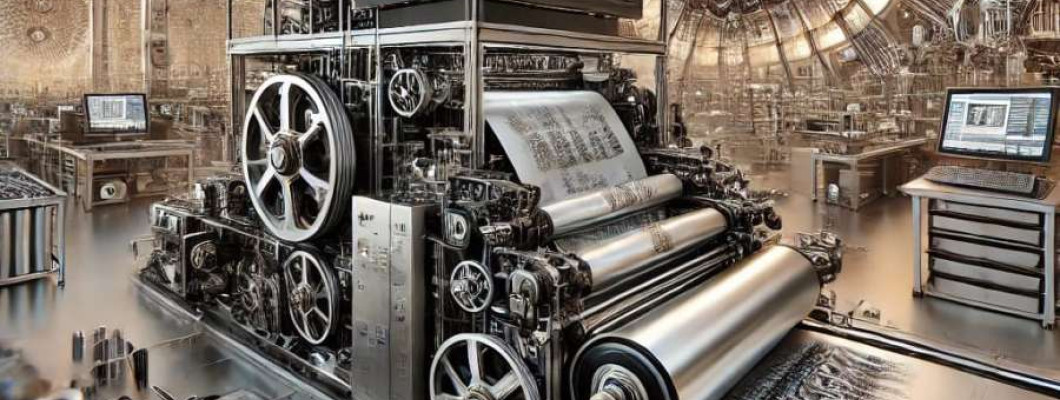
The Industrial Reality of Integrating A4 Roll DTF Printers in Scalable Production
Within scalable business environments where throughput and automation dictate profitability, the choice between DIY Direct-to-Film (DTF) printers and industrial-grade machines becomes a pivotal operational decision. Consider a medium-sized printing enterprise expanding into custom textile decoration. The adoption of an A4 Roll DTF Printer introduces challenges and potential bottlenecks. From continuous roll feed management to maintaining printhead integrity over extended hours, the printer’s ability to sustain consistent output without degrading image quality is central to scalable operations.
Unlike desktop or DIY units primarily designed for short-run or prototype work, industrial-grade A4 Roll DTF Printers must withstand hundreds of linear meters of substrate daily. This demands robust mechanical design, stable environmental controls, and fail-safe software integration to avoid unscheduled downtime. In practice, many operators face hidden workflow interruptions caused by filament curling, ink clogging, or temperature-induced media expansion—all factors underestimated in DIY setups but critical in production-scale environments.
Another core challenge lies in automation and labor optimization. Industrial-scale printers incorporate sensors, high-capacity ink reservoirs, and synchronized drying systems that operate cohesively within enterprise resource planning (ERP) frameworks. This contrasts markedly with DIY systems, where manual interventions and frequent maintenance cycles erode labor efficiency and introduce variability.
Technical Deep-Dive into the A4 Roll DTF Printer’s Industrial Capabilities
Printhead Design and Ink Delivery Mechanics
The printhead in an industrial A4 Roll DTF Printer typically features piezoelectric arrays with droplet sizes ranging from 4 to 12 picoliters, enabling fine resolution at 600 to 1200 dpi. In contrast, DIY units often use thermal inkjet nozzles with less precise ink placement, affecting edge crispness and color vibrancy. Piezoelectric printheads sustain higher cycle counts, with tested durability exceeding 500 million ink ejections before replacement, reducing operational cost per linear meter.
Roll Media Handling and Tension Control
Accurate media tension is critical to prevent skew and banding artifacts. Industrial-grade devices integrate closed-loop feedback controllers using optical encoders and load cells to maintain precise tension within ±0.1 N. DIY models rely on manual spindle adjustments lacking dynamic compensation, resulting in substrate misfeeds. The physics of roll mechanics dictate that any angular misalignment exceeding 0.5° can induce cumulative positional errors over a 50-meter print run, degrading print fidelity.
Ink Chemistry and Thermal Management
Industrial inks in A4 Roll DTF Printers are formulated for fast curing and strong adhesion on polyester blends, resisting cracking under flex or wash cycles. Ink viscosity ranges from 10 to 15 centipoise at operating temperatures of 45°C, optimized for nozzle stability. Thermal management systems maintain consistent printhead temperature to ±1°C, preventing nozzle clogging. Without active thermal controls seen in DIY devices, fluctuations cause ink precipitation and decreased print quality.
Throughput and Automation Features
Industrial A4 Roll DTF Printers achieve speeds of approximately 1.5 to 2.5 square meters per hour, enabled by synchronized multi-pass printing and inline drying modules using IR or hot air systems. Automation extends to roll-to-roll winding/unwinding mechanisms capable of handling substrates weighing up to 25 kg without operator intervention. DIY printers lack such integration, limiting continuous operation and increasing manpower needs.
Maintenance Cycles and Systems Diagnostics
Advanced printers feature proactive diagnostics, automatically detecting printhead nozzle health and ink system pressure anomalies. Scheduled maintenance intervals extend beyond 2000 operation hours with modular components designed for rapid replacement. Contrastingly, DIY units often require reactive maintenance triggered by print defects, causing unplanned downtime and resource inefficiency.
| Specification Aspect | Industrial A4 Roll DTF Printer | DIY DTF Printer |
|---|---|---|
| Printhead Type | Piezoelectric, 4-12 pl droplet size | Thermal Inkjet, variable droplet size |
| Print Resolution | 600-1200 dpi | 300-600 dpi |
| Media Tension Control | Closed-loop feedback ±0.1 N | Manual adjustment, no feedback |
| Ink Viscosity at 45°C | 10-15 cP | Variable, lacking thermal control |
| Max Continuous Operation | >2000 hours maintenance interval | <500 hours before major servicing |
Scenario Analysis of A4 Roll DTF Printer Application in Scalable Businesses
Scenario One: Mid-Size Apparel Branding Facility
With a daily target of 300 linear meters of printed roll media, the industrial A4 Roll DTF Printer supports continuous 12-hour shifts. Automated roll feeding synchronizes with drying units, avoiding bottlenecks common in manual DIY workflows. Reduced changeover time and precision color consistency enhance product quality while minimizing labor costs.
Scenario Two: Customized Promotional Products Provider
Demanding rapid turnaround for small batch production, the printer’s ability to quickly switch between substrate types without reconfiguration reduces idle periods. Consistent nozzle performance prevents wasted ink and time, which is critical when delivering diverse, short runs.
Scenario Three: Textile Prototype and Sample Production
When producing prototype garments requiring micron-level detail and precise color matching, the advanced printhead technology achieves repeatable output metrics. This reliability allows design iterations without risking material waste, a cost-sensitive aspect for scaling businesses.
Expert FAQ Addressing Advanced Operational Concerns
What measures ensure printhead longevity under high-throughput conditions?
Periodic nozzle cleaning cycles, ink chemistry optimized to resist sedimentation, and thermal controls stabilize droplet ejection. Additionally, modular printhead cartridges allow quick swaps, minimizing downtime and preserving print quality.
How does media tension control prevent substrate deformation?
Closed-loop tension systems dynamically adjust roller torque based on sensor input, maintaining flatness and preventing micro-wrinkles that can skew print registration. This reduces waste and ensures alignment fidelity, especially critical in roll-to-roll operation.
What are the implications of ink viscosity variation on print quality?
Ink viscosity directly affects droplet formation and flight stability. Maintaining ink within the 10-15 centipoise range at optimal temperature ensures consistent droplet volume, critical to achieving high-definition images without bleeding.
How do integrated drying systems impact print throughput?
Drying units calibrated to specific ink curing profiles enable immediate handling post-print, avoiding smudging and enabling consecutive printing passes. This integration effectively doubles throughput compared to DIY setups relying on ambient drying.
What diagnostic features preemptively alert to system failures?
Real-time monitoring of nozzle jetting frequency, ink pressure sensors, and media alignment detectors feed into automated alerts. Early detection avoids catastrophic failures and facilitates scheduled maintenance planning.
Strategic Verdict and Recommendation for A4 Roll DTF Printer Adoption
When evaluating production scalability against operational efficiency, the A4 Roll DTF Printer emerges as a definitive industrial-grade solution. Its robust mechanical design, precision printhead technology, integrated automation, and advanced diagnostics substantially bridge the operational gap separating DIY printers from enterprise demands. Businesses aiming for throughput optimization, labor cost control, and consistent high-quality output will benefit significantly from this technology.
Given the documented advantages and capacity to integrate within existing workflow infrastructures, the A4 Roll DTF Printer is decisively recommended for scalable business owners seeking industrial performance without compromise. This offering sets a new standard in balancing print fidelity, operational uptime, and automation readiness essential for competitive textile printing enterprises.