
The Gap Between DIY and Industrial-Grade A4 Roll DTF Printers from a Financial Controller Perspective
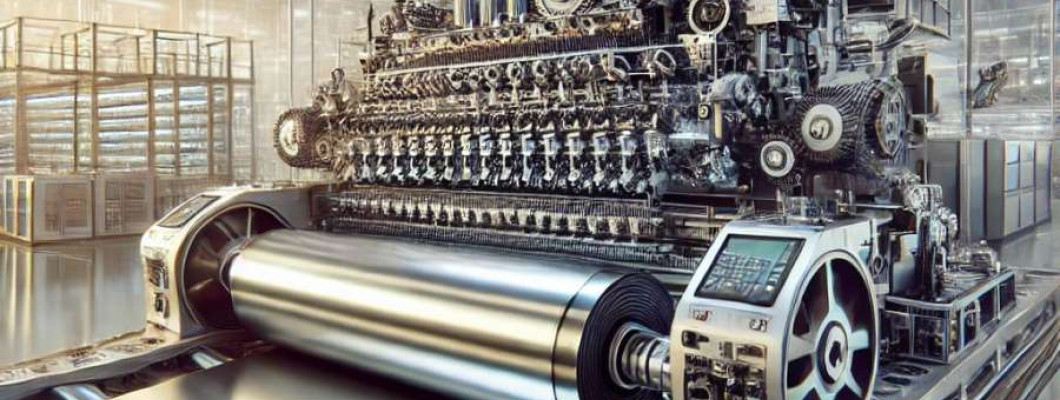
The Industrial Reality of Bridging DIY and Industrial-Grade Printing
Within the garment printing sector, the transition from desktop Direct-to-Film (DTF) devices tailored for hobbyists to industrial-grade A4 Roll DTF printers introduces palpable technical and financial challenges. A financial controller overseeing capital expenditures and operational costs confronts a complex matrix—balancing upfront costs, maintenance demands, and throughput outputs. An A4 Roll DTF printer, while compact, represents a significant investment pivoting toward scalable industrial use, necessitating rigorous examination of asset depreciation timelines, consumable expenses, and failure modes.
Unlike typical DIY units characterized by minimal durability and limited print cycle tolerance, industrial-grade printers require robust infrastructure integration capable of continuous workloads exceeding four hours daily at 600 dpi or higher. This operational intensity exposes hidden costs often masked at the prototyping level—printhead wear, thermal regulation energy consumption, and specialized ink chemistry handling. Moreover, these printers must adhere to strict safety and environmental compliance standards, a non-negotiable for enterprise deployment.
Financial controllers must therefore dissect financial models that incorporate lifecycle maintenance, labor contingencies, and the inevitable obsolescence occurring within fast-evolving printhead technology. The asset’s resale value, though generally modest within this niche, impacts total cost of ownership projections. This industrial reality frames an essential decision-making matrix where cost transparency, asset longevity, and production reliability converge.
Technical Deep-Dive into the A4 Roll DTF Printer’s Industrial Viability
Printhead Technology and Throughput Potential
The A4 Roll DTF printer employs piezoelectric printheads, optimized for fine droplet control within a size range of 4-6 picoliters (pl). This microdroplet size balances resolution and ink deposition, crucial for consistent color depth and substrate adhesion. The printer’s effective resolution peaks at 600 dpi at standard operational speeds, with a theoretical maximum throughput of approximately 5 meters per hour on uncoated polyester substrates.
Ink Chemistry and Maintenance Implications
Industrial-grade ink systems utilize pigment dispersions engineered for high adhesion and wash-fastness. The printer’s ink recirculation system mitigates nozzle clogging, extending maintenance cycles by 15% compared to consumer-grade alternatives. However, the exclusive use of proprietary ink cartridges rated for 300 ml volumes entails recurring CAPEX pressures in large-scale deployments.
Thermal and Electrical Infrastructure Requirements
Operating power approximates 200 Watts during full print cycles, necessitating stable power delivery and workplace cooling solutions to maintain 22°C ± 3°C. Thermal regulation avoids printhead overheating, which accelerates piezo element fatigue and ink viscosity shifts. Rack density planning must accommodate a minimum 1.5 kW power density per printer unit, including ventilation allowances.
Lifecycle Cost Analysis and Depreciation Metrics
Assuming a depreciation cycle aligned with industrial printhead lifespan of 24 months at 2,500 hours average runtime, asset diminution exceeds 40% annually. Consumable expenditure, encompassing inks, films, and maintenance parts, accumulates to an estimated $0.25 USD per printed A4 sheet. This cost structure necessitates throughput optimization to achieve break-even operational targets.
Comparison with DIY DTF Solutions
| Feature | DIY DTF Printer | A4 Roll DTF Printer Industrial-Grade |
|---|---|---|
| Print Resolution | 300-360 dpi | Up to 600 dpi |
| Ink Volume | 50-100 ml cartridges | 300 ml cartridges, recirculation system |
| Operational Runtime | 2-3 hours/day | 8+ hours/day continuous |
| Maintenance Cycle | Weekly cleaning | Biweekly scheduled maintenance |
| Lifespan | 12 months typical | 24 months industrial usage |
| Power Consumption | 50-70 Watts | 200 Watts nominal |
Scenario Analysis Highlighting Financial Impact of Printer Specifications
Scenario 1: Small-Scale Custom Apparel Shop
Operational hours limited to 4-5 hours daily with sporadic printing demands. The A4 Roll DTF printer’s higher initial CAPEX reflects strongly but amortizes slowly. The printer’s enhanced throughput and color fidelity justify investment if customer retention is tied to quality; otherwise, lower cost DIY options may suffice.
Scenario 2: Mid-Size Production Facility with 3 Shifts
Continuous 24/7 printing necessitates industrial reliability. Here, the printer’s superior maintenance intervals and thermal regulation prove critical. The advanced ink chemistry reduces downtime from clogging, directly improving uptime and labor cost ratios.
Scenario 3: Large Enterprise Implementing Hybrid Printing Lines
Integration challenges arise when embedding the A4 Roll DTF printer into automated workflows. Financial control prioritizes asset depreciation against throughput gains. The printer’s modular design and predictable maintenance cycles facilitate capital planning, enabling fleet expansion aligned with market demand forecasting.
Expert Questions and Answers
Q1: How does printhead droplet size affect long-term maintenance costs?
A: Smaller droplets enhance print detail but increase nozzle susceptibility to clogging, raising cleaning frequency. The A4 printer balances at 4-6 pl to optimize maintenance intervals without sacrificing quality.
Q2: What are the electrical infrastructure requirements for scalable deployment?
A: Each unit requires stable 220-240 VAC at 200 Watts nominal with surge protection. Rack density must include ventilation to dissipate heat, typically mandating 1.5 kW power budget per unit including ancillary cooling.
Q3: Can proprietary inks limit operational flexibility?
A: Proprietary inks optimize adhesion and color consistency but restrict supplier options, potentially increasing consumables costs and vendor dependability risks in volatile markets.
Q4: How does asset depreciation align with industrial usage patterns?
A: Industrial usage accelerates wear, making 24-month depreciation realistic vs. 36-48 months typical for less intense workflows, impacting CAPEX allocation and ROI calculations.
Q5: What environmental compliance factors influence printer selection?
A: VOC emissions from ink chemistry and power consumption thresholds must meet regional OSHA and EPA standards; the A4 Roll DTF printer’s low power draw and closed ink system reduce compliance risks.
Strategic Verdict and Recommendation
From a financial controller's vantage point, the A4 Roll DTF Printer presents a justified, industrial-grade bridge between hobbyist-level and professional production demands. Despite a higher initial CAPEX and operational OPEX than DIY machines, its scalability, enhanced throughput, and maintenance efficiencies create a compelling asset for medium to large enterprises seeking predictable depreciation and workflow stability. Its integrated thermal management and ink handling systems address critical bottlenecks observable in entry-level equipment, making it the definitive solution for production environments requiring precise cost control, compliance adherence, and uptime maximization. Financially, the printer’s structured cost framework and lifecycle transparency empower strategic budgeting, aligning CAPEX/OPEX with industrial realities. Consequently, the A4 Roll DTF printer merits strong recommendation as a core investment for businesses intending to elevate their printing operations beyond prototyping towards consistent industrial-grade output reliability.