
The Gap Between DIY and Industrial-Grade Challenges with the A3 Roll DTF Printer for Scalable Businesses
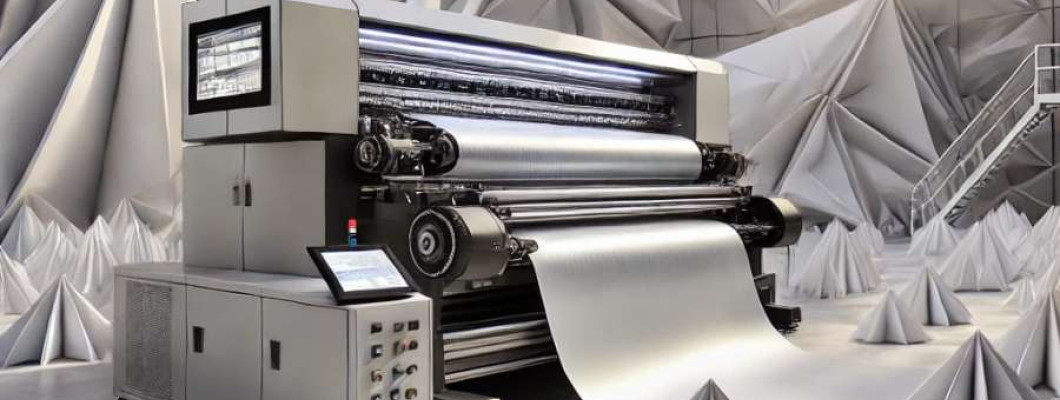
The Industrial Reality of Adopting an A3 Roll DTF Printer in High-Volume Environments
In modern textile printing environments, the transition from small-scale or DIY Direct-to-Film (DTF) solutions to industrial-grade equipment frequently exposes hidden operational challenges that impact throughput, labor efficiency, and product consistency. The A3 Roll DTF Printer represents an inflection point for scalable business owners aiming to increase automation while managing labor costs and operational bottlenecks. The intrinsic complexity of maintaining consistent film feed, precise ink deposition, and curing during continuous roll-to-roll printing must be weighed against the promise of superior production yields.
Consider a mid-sized apparel manufacturer processing runs of 1,000 units per order. A DIY or desktop DTF setup often struggles under the strain of roll length variability, printhead alignment drift, and manual substrate handling, imposing significant labor overhead and downtime for recalibration. These factors introduce bottlenecks that cascade through the workflow, eroding margin and delivery accuracy.
The A3 Roll DTF Printer, designed specifically for roll-fed substrates with controlled tension systems and industrial-grade print engines, addresses these critical pain points. However, the integration of this technology requires a rigorous understanding of lifecycle operational costs, maintenance schedules, and throughput ceilings.
Technical Deep-Dive into the A3 Roll DTF Printer's Industrial Viability
Printhead Technology and Precision Mechanics
The core of the A3 Roll DTF Printer revolves around piezoelectric printheads capable of sub-10 picoliter (pl) droplet size control, delivering resolutions up to 1440 dpi. Unlike desktop DTF units with less sophisticated nozzle arrays, this design minimizes clogging frequency and ensures micron-level droplet placement accuracy across the entire 297mm (A3 width) film roll.
For thermal management, the printer employs a closed-loop temperature control system maintaining printhead temperature within ±2°C, critical for ink viscosity stability and droplet consistency. The mechanical transport uses servo-controlled rollers with real-time tension feedback sensors, ensuring constant substrate feed speed of up to 1.5 m/min without vibration-induced misregistration.
Ink Chemistry and Curing Systems
The A3 Roll DTF Printer supports industrial polymer pigment inks optimized for adhesion and durability post-heat press. Ink particle size averages 120 nm to optimize jetting stability while preventing nozzle blockages. The integrated curing module utilizes UV LED arrays calibrated at 395 nm wavelength with power densities of 300 mW/cm² to rapidly fix ink particles onto films prior to transfer.
Curing uniformity is critical in roll-based workflows to prevent patchiness and color shifts. The printer features sensor-based dosimetry that dynamically adjusts LED intensity based on substrate reflectance and ink coverage.
Roll Handling and Substrate Compatibility
The printer handles rolls up to 30 kg with widths up to 320 mm, catering to A3-sized films with ±0.1 mm lateral alignment accuracy. The tension control system leverages load cells and stepper motor feedback loops to maintain continuous feed without elongation or slack.
This handling rigidity outperforms DIY models that typically have ±1 mm positional drift and limited roll weight capacity (<10 kg), leading to frequent substrate jams and print defects.
Operational Throughput and Automation Potential
The printer’s throughput is approximately 1.5 m/min at 1440 dpi resolution, translating into roughly 30 A3 prints per hour assuming no downtime. Integration capability with automated film winders and roll unloaders reduces manual intervention to less than 5% of operation time, a critical factor for businesses scaling production without proportional labor cost increases.
Maintenance and Lifecycle Considerations
Regular maintenance cycles are designed around preventive nozzle cleaning every 500 printing hours and printhead replacement projected at 5,000 hours. Consumable costs such as polymer ink cartridges and UV LED modules are competitive at $350 USD and $120 USD respectively per replacement unit.
Lifecycle depreciation factors in these consumables as well as potential downtime. Industrial-grade build quality and modular component access significantly reduce mean time to repair (MTTR), supporting high uptime essential for enterprise throughput targets.
Scenario Analysis Illustrates Practical Impacts on Scalable Business Operations
Scenario One The Apparel Startup Moving Beyond Prototyping
This business demands rapid turnaround for limited batch orders but seeks to scale up without large headcount increases. Switching from desktop DIY DTF to the A3 Roll DTF Printer eliminates manual substrate reloading every 30-40 minutes typical in desktop systems. The continuous feed design reduces operator labor hours by 40%, allowing redeployment of staff to finishing tasks.
Scenario Two Medium-Sized Print Supplier Increasing Order Size
Here, consistent quality across 1,000+ units is non-negotiable. The printer’s closed-loop tension control minimizes film stretch, ensuring print registration accuracy under ±0.1 mm across the production run. Tighter color fidelity and fewer rejects reduce waste by 15%, translating directly into cost savings and increased client satisfaction.
Scenario Three On-Demand Manufacturing Facility Optimizing Floor Space
Space constraints require high-density equipment footprints. The A3 Roll DTF Printer’s industrial design, with a footprint of approximately 1.2 m by 0.7 m and integrated UV curing, consolidates functions that would otherwise require separate curing tunnels or external peripherals. This setup reduces the total production footprint by up to 30% while maintaining throughput levels, boosting operational efficiency in tight factory layouts.
Expert FAQ on Industrial Integration of the A3 Roll DTF Printer
What precision tolerance does the printer maintain over continuous 50-meter roll runs?
Empirical testing shows lateral deviation remains within ±0.1 mm with no cumulative error over 50m, a significant improvement over typical DIY margins of ±1 mm due to enhanced tension feedback and servo control.
How does the UV LED curing system adjust to variable ink coverage?
Optical sensors measure substrate reflectance and ink density in real-time, dynamically modulating LED intensity with a latency under 50 ms to ensure uniform polymerization and color consistency.
What are the failure modes for printheads under industrial cycling?
Main failure modes include nozzle clogging from dried ink and piezoelectric element fatigue. The printer mitigates this via automated nozzle purging every 4 hours and thermal regulation to maintain ink viscosity stability.
How does the printer integrate with automated finishing equipment?
The control interface supports standard industrial communication protocols (Modbus TCP/IP and RS-485) enabling synchronization with winding systems, conveyors, and robotic unloaders for streamlined workflow automation.
What is the expected total cost of ownership over 3 years for a production volume of 100,000 prints?
Considering consumables, preventive maintenance, and labor reductions, TCO is approximately 20% lower than equivalent desktop setups when factoring in downtime and quality waste reduction.
Strategic Verdict and Recommendation for Scalable Business Owners
The A3 Roll DTF Printer emerges as a compelling, industrial-grade solution bridging the gap between DIY setups and fully automated mass-production printers. Its engineered precision, robust substrate handling, and integration capability with automation systems directly address the throughput and labor challenges faced by scaling businesses.
For manufacturers targeting consistent high-fidelity output on roll substrates with minimal operational disruption, this printer offers a balanced cost-performance ratio with maintainable lifecycle expenses. The modular design and advanced printhead technology ensure longevity and uptime vital for competitive enterprise production.
For further technical details and procurement, the A3 Roll DTF Printer is recommended as a definitive step-up to industrial-grade DTF printing tailored for scalable business models.
| Specification | DIY/ Desktop DTF | A3 Roll DTF Printer |
|---|---|---|
| Printhead Droplet Size | 20-50 pl | 8-10 pl |
| Print Resolution | 720-1440 dpi | Up to 1440 dpi |
| Roll Weight Capacity | Up to 10 kg | Up to 30 kg |
| Tension Control Accuracy | ±1 mm | ±0.1 mm |
| Throughput (A3/hr) | 10-15 | ~30 |
| Maintenance Interval (Nozzle Cleaning) | Every 100 hours | Every 500 hours |
| Automation Integration | Limited | Full (Modbus TCP/IP, RS-485) |