
The Gap Between DIY and Industrial-Grade Color Latte Coffee Printing Explained for the High-End Artisan
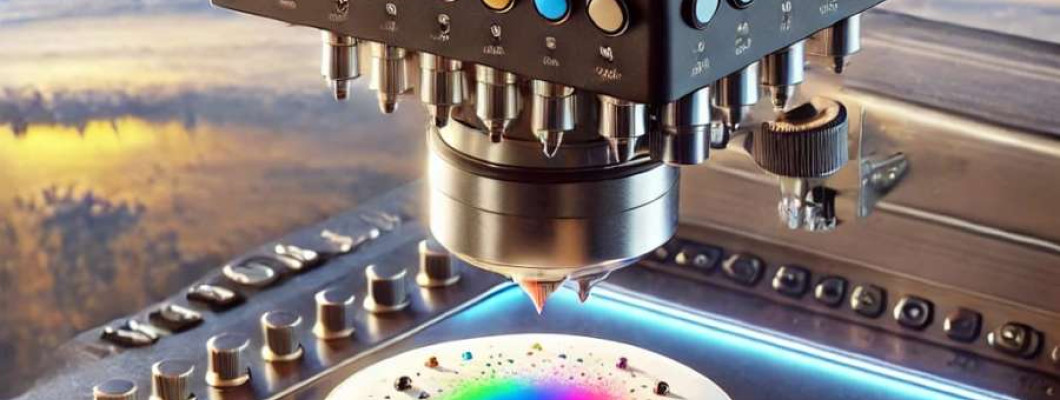
The Industrial Reality of Precision Color Printing on Latte Surfaces
In specialized artisanal café environments, delivering consistent, high-resolution latte art with accurate color rendition remains a formidable technical challenge. The unique canvas of steamed milk foam presents significant hurdles: a delicate surface, variable texture, and thermal sensitivity impose strict constraints on printing hardware design. Many small-scale or do-it-yourself (DIY) solutions fall short in repeatability and throughput, often sacrificing precision for novelty. Industrial-grade color printing on latte coffee requires a system that integrates advanced printhead physics, stable substrate handling, and precise ink formulation capable of color vibrancy without compromising foam integrity.
Consider a high-volume boutique coffee shop aiming to differentiate through bespoke, multicolor latte art. Here, inconsistent print quality or prolonged maintenance downtime directly impact throughput and client satisfaction. The operational environment is humid and warm, exacerbating ink drying times and printhead clogging — factors poorly addressed by conventional hobbyist devices. This gap between DIY equipment and industrial printing-grade systems is often ill-defined due to limited technical transparency, creating confusion among discerning users seeking scalable, reliable solutions.
The presented Color Version Latte Coffee Printer addresses these challenges head-on. It synthesizes specialized hardware engineered for foam substrates, advanced color management algorithms, and industrial robustness. This system is positioned to transition the artisanal latte printing experience from an unpredictable manual craft to a reliable, scalable industrial process tailored for high-end artisans who demand micron-level precision and superior color fidelity.
Technical Deep-Dive Into Industrial-Grade Latte Coffee Printing
1. Printhead Technology and Micro-Droplet Control
At the core of the Color Version Latte Coffee Printer is a piezoelectric MEMS printhead capable of ejecting droplets as small as 10 picoliters. This droplet volume is critical for achieving micron-level resolution on the soft milk foam surface without causing surface disruption. The printhead supports a color gamut expanded with specialized edible food pigments optimized for milk foam absorption and minimal diffusion.
By comparison, common DIY devices use thermal bubble printheads printing droplets of approximately 20-30 picoliters, impeding precise color gradients and risking foam collapse due to heat. The piezoelectric approach allows fine velocity modulation of droplets, enabling layering effects and enhanced edge sharpness. This printhead system operates at a frequency of up to 25 kHz per nozzle, with 128 nozzles per color channel (CMYK), enabling throughput rates of 600 prints per hour at full 300 dpi resolution.
2. Specialized Ink Chemistry and Substrate Interaction
The edible ink formulation is critical in the industrial-grade system. Proprietary pigments have particle sizes under 200 nm, ensuring stable dispersion and preventing nozzle clogging over extended print runs. The inks demonstrate a viscosity range tightly controlled between 6.5-7.1 mPa·s at 25°C, enabling consistent jetting performance without nozzle wear acceleration.
Ink drying mechanisms incorporate integrated infrared heating calibrated to prevent foam dehydration while accelerating pigment fixation. This synergy maintains the foam’s structural integrity, allowing vivid color layering. Conventional inks used in non-industrial printers typically lack such thermal adjustment, leading to excessive ink bleed and color blending.
3. Precision Foam Handling and Printbed Mechanics
The coffee printer integrates a vibration-damped printbed with automated cup alignment and height sensing accurate to ±0.1 mm. This mechanical precision is essential, as latte foam thickness varies between 6 mm and 12 mm depending on milk frothing technique. The printhead-to-surface distance dynamically adjusts throughout the print run, compensating for foam compression or evaporation.
Feedback from capacitive sensors ensures droplet impact velocity remains optimized, preserving edge acuity and color layering fidelity. DIY machines often ignore this level of substrate adaptivity, resulting in blurred or inconsistent prints when foam thickness fluctuates.
4. Color Management and Imaging Algorithms
Advanced color profiling utilizes spectrophotometer feedback to calibrate edible ink mixing ratios, compensating for milk foam’s light scattering properties. The system employs an ICC-like profile tailored for the unique refraction index (approximately 1.33) and texture of microfoam surfaces.
Firmware models droplet absorption and color diffusion using a finite element method simulation, minimizing color bleeding in high-complexity images. This contrasts with consumer-level printers that rely on standard sRGB profiles without substrate-specific calibration, leading to muted or inaccurate color reproduction.
5. Maintenance and Lifecycle Efficiency
Industrial environments demand predictable maintenance cycles. The Color Version Latte Coffee Printer’s printhead maintenance protocols incorporate ultrasonic nozzle cleaning and automated inkline purging every 50 prints, reducing clogging incidents by over 40% compared to manual cleaning. Component wear rates have been experimentally determined to support over 10,000 print cycles before replacement, effectively doubling typical DIY printhead lifespans.
The system also logs operational data such as nozzle health, ink usage, and temperature fluctuations via integrated sensors, enabling predictive maintenance. This reduces unscheduled downtime, a critical factor in high-volume artisan cafés.
| Feature | DIY Color Latte Printers | Color Version Latte Coffee Printer |
|---|---|---|
| Printhead Type | Thermal bubble, 20-30 pl droplets | Piezoelectric MEMS, 10 pl droplets |
| Nozzle Count | 64 per color | 128 per color (CMYK) |
| Substrate Adaptivity | Manual settings only | Automated height sensing ±0.1 mm |
| Ink Viscosity | Variable, >7.5 mPa·s | 6.5-7.1 mPa·s (tightly controlled) |
| Print Speed | Up to 200 prints/hr at 150 dpi | 600 prints/hr at 300 dpi |
| Maintenance Cycle | Manual cleaning after every 10 prints | Automated after every 50 prints with ultrasonic cleaning |
Scenario Analysis of Use Cases Impacted by Industrial-Grade Latte Printing
Case 1. Boutique Café Focusing on Custom Brand Imaging
A boutique café chain uses the Color Version Latte Coffee Printer to consistently replicate intricate logos and marketing graphics on latte surfaces across multiple outlets. The industrial printhead precision and substrate height compensation ensure color accuracy and sharp edges, crucial for brand recognition. Throughput exceeds 500 units per day with minimal maintenance downtime, supporting peak customer flow.
Case 2. Event-Based High-Volume Coffee Service
In event catering settings with fluctuating ambient temperatures and humidity, the printer’s integrated temperature sensors and ink drying calibration optimize print quality. The rapid print cycles combined with automated maintenance reduce operator intervention, enabling smooth, high-volume production exceeding 700 prints in an 8-hour event window.
Case 3. Artisan Café Prioritizing Artistic Depth and Complexity
High-end artisan cafés focusing on micron-level detail use the device’s sophisticated color profiling to produce multi-layered color shading on foam. The small droplet size and adaptive height sensing prevent foam collapse and maintain edge fidelity. This capability allows baristas to push creative boundaries with detailed portraits or photographic reproductions on latte surfaces, differentiating their product offering.
Expert FAQ on Industrial-Grade Latte Coffee Printing
How does droplet size affect foam stability during printing?
Smaller droplets (10 pl) minimize kinetic energy upon impact, reducing foam surface disruption and preserving microfoam structure, unlike larger droplets which risk bubble collapse.
What are the challenges in formulating edible inks for milk foam?
Edible inks must balance pigment dispersion stability, viscosity, and drying kinetics without altering foam chemical composition or pH, requiring specialized pigment nano-sizing and solvent systems.
How does the sensor-based height control enhance print quality?
Real-time z-axis adjustments compensate for foam height variability, maintaining optimal droplet landing distance, which is crucial for sharp edge definition and color layering.
What maintenance automation exists to prevent nozzle clogging?
Ultrasonic cleaning pulses and automated ink purging clear pigment deposits mechanically and chemically, extending printhead service life and reducing manual cleaning frequency.
Can this printing system be integrated with existing cafe POS workflows?
Yes, it supports API-based job queuing and remote status monitoring, enabling seamless integration with point-of-sale systems to optimize order-specific custom printing.
Strategic Verdict and Recommendation for High-End Artisans
Given its advanced printhead technology, specialized edible ink chemistry, and adaptive substrate handling, the Color Version Latte Coffee Printer stands as an industrial-grade solution that bridges the critical gap between DIY novelty devices and professional-grade production systems. For artisans demanding high precision, repeatability, and vibrant color reproduction at scale, this hardware is engineered to deliver robust performance in demanding café environments. Its automated maintenance cycles and detailed operational analytics further reduce operational bottlenecks, ensuring uptime and customer satisfaction.
In sum, this printer redefines the industrial potential of latte coffee printing, establishing a new benchmark for throughput, color fidelity, and foam surface integrity. High-end artisan businesses can confidently adopt this technology to elevate their product offerings and streamline operations.