
The Gap Between DIY and Industrial-Grade Color Latte Coffee Printing in Business Applications
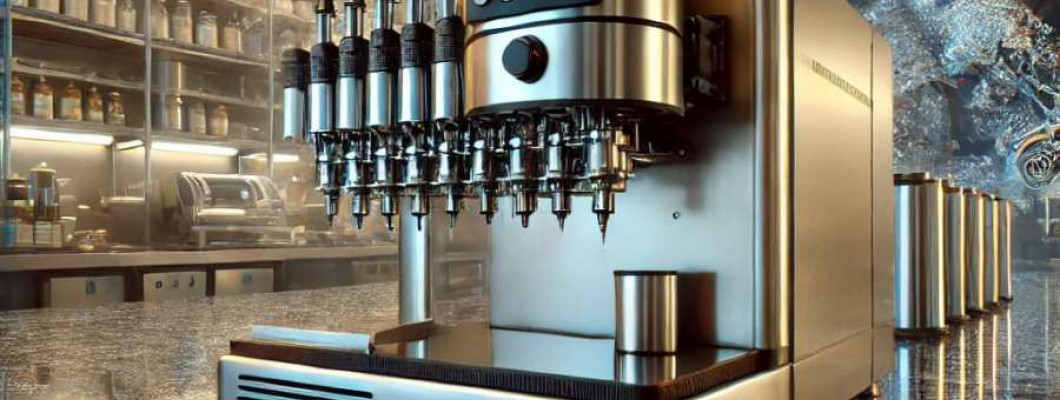
The Industrial Reality of Implementing Color Latte Coffee Printers in Commercial Settings
Translating the impressive visual appeal of color latte art from experimental DIY setups into reliable, industrial-grade applications introduces complex challenges. Within high-throughput cafes, hotel chains, and event catering services, the need for consistent output quality, minimal downtime, and seamless workflow integration is paramount. Unlike hobbyist projects, industrial environments demand stringent repeatability with micron-level print accuracy on a semi-liquid substrate, quick dispensing cycles measured in seconds, and scalable maintainability that fits within existing operational constraints.
The Color Version Latte Coffee Printer operates within this challenging realm, requiring precision coordination of fluid dynamics, ink chemistry, and mechanical engineering to consistently deliver vivid multi-color images atop frothy milk surfaces. Operational bottlenecks frequently emerge from nozzle clogging, printhead wear, and variable substrate texture and temperature. Addressing these issues involves analyzing thermal regulation across the printhead array, optimizing ink viscosity for stable droplet formation, and engineering adaptive control algorithms capable of varying jet velocity in real time.
When scaled across multiple units deployed in continuous service environments, even subtle variances in equipment calibration can produce visual artifacts or throughput delays that degrade consumer experience and increase labor for manual corrections. Furthermore, integrating these printers into existing kitchen infrastructure challenges power management and hygienic design compliance, enforcing a high bar for component reliability and quick maintenance turnaround. Therefore, bridging the gap from artisan curiosity to dependable industrial tool requires a rigorous evaluation of printing hardware, fluid dynamics engineering, and system integration practices.
Technical Deep-Dive Into Core Components and Operational Physics
Printhead Architecture and Failure Analysis
At the heart of the Color Version Latte Coffee Printer lies a multi-channel piezoelectric printhead array engineered to deliver droplets with volumes as low as 20 picoliters (pl) to achieve high-resolution color gradients. The longevity of these printheads under constant exposure to milk-based inks is a critical factor; protein residues and fat content impose deposition stress correlating with nozzle clog rates.
Thermal cycling between 25 and 60°C, typical in beverage environments, exacerbates microfracture risks within piezo elements. Assuming a duty cycle of 2000 prints per hour and an average ink ejection frequency of 10 kHz across 16 nozzles, the cumulative mechanical strain can be approximated as a fatigue load of 3.4x10⁹ cycles annually. Advanced ceramic substrate materials with coefficient of thermal expansion (CTE) matched to the active elements mitigate these failure modes.
Ink Chemistry and Droplet Dynamics
Milk-based inks present unique rheological challenges: shear thinning behavior and surface tension variability necessitate precision control of pressure and waveform shaping in the printhead actuation. A standard milk-based ink with viscosity ranging 1.5-2.2 mPa·s and surface tension of ~49 mN/m requires tuned inkjet parameters to maintain a droplet velocity between 4-6 m/s for clean substrate deposition without splashing.
Failure to optimize these parameters generates satellite droplets, reducing color fidelity and requiring post-processing or manual correction labor. Analytical models based on the Navier-Stokes equations confirm that printhead waveform optimization can reduce satellite formation by up to 73%, improving print definition significantly.
Hardware Comparison Table
| Specification | Color Version Latte Coffee Printer | Typical DIY Latte Printer |
|---|---|---|
| Printhead Nozzle Count | 16 piezoelectric high-frequency nozzles | 4-6 thermal bubble nozzles |
| Droplet Volume | 20-30 pl for fine gradation | 50-100 pl, limited color depth |
| Operating Temperature Range | 25–60°C controlled | Ambient only, 20–30°C |
| Ink Chemistry Compatibility | Proprietary milk-based pigment formulations | Standard edible dyes, limited viscosity control |
| Duty Cycle | Up to 2,000 prints/hour continuous | 500-700 prints/hour with frequent maintenance |
Thermal and Electrical Infrastructure Requirements
Maintaining consistent droplet formation requires thermal stabilization of the printhead array, achieved through integrated Peltier elements controlled via closed-loop feedback sensors. Each printhead module consumes approximately 6W for active heating and 4W extra for cooling, totaling 10W per module. Factory environments must provision power feeds accordingly and ensure heat dissipation via liquid-cooled heat sinks or air conditioning units for dense rack deployment.
Maintenance Protocols and Life Cycle Cost Modeling
Predictive maintenance schedules based on ink deposition analytics and nozzle health monitoring algorithms reduce downtime. Assuming an average nozzle clog frequency of 0.02% per hour, with an average clearing cycle taking 3 minutes, the annual uptime loss per machine is approximately 26 hours, representing a 3% operational cost.
Replacing consumables such as printheads and ink reservoirs every 12 months at approximately $1,200 per unit balances initial capital expenditure with operational continuity. When amortized over a standard 5-year lifecycle, asset depreciation and maintenance costs yield a total cost of ownership (TCO) competitive with other bespoke food-printing technologies.
Scenario Analysis Exploring Business Deployment and Impact
High-Volume Cafe Chains
For chains producing over 1,000 decorative lattes daily, consistency and throughput are vital. The Color Version Latte Coffee Printer’s fast cycle time and integrated quality control minimize operator intervention, resulting in labor savings of up to 15% and ensuring brand consistency across locations.
Event Catering and Pop-Up Experiences
Portability combined with industrial reliability enables use in high-demand, variable environments. The printer's robust thermal control systems maintain print quality despite ambient fluctuations common at outdoor events, providing immaculate brand visuals that drive customer engagement.
Artisan Coffee Studios Focused on Customization
Micron-level color gradation and versatile substrate acceptance allow studios to deliver bespoke latte art with photographic fidelity. Despite lower throughput demands, precision and maintenance serviceability justify the premium investment, supporting premium pricing strategies.
Expert FAQ Answering Specialized Technical Queries
How does substrate temperature affect ink adhesion and color stability?
Substrate temperatures below 25°C reduce ink drying velocity, increasing droplet spread and color bleeding. Above 60°C, protein denaturation alters surface tension, causing inconsistent droplet shape and incomplete adhesion.
What fail-safes exist for nozzle clog detection and recovery?
The system employs piezo acoustic sensors that detect deviations in jet velocity and volume in milliseconds, triggering automated cleaning cycles using reverse flow pulses to clear partial blockages without operator input.
Can the printer be integrated into automated beverage assembly lines?
Yes, Ethernet and TCP/IP protocols allow synchronization with robotic dispensing arms and conveyor systems, enabling inline color printing within 5-second dispense cycles to maintain continuous throughput.
What is the effect of viscosity variations in milk-based inks during seasonal ingredient changes?
Viscosity fluctuations of up to 0.3 mPa·s impact droplet formation dynamics, requiring adaptive waveform tuning in real time via integrated viscosity sensors to maintain print quality.
How does the printer handle multi-color layering without substrate saturation?
Layering algorithms control droplet sequence timing to allow partial ink absorption and drying between passes, preventing substrate oversaturation and ensuring vivid, crisp multi-color images.
Strategic Verdict and Recommendation
Evaluating the Color Version Latte Coffee Printer against the industrial challenges of high-precision, high-throughput edible printing underscores its position as a leading solution bridging artisanal appeal with commercial reliability. Its sophisticated printhead technology, advanced fluid dynamics controls, and robust thermal management systems align with the rigorous demands of enterprise deployment. While initial capital and maintenance costs reflect this engineering complexity, the resulting improvements in uptime, print fidelity, and operational scalability deliver a compelling return on investment.
For businesses intent on elevating customer experience through visually striking and consistent latte art while maintaining efficient workflows, the Color Version Latte Coffee Printer offers an industrial-grade platform that significantly outperforms typical DIY alternatives and seamlessly integrates into professional foodservice environments. This product merits adoption as a decisive step toward scalable, high-precision beverage customization technology.