
The Gap Between DIY and Industrial-Grade Color Version Latte Coffee Printer Explored for High-End Artisans
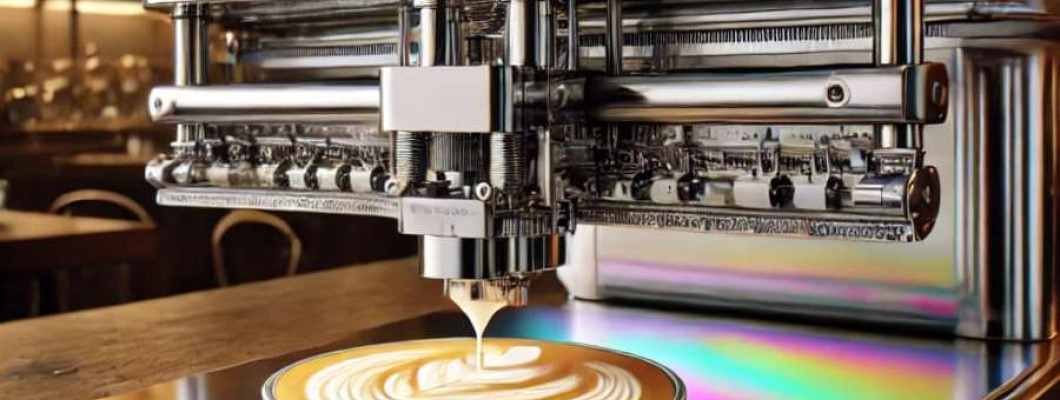
The Industrial Reality of Achieving Precision and Consistency in Latte Art Printing
The evolution of latte art printing technology has introduced a unique challenge at the intersection of artisanal expression and industrial-grade performance. For high-end artisans aiming to reproduce micron-level color depth and consistent substrate adherence, the transition from manual or semi-automated devices to a fully industrial solution uncovers technical hurdles. These include precision color layering, substrate variability (foam texture, milk composition), and hardware reliability under continuous operation. Understanding how the Color Version Latte Coffee Printer addresses these challenges requires examining the gap between DIY devices and the scalable, high-precision industrial apparatus that this product aims to replace.
In artisanal environments, operators face issues like uneven ink droplet size, limited color gamut, and unpredictable maintenance cycles that lead to output inconsistency and downtime. The need for micron-level precision in ink deposition combined with precise thermal and mechanical control demands an integrated printhead system that surpasses conventional hobbyist-grade coffee printers. Additionally, the operational environment adds complexity: temperature fluctuations affect milk foam rheology, impacting the substrate’s printability and resulting image fidelity. Such conditions typically exceed the design scope of DIY devices.
Transitioning to a manufacturer-grade system like the Color Version Latte Coffee Printer requires robust engineering solutions for repeatability and ease of use under busy café workflows. Key performance parameters include printhead resolution measured in droplets per inch (dpi), ink droplet size in picoliters (pl), and multi-channel color management for enhanced color depth. Achieving high throughput without sacrificing image quality mandates precise driver electronics controlling piezoelectric inkjet nozzles, along with environmental sensors that stabilize print quality by compensating for ambient changes.
Technical Deep-Dive Into Printhead Engineering and Color Accuracy
Printhead Resolution and Droplet Size Control
The Color Version Latte Coffee Printer utilizes advanced piezoelectric printheads capable of producing droplets as small as 5 pl, achieving resolutions up to 1200 dpi. This surpasses typical DIY devices that often peak around 300-600 dpi with droplets >20 pl, resulting in coarser images and limited color blending. The smaller droplets enable finer gradient transitions and sharper edges critical for detailed latte art reproduction.
Multi-Channel Color Delivery System
Unlike standard monochromatic or limited-color hobbyist printers, this industrial-grade printer features at least four distinct pigment channels optimized for food-safe, milk-affine inks. The system controls the deposition ratio dynamically to reproduce subtle hues and midtones for photorealistic imagery. The color management algorithm compensates for the reflectance properties of milk foam substrates, ensuring fidelity from RGB source images to final print output.
Environmental Sensing and Adaptive Compensation
Temperature and humidity sensors integrated near the printhead provide real-time feedback for adaptive droplet ejection adjustments. This prevents common issues like nozzle clogging or inconsistent ink spreading caused by foam temperature variation. The closed-loop system recalibrates print parameters continuously, which is a significant advancement over manual calibration processes common in lower-grade devices.
Hardware Reliability and Maintenance Considerations
Industrial operations demand uninterrupted uptime and simplified maintenance. The design incorporates modular printheads with automated cleaning cycles and ink supply systems that minimize operator intervention. Expected printhead lifespan is extended to 2000 hours under typical café usage, compared to 500-800 hours for DIY equipment. The printer chassis is engineered for vibration damping and thermal dissipation to safeguard print alignment and structural integrity.
Comparative Data Table of DIY vs Industrial-Grade Latte Coffee Printers
| Specification | DIY Latte Printer | Color Version Latte Coffee Printer |
|---|---|---|
| Print Resolution (dpi) | 300-600 | Up to 1200 |
| Droplet Size (pl) | 20-50 | 5-10 |
| Color Channels | 1-2 | 4+ |
| Printhead Lifespan (hours) | 500-800 | 2000+ |
| Environmental Compensation | None or Manual | Automated Real-Time |
| Maintenance Protocol | Manual Cleaning | Automated Cleaning Cycles |
| Throughput (prints/hour) | 5-10 | 20-30 |
Scenario Analysis of Business Use-Cases for the Color Version Latte Coffee Printer
High-End Artisan Café Focused on Aesthetic Excellence
A boutique café specializing in premium coffee experiences demands consistent high-resolution prints for branding and customer delight. The printer’s micron-level droplet control and multi-color ink delivery allow the baristas to reproduce complex art that aligns with seasonal marketing campaigns. The environmental compensation ensures the output remains consistent despite variable foam textures.
Mid-Scale Commercial Coffee Shop Seeking Throughput and Cost Efficiency
For a business balancing quality with volume, the printer’s robust hardware reliability and automated maintenance reduce labor costs while maintaining print quality. The system’s ability to process 20-30 prints per hour provides scalability without requiring additional operators focused solely on print supervision or manual corrections.
Foodservice Chain Integrating Custom Branding Across Locations
With distributed operations, the uniform print output across different environmental conditions and operators is paramount. The printer’s automated calibration and modular components simplify maintenance and training requirements. Remote monitoring options can be integrated to track printer health, reducing downtime and increasing overall operational coherence within the chain.
Expert FAQ Addressing Deep Technical Queries
What is the printhead’s fail-safe mechanism for nozzle clogging under high-fat milk foams?
The printhead incorporates ultrasonic vibration-assisted cleaning cycles and a backflush ink circulation system that operates automatically every 10 prints. This reduces residue buildup from lipids and proteins that might otherwise obstruct nozzles.
How does droplet size variability affect color gamut and tonal fidelity on porous milk foam?
Smaller droplets enable higher tonal precision by controlling ink spreading radius on the porous foam substrate. The system dynamically adjusts droplet size between 5-10 pl based on foam density, maintaining color accuracy and reducing bleeding.
What algorithms are used for color profile correction specific to coffee foam substrates?
A proprietary color management pipeline employing multispectral imaging feedback calibrates RGB source images into CMYK-like food-safe pigment channels. It factors in substrate reflectance and scattering coefficients to optimize perceived color depth under café lighting.
How does the printer manage heat dissipation to maintain printhead alignment?
The chassis integrates graphite-infused thermal pads and micro-fan arrays strategically placed near critical electronics. This design maintains temperature within 35°C ±2°C, preventing thermal expansion that could misalign printhead arrays.
What maintenance scheduling is recommended to maximize uptime and print quality?
A preventative schedule includes automated cleaning every 500 prints, ink reservoir replacement every 1500 prints, and full printhead recalibration every 1000 hours, ensuring consistent output with minimal operator intervention.
Strategic Verdict and Recommendation
The Color Version Latte Coffee Printer bridges the substantial technical and operational gap that exists between consumer-grade DIY latte art printers and true industrial systems suitable for high-end artisan environments. Its advanced printhead architecture, superior droplet resolution, and adaptive environmental controls establish it as a definitive solution in the niche but demanding sector of coffee art printing.
For businesses requiring repeatable, precision color printing on highly variable substrates such as milk foam, this product provides an unmatched combination of throughput, ease of maintenance, and image fidelity. Operators can expect reduced downtime, consistent brand presentation, and expanded creative possibilities that are crucial for market differentiation.
Given the technical specifications and operational robustness explored in this analysis, the Color Version Latte Coffee Printer is recommended as the industrial-grade benchmark for high-end artisans and specialty coffee businesses aiming to integrate precision printing into their workflow without compromise.