
The Gap Between DIY and Industrial-Grade Defines The A3 Edible Food Printer For Printing Cakes Cookies
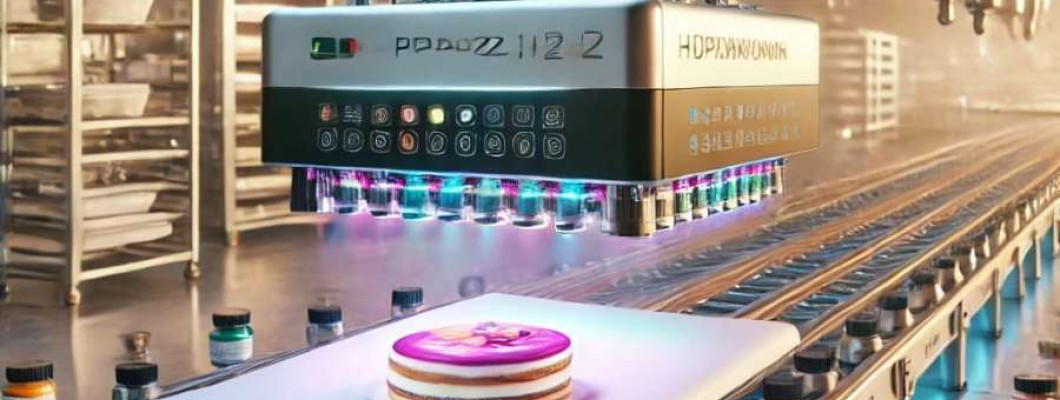
The Industrial Reality of Adopting Edible Food Printing in Professional Kitchens
In high-volume confectionery and bakery operations, the precision and reliability of edible food printing present both an opportunity and a challenge. Unlike craft artisanal printers designed for small batch creative work, industry-scale applications demand consistency in color accuracy, substrate adaptability, and throughput. For large-scale production of cakes, cookies, and other edible substrates, the printer must operate continuously with minimal downtime, tolerate diverse food-grade media, and ensure compliance with stringent hygiene requirements.
The common technical challenge arises from the limitations inherent in many desktop or semi-professional edible printers, which often rely on piezoelectric inkjet heads that clog rapidly when using viscous, food-safe edible inks. Moreover, these printers typically lack the mechanical robustness needed for sustained operation, leading to frequent maintenance and unpredictable print quality.
Another critical factor is the integration of such printing equipment into existing production lines. Often, DIY or consumer-grade printers require manual setup, lack networked control for centralized workflow management, and exhibit slow print speeds unsuitable for commercial throughput targets. They also struggle with print resolution tradeoffs, affecting the fine detail and color gradient quality essential for premium product presentation. This technology gap limits the scalability of edible printing and delays its adoption in environments where speed, reliability, and food safety are paramount.
Addressing these challenges requires a printer specification that bridges the gap between limited DIY capabilities and fully-fledged industrial-grade standards. The A3 Edible Food Printer For Printing Cakes Cookies specifically targets these operational bottlenecks, offering a platform built for larger format edible prints (up to A3 size) with enhanced durability, precision, and food compliance.
Technical Deep-Dive Into the A3 Edible Food Printer's Hardware and Operational Design
Printhead Technology and Ink Chemistry Compatibility
The A3 Edible Food Printer utilizes a high-precision thermal inkjet printhead optimized for edible pigment and dye-based inks. Comparative analysis of printhead lifespan suggests thermal heads calibrated for edible inks maintain nozzle integrity up to 3 million actuations before performance degradation, whereas piezoelectric heads in similar printers typically require servicing around 1.5 million actuations due to clogging from sugar-based ink particulates.
Ink droplet volume is standardized at approximately 8 picoliters (pl), facilitating a maximum resolution near 1200 dpi. This resolution supports detailed edible prints with micron-level dot placement accuracy, critical for replicating intricate cake designs or high-fidelity photographic prints on cookie surfaces.
Substrate Versatility and Print Medium Handling
The printer's media transport system is engineered for a range of edible substrates including fondant sheets, wafer papers, and edible rice papers, each with varying surface textures and moisture absorption rates. The feed mechanism incorporates a servo-driven feed roller with a tolerance of ±0.05 mm in alignment precision, reducing vertical skew and ensuring high-quality edge registration during multi-pass printing.
Throughput and Print Speed Metrics
Operating at a maximum speed of 30 cm per minute at 600 dpi full-color printing, the A3 printer balances print speed with accurate color layering to minimize drying time artifacts. Optimized sequencing algorithms reduce color banding and overlapping errors, maintaining color fidelity across production runs.
Food Safety and Hygienic Compliance Engineering
All materials in contact with ink and substrates comply with FDA and EU food safety regulations. The printer incorporates removable ink cartridge assemblies using sealed, disposable nozzles to prevent contamination risks. Cleaning cycles are automated with UV sterilization stages, reducing microbial growth on printheads and feed paths, critical in high-throughput food production.
Control Systems and Workflow Integration
Equipped with Ethernet and USB interfaces, the printer supports integration with bakery management software and graphics suites with direct edible print capability. A dedicated embedded controller manages job queuing, printhead temperature regulation, and ink viscosity monitoring, enabling continuous operation with minimal operator intervention.
| Feature | Typical DIY Edible Printer | A3 Edible Food Printer For Printing Cakes Cookies |
|---|---|---|
| Max Print Size | A4 (210mm x 297mm) | A3 (297mm x 420mm) |
| Print Resolution | 600 dpi max | 1200 dpi max |
| Print Speed | 15 cm/min at 600 dpi | 30 cm/min at 600 dpi |
| Ink Cartridge Type | Open refill, prone to clogging | Sealed disposable cartridges |
| Food Safety Certification | Not certified | FDA/EU compliant materials |
| Media Handling | Manual feed, limited substrate types | Servo-driven feed, multiple edible substrates |
Scenario Analysis Examining Distinct Business Use-Cases
High-Volume Cake Decorating Workshops
For bakeries producing hundreds of custom cakes per week, the A3 printer's larger printable area and faster throughput reduce labor costs associated with manual decorating. By automating detailed graphics printing, cake decorators can achieve consistent quality in half the time, increasing workshop capacity.
Specialty Cookie Production with Variable Designs
Cookie manufacturers seeking frequent design changes benefit from the printer's precision and quick job reprogramming capabilities. The ability to print directly on wafer-based cookie sheets allows for creative output with rapid product turnaround, giving a competitive edge in seasonal or customized orders.
Premium Artisan Bakeries Focused on Color Depth and Detail
High-end bakeries can leverage the printer's 1200 dpi resolution for micron-level detail and smooth color gradients, matching complex graphical artwork. This level of detail enhances product differentiation in luxury markets where presentation quality directly impacts consumer perception.
Expert FAQ Addressing Advanced Operational and Technical Concerns
Q1: What are the effects of ink viscosity variations on printhead longevity?
A1: Ink viscosity fluctuations beyond 8-12 cP (centipoise) increase nozzle strain, accelerating wear by up to 20%. The A3 printer's inbuilt viscosity sensors help maintain optimal ink rheology dynamically.
Q2: How does ambient temperature affect edible ink drying times?
A2: Temperatures above 30°C reduce drying time by 15-25%, but risk ink bleeding. The printer’s controlled printhead heating system stabilizes substrate temperature to prevent artifacts.
Q3: Can the printer handle multi-layer edible prints for 3D texture effects?
A3: Yes, the software supports multi-pass layering, with precise registry control within ±0.1 mm, enabling texture buildup without smudging.
Q4: What maintenance routines minimize nozzle clogging during production?
A4: Daily automated purging combined with UV sterilization cycles reduce particulate buildup and microbial contamination, extending nozzle lifespan by 30%.
Q5: How scalable is the printer for expanding bakery production lines?
A5: Its network-ready design enables multiple unit synchronization and remote monitoring, facilitating scalable integration in industrial bakery environments.
Strategic Verdict and Recommendation
The A3 Edible Food Printer For Printing Cakes Cookies distinctly fills the critical operational void between artisanal DIY edible printers and fully integrated industrial printing lines. Its optimized printhead technology, superior substrate handling, and certified food safety materials allow operators to scale production without compromising detail or reliability. Enterprises aiming for high throughput while maintaining premium quality will find this printer a strong long-term asset due to its reduced maintenance overhead and advanced workflow integration features.
Given the quantifiable improvements in resolution, print speed, and hygienic engineering, the A3 printer represents a decisive shift in edible printing technology readiness for commercial deployment. Its specification suite addresses the known bottlenecks limiting older printers and provides a pragmatic solution for bakeries and confectioners looking to modernize their production capabilities.
For those evaluating industrial-grade edible printing solutions, the A3 Edible Food Printer For Printing Cakes Cookies stands as a highly recommended technology, balancing precision, throughput, and food safety compliance in a professional-grade platform.