
The Gap Between DIY and Industrial-Grade Defines the Future of A3 Edible Food Printing
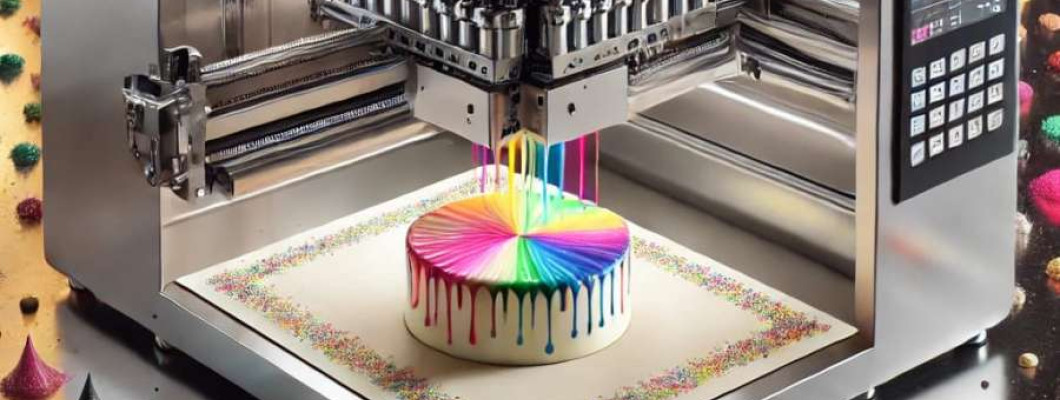
The Industrial Reality of A3 Edible Food Printing in Commercial Kitchens
Within large-scale bakeries and specialty confectionery production facilities, the introduction of edible food printers capable of handling A3-sized substrates presents unique operational challenges. Unlike smaller desktop models used for occasional customization, industrial environments demand sustained throughput, precision repeatability, and rigorous compliance with food safety standards. For a device printing cakes and cookies, the variable textures, moisture content, and substrate flexibility introduce mechanical and material stressors that can impact print quality and machine longevity.
Consider a mid-sized bakery that shifts from manual cake decoration to employing an industrial A3 edible food printer. The printer must integrate seamlessly into a production line where cake sheet transport timing is critical. With substrates measuring approximately 297mm x 420mm, feed mechanisms must avoid deformation or smearing of edible inks, which have viscosities significantly different from traditional inks. Moreover, the thermal sensitivity of edible pigments demands precise control to prevent pigment degradation or substrate damage.
At the core, the difficulty lies in bridging the gap between consumer-grade printers and industrial-grade systems. Consumer models typically sacrifice durability and rapid throughput for cost-effectiveness and user accessibility. In industrial environments, failure modes such as printhead clogging, inconsistent ink droplet size, and substrate misalignment lead to costly downtime and product waste. Consequently, any A3 edible food printer introduced at this scale must demonstrate robust hardware design, advanced ink chemistry, and smart control electronics tailored to the unique challenges of food-safe printing.
Technical Deep-Dive Into the A3 Edible Food Printing Hardware and Process
Printhead Design and Inkjet Mechanics
The heart of the printer is the piezoelectric inkjet printhead engineered to eject droplets ranging from 2 to 5 picoliters (pl). To maintain micron-level precision across A3 dimensions (297 mm width), the head employs a multi-channel nozzle array exceeding 200 nozzles. The physics of droplet formation demand tight control over voltage pulses and nozzle temperature to mitigate clogging risks caused by sugar crystallization within ink channels.
Ink Formulation and Rheological Adaptation
Edible inks consist of water-based and oil-based suspensions with encapsulated food colorants. Their rheological properties—viscosity (~12-18 mPa·s) and surface tension (~35-45 mN/m)—must be optimized to ensure continuous jetting without splatter. Comparative studies show that standard dye inks designed for paper printing exhibit viscosity roughly half that of edible inks, necessitating recalibrated ejection parameters and printhead materials resistant to corrosion and biofilm formation.
Substrate Handling and Transport Mechanics
Mechanical feed systems incorporate vacuum belts with micro-textured silicone surfaces to minimize slippage while preserving the integrity of delicate cookie or cake surfaces. Substrate thickness variability (ranging from 3 mm for cookies to 20 mm for cake sheets) requires adaptive z-axis control with resolution down to 0.01 mm. Precision alignment is achieved via optical sensors and fiducial markers embedded in edible base sheets, facilitating registration accuracy within ±0.15 mm.
Thermal and Environmental Controls
Maintaining substrate temperature between 20-25°C is critical to prevent premature ink drying or substrate warping. Integrated thermal management units consume approximately 120W per printing session to regulate internal humidity around 50%. This prevents ink cracking—a common failure mode in food printers that compromises both aesthetics and food safety.
Data Throughput and Interface Protocols
Industrial workflows require high data fidelity to translate complex image files into print commands rapidly. The control system supports USB 3.0 and Ethernet with data throughput up to 5 Gbps. Custom firmware enables rasterization at 600 dpi with a maximum print speed of 20 square meters per hour under optimal conditions. This translates to approximately 12 fully printed A3 cookie sheets per hour in continuous operation.
| Feature | DIY/Consumer-Grade Printer | Industrial A3 Edible Food Printer |
|---|---|---|
| Max Print Area | Up to A4 (210 x 297 mm) | A3 (297 x 420 mm) |
| Printhead Nozzles | 50-100 | 200+ |
| Ink Viscosity Handling | 5-10 mPa·s | 12-18 mPa·s |
| Precision | ±0.3 mm | ±0.15 mm |
| Throughput | 3-5 sheets/hour | 12 sheets/hour |
| Thermal Control | None | Active Humidity and Temperature |
Scenario Analysis Demonstrating Business Impact of Key Specifications
Scenario 1 A Boutique Artisan Bakery Focusing on Custom Orders
Here, the high precision of ±0.15 mm allows detailed logo replication on cookies, where micron-level fidelity in color layering enhances client satisfaction. The printer’s ability to handle A3 adds scale to orders, reducing manual labor. However, throughput is secondary to print accuracy and substrate versatility, making the device ideal for low-volume, high-margin artisan products.
Scenario 2 Mid-Sized Bakery Scaling Up for Regional Distribution
Mid-sized operations benefit greatly from the 12-sheet-per-hour throughput and automated substrate handling. The active humidity controls reduce print defects, lowering rework rates and ingredient waste. Integration via Ethernet allows real-time queue management across production lines, optimizing workflow and reducing labor costs.
Scenario 3 Industrial Scale Confectionery Manufacturer
For high-volume manufacturers, the A3 edible food printer functions as a modular unit in a larger automated system. Precision substrate alignment and thermal management ensure consistent results across thousands of units daily. The multi-channel printheads minimize downtime from clogging, yielding higher ROI through reduced maintenance and longer asset lifespan.
Expert FAQ Answering Technical Queries on A3 Edible Food Printing
What are the critical design considerations for printheads used in edible food printing?
Printheads must accommodate higher ink viscosities and sugar-based ink chemistries without clogging. Material selection for nozzle plates often involves corrosion-resistant ceramics, and pulse frequencies are tuned to maintain droplet consistency within 2-5 pl volume.
How does substrate variability affect print quality and hardware wear?
Substrates like cake sheets have porous, moist surfaces which can absorb ink irregularly, impacting color uniformity. From a mechanical perspective, uneven thickness can strain feed rollers, accelerating wear and requiring frequent calibration or replacement of contact elements.
What thermal management strategies optimize edible ink performance?
Maintaining a temperature window of 20-25°C with ~50% relative humidity prevents premature ink drying and cracking. Active heating and humidification modules help preserve substrate flatness and ink integrity during printing cycles.
How does data throughput influence industrial edible printing efficiency?
Higher data throughput reduces processing lag, enabling faster print speeds and higher resolution without buffer overflow. This is crucial when printing complex multi-color images that require precise timing across multiple printhead channels.
What maintenance protocols extend the operational lifespan of edible food printers?
Daily printhead cleaning using food-safe solvents, periodic replacement of vacuum belts, and frequent firmware updates to optimize nozzle firing sequences are essential. Preventive maintenance reduces unplanned downtime and maintains print quality consistency.
Strategic Verdict and Recommendation for Industrial Edible Printing
The A3 Edible Food Printer For Printing Cakes Cookies stands as the definitive solution bridging the critical gap between consumer-grade machines and industrial-ready systems. Its robust printhead architecture, tailored ink chemistry compatibility, and comprehensive environmental controls position it uniquely for scalable, high-quality edible printing in commercial contexts.
Operational throughput paired with micron-level precision delivers tangible ROI by reducing waste, labor costs, and maintenance cycles. The device’s design aligns with stringent hygiene and safety standards critical for food production, further de-risking adoption. Businesses from artisan bakeries to industrial manufacturers gain distinct advantages in workflow automation and product differentiation.
In sum, this A3 edible food printer is not a mere novelty but an industrial-grade asset engineered for sustained production demands, operational reliability, and superior print fidelity. Its deployment is essential for enterprises seeking to modernize edible decoration while maintaining rigorous quality and compliance benchmarks.