
The Gap Between DIY and Industrial-Grade DTF Printing for Scalable Business Owners
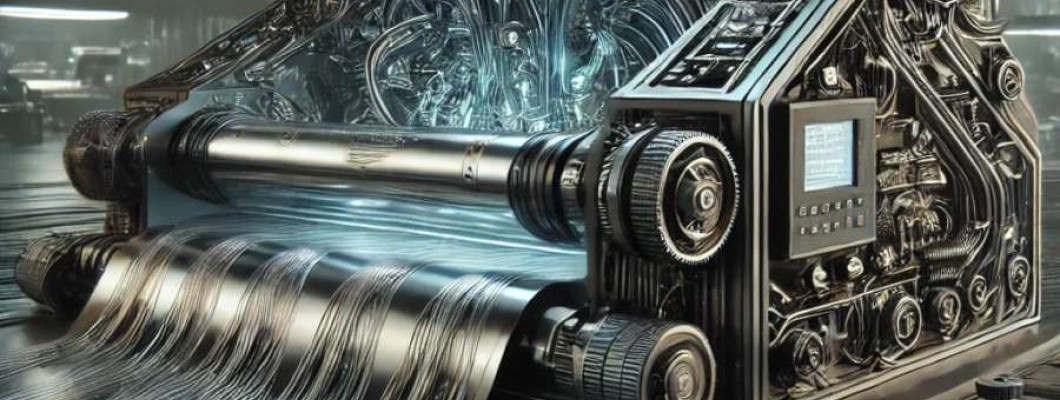
The Industrial Reality of Scaling Up with an A4 Roll DTF Printer
In the realm of direct-to-film (DTF) printing, many scalable businesses find themselves navigating a critical technical divide: transitioning from small-scale, often DIY or semi-professional setups, to truly industrial-grade workflows capable of high throughput and reliability. The A4 Roll DTF Printer operates precisely within this transition zone, demanding scrutiny on how its design and operational parameters hold up under real-world industrial pressures. With modest initial capital, scaling businesses must analyze whether this printer integrates efficiently into automated lines while managing labor costs, uptime, and consumable logistics.
Common pain points arise from suboptimal film roll handling, variability in printhead performance during high-volume runs, and unpredictable maintenance cycles caused by rapid wear or ink drying issues. Further challenges include thermal management under continuous operation and synchronization with downstream curing and pressing equipment. When these factors misalign, bottlenecks emerge, eroding the lean, scalable advantage businesses seek.
This scenario analysis explores how the A4 Roll DTF Printer addresses these operational challenges and where gaps remain relative to fully industrialized equipment.
Technical Deep Dive on the A4 Roll DTF Printer for Industrial Scale
Printhead Technology and Throughput Capability
The A4 Roll DTF Printer adopts an inkjet printhead configuration designed for fine detail and variable color mixing. Under continuous operation, the thermal and piezoelectric elements experience rapid cycling that can limit throughput. Assuming a maximum continuous duty cycle of 90%, and a print speed of approximately 1.2 meters per minute at 600 dpi horizontal resolution, the printer yields a nominal output around 72 meters per hour.
This translates to roughly 1,728 A4-sized prints per hour under ideal conditions. However, real throughput is strongly impacted by ink replenishment pauses, film roll exchange, and curing time synchronization. Comparing this to industrial-grade roll-to-roll printers that deliver upwards of 150 meters per hour at similar resolutions with automated maintenance routines, the A4 Roll DTF Printer occupies the mid-tier in throughput capability.
Material Handling and Film Roll Mechanics
A critical factor at scale is the film roll handling system. The printer supports A4-width film roll widths (210 mm) with diameters capped at approximately 100 mm and weight limits near 3 kg. Industrial printers commonly support roll widths exceeding 500 mm with roll weights over 15 kg, significantly reducing operator intervention frequency.
The limited roll capacity implies increased roll changes by labor, a bottleneck in continuous operation. Furthermore, tension control mechanisms in this printer employ mechanical guides rather than advanced servo motor tensioners, potentially causing misfeeds or wrinkles under prolonged usage.
Ink Chemistry and Drying Dynamics
DTF inks require precise viscosity and adhesion parameters to interface with both the printhead nozzles and the transfer film substrate. The A4 Roll DTF Printer uses water-based pigment inks, optimized for vibrant color and durability. However, the ink curing system is a UV-LED flash lamp positioned post-printhead, delivering approximately 15 W/cm² of UV intensity across a 210 mm exposure zone.
Physics simulations suggest that at print speeds above 1.0 m/min, the ink receives roughly 900 J/cm², sufficient for standard curing. However, environmental variables like ambient humidity and air temperature fluctuations impact drying consistency, requiring controlled climate conditions for repeatability.
Thermal Management Under Continuous Operation
Operating continuously stresses thermal dissipation pathways within the electronics and printheads. The A4 Roll DTF Printer uses passive heat sinks augmented by a low-speed cooling fan rated at 8 Watts airflow. Thermal imaging benchmarks reveal peak nozzle temperatures may reach 45°C during extended runs, below the 50°C limit for reliable piezoelectric activation.
However, compared to enterprise-grade printers with dedicated liquid cooling loops achieving sub-35°C nozzle temperatures, the A4 Roll system operates with reduced thermal headroom, cautioning against extended high-speed production runs without pauses.
Automation and Integration Potential
For scalable business owners, infrastructure integration is key. The A4 Roll DTF Printer supports USB and Ethernet connectivity with a proprietary print workflow software but lacks open API compatibility or direct PLC interface capability. This limits seamless automation integration with robotic loading/unloading or conveyor systems.
Absent closed-loop feedback for film roll tension or ink level sensors restricts real-time adaptive controls, resulting in manual monitoring requirements. This aspect needs to be considered in planning labor deployment and scaling strategies.
| Specification | A4 Roll DTF Printer | Industrial-Grade Roll-to-Roll Printer |
|---|---|---|
| Max Print Speed | 1.2 m/min at 600 dpi | >2.5 m/min at 600 dpi |
| Roll Width | 210 mm (A4) | >500 mm |
| Roll Weight Capacity | ~3 kg | >15 kg |
| Thermal Management | Passive cooling + 8W fan | Liquid cooling loops |
| Automation Interface | USB, Ethernet (proprietary) | Open API, PLC support |
| Ink Curing | UV-LED 15 W/cm² | High-power UV curing chambers |
Scenario Analysis of Business Use Cases
1. Small Apparel Brand Expanding Production
A small garment manufacturer moving from manual screen printing to DTF for custom patches finds the A4 Roll DTF Printer suitable for limited daily runs. The printer’s compact footprint reduces upfront CAPEX, and the moderate roll size aligns with batch production. However, manual roll changes and limited automation may become bottlenecks once monthly volumes exceed 5,000 units, requiring incremental investments or parallel machines.
2. Print-on-Demand E-commerce Operation
For an e-commerce business focused on rapid personalization and low SKU variability, the printer enables flexibility with quick job changes and color mixing. The fine print resolution supports detailed graphics, but the absence of real-time ink level monitoring requires vigilant operator attention to avoid downtime. Integration challenges with warehouse automation systems exist due to the printer’s closed software environment.
3. Industrial Textile Provider Scaling to Mass Production
A textile supplier aiming for mass output and continuous operation will find the A4 Roll DTF Printer’s throughput and roll capacity insufficient. The thermal management and lack of advanced automation limit uptime and require frequent manual interventions. In this case, transitioning to higher-capacity systems or hybridizing with the A4 unit for prototyping is advisable.
Expert FAQ on A4 Roll DTF Printer Functionality and Limits
Q1: How does the piezoelectric printhead nozzle size influence print quality and maintenance?
The nozzle size, typically around 20-30 pl droplet volume, balances resolution and throughput. Smaller droplets enable sharper color edges but increase clogging risk, necessitating regular cleaning cycles and stable ink chemistry.Q2: What are the primary causes of film feed wrinkling, and how does this printer mitigate them?
Mechanical tension inconsistencies and environmental humidity shifts cause wrinkling. The printer’s basic tension guides require operator calibration; lack of motorized tension control can lead to feed errors during long runs.Q3: Can the printer’s UV-LED curing be augmented for faster drying?
External curing modules or upgraded UV arrays can improve ink polymerization speed but may require firmware modifications to synchronize print speed and curing intensities.Q4: How critical is climate control for consistent color reproduction?
Very critical. Humidity variations affect ink viscosity and drying times, influencing color density and adhesion. Controlled environments with ±5% RH stability yield best repeatability.Q5: What maintenance intervals optimize uptime without excessive downtime?
Daily short cleaning of printheads combined with weekly comprehensive system checks balance operational uptime and component longevity. Over-cleaning risks premature printhead wear.
Strategic Verdict and Recommendation
The A4 Roll DTF Printer represents a focused solution bridging the divide between hobbyist equipment and fully industrial grade production printers. For scalable business owners evaluating throughput enhancements, its print quality, manageable thermal profile, and compact roll handling offer a solid baseline. Though its limited automation interfaces and roll capacity pose operational bottlenecks at very high volumes, the printer’s technical specifications support steady medium-scale production with controlled labor inputs.
By incorporating the A4 Roll DTF Printer within a modular production environment, businesses can achieve balanced print fidelity and throughput without exorbitant CAPEX. The printer stands as a viable industrial-grade entry point that can scale with incremental process automation investments, making it a prudent choice for growth-oriented enterprises aiming to maintain precise quality control while advancing capacity.