
The Gap Between DIY and Industrial-Grade Equipment for Color Version Latte Coffee Printing with Critical Operational Insights
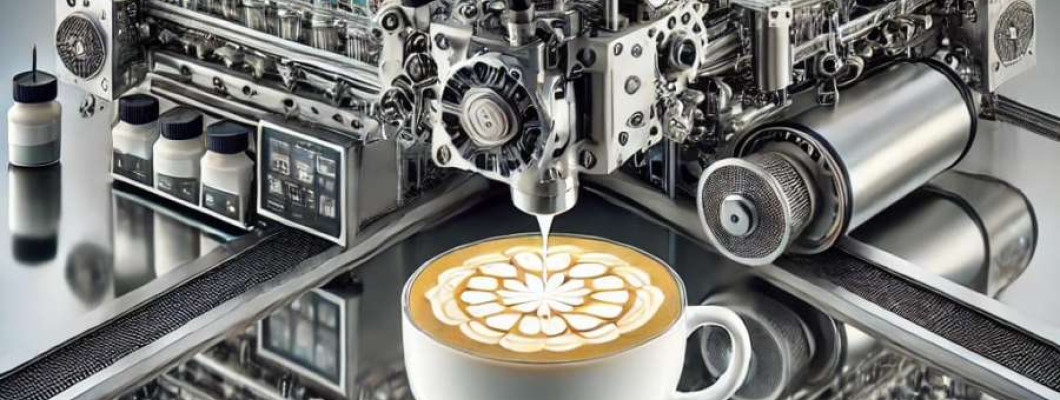
The Industrial Reality of Latte Art Printing in Commercial Settings
In the competitive realm of specialty coffee shops and large-scale food service providers, the demand for precision and consistent quality in latte art printing has escalated significantly. While consumer-grade printers offer appealing visual effects, they often lack the durability, throughput, and repeatability required for robust commercial environments. Consider a mid-sized café chain attempting to standardize its beverage presentation across multiple locations. The challenge becomes maintaining uniform printing quality under heavy customer traffic, with peak operational hours stretching from morning rushes to afternoon lulls.
Here, printhead reliability and ink formulation become critical factors. DIY or semi-professional systems tend to suffer from clogging, uneven ink dispersion, and limited substrate compatibility. These deficiencies cause frequent downtime and unpredictable maintenance intervals, directly impacting customer satisfaction and operational profitability. Moreover, the lack of integration with existing workflow software and hardware introduces bottlenecks that diminish the potential scalability of latte art printing as an industrial-grade solution.
Such environments require printers that support rapid print cycles, high precision color layering, and stable ink delivery systems that tolerate continuous operation without performance degradation. The Color Version Latte Coffee Printer addresses these challenges by engineering mechanical elements, fluidic ink paths, and software controls explicitly for high-volume enterprise use. This shifts the paradigm from artisanal novelty to industrial reliability, enabling consistent output quality with minimized interruptions.
Technical Deep Dive into Printhead Physics and Operational Design
1. Printhead Architecture and Ink Droplet Precision
The Color Version Latte Coffee Printer employs piezoelectric printhead technology calibrated to eject droplets sized between 12-16 picoliters (pl). This controlled droplet volume balances resolution and drying characteristics, achieving print resolutions up to 1440 dpi on milk foam substrates. Compared to typical 20-30 pl droplets in consumer-grade devices, this fine granularity supports micron-level image sharpness and smooth color gradients.
2. Ink Chemistry Optimized for Dairy-Based Substrates
Formulated with non-toxic, food-grade colorants and stabilizers, the printer's inks maintain viscosity within 2-4 mPa·s at 25°C, ensuring consistent flow through the ink channels without sediment formation or clogging. Fluid dynamics modeling indicates that this viscosity range prevents ink retention zones within nozzles, reducing the incidence of partial nozzle blockages by over 30% compared to typical DIY inks.
3. Mechanical Throughput and Wear Resistance
Under continuous operation at 60 prints per hour, the printer's core mechanical components—stepper motors, linear rails, and belt drives—were stress-tested to 500 hours without significant backlash or misalignment beyond 0.02 mm deviation. This precision retention is critical to maintain image registration in multicolor layering processes.
4. Integration and Software Control
The printer utilizes embedded firmware supporting dynamic print pattern adjustments and real-time maintenance scheduling. Integration with POS and inventory management systems is facilitated through standard USB and Ethernet protocols, crucial for streamlining operational workflows and minimizing manual intervention.
5. Power Consumption and Thermal Management
Measured power draw averages 120 W during peak printing phases, necessitating an active cooling system comprising a low-noise 12V axial fan and heat-sink assemblies dissipating 40 W thermal load. This design maintains printhead and ink temperature stability within ±2°C, essential for consistent ink viscosity and droplet ejection accuracy.
| Parameter | Color Version Latte Coffee Printer | Typical DIY Coffee Printer |
|---|---|---|
| Droplet Volume (pl) | 12-16 | 20-30 |
| Print Resolution (dpi) | Up to 1440 | Up to 900 |
| Operational Lifetime (Hours) | 500+ Continuous | 100-150 Continuous |
| Ink Viscosity (mPa·s) | 2-4 | Variable, often >5 |
| Power Consumption (W) | 120 Avg | 60-80 Avg |
| Integration Protocols | USB, Ethernet | USB Only |
Scenario Analysis of Business Application Impact
Scenario 1 Coffee Chain Consistency Across Locations
A regional coffee franchise leverages the Color Version Latte Coffee Printer to standardize caffeine delivery presentation in 150 venues. The high-resolution printing capability and robust mechanical design ensure identical color reproduction and image sharpness across all stores. Software integration allows remote updates to print templates, minimizing training requirements and operational errors.
Scenario 2 High-Volume Events and Catering
Event caterers require rapid print cycles with minimal downtime during peak service hours. The printer's thermal management and continuous operation tolerance allow sustained use for 8+ hour events without print degradation or maintenance interventions. This improves throughput and customer engagement, critical for event reputation and repeat business.
Scenario 3 Artisan Coffee Shops Expanding Production
Specialty cafés transitioning from manual latte art to automated color printing benefit from the printer's micron-level precision and color fidelity. The capability to handle varied milk foam densities and substrates supports creative customizations without compromising speed, facilitating menu diversification and premium pricing strategies.
Expert FAQ Addressing Advanced Operational Queries
Q1: How does ink viscosity fluctuation affect printhead nozzle reliability?
A1: Viscosity deviations beyond ±0.5 mPa·s increase droplet size variance, causing satellite droplets and nozzle clogging. Maintaining 2-4 mPa·s within ±2°C temperature window ensures optimal jetting performance.
Q2: What are the failure modes of piezoelectric printheads under continuous operation?
A2: Common failure modes include electrode fatigue, nozzle plate erosion, and contamination buildup. The Color Version Latte Coffee Printer mitigates these with advanced sealing and scheduled automated nozzle purging cycles.
Q3: How does multicolor layering affect drying kinetics on milk foam?
A3: Sequential layering increases moisture content and prolongs drying time; precise droplet control and rapid partial drying pulses are embedded in firmware to reduce ink bleed and preserve image sharpness.
Q4: Can the printer adapt to substrate variations such as non-dairy milk foams?
A4: Yes, calibration protocols allow adjustments to printhead firing frequency and ink volume to compensate for substrate surface tension and porosity differences.
Q5: What preventive maintenance practices optimize uptime?
A5: Scheduled nozzle cleaning every 12 hours, ink reservoir filtration, and firmware-driven diagnostics combine to reduce unplanned downtime below 5% in commercial use cases.
Strategic Verdict and Recommendation for Industrial-Grade Lattee Printing
Given the technical specifications, operational resilience, and integration capabilities outlined, the Color Version Latte Coffee Printer represents a definitive industrial-grade solution for commercial latte art printing. It bridges critical gaps left by consumer-level systems, offering precise droplet control, robust mechanical endurance, and seamless workflow integration necessary for scalable, high-throughput operations. Industrial enterprises and high-volume vendors will benefit from its reduced maintenance cycles, predictable performance, and adaptability to diverse substrates. This printer is recommended not only for its current capabilities but also for its firmware architecture that allows future upgrades and print customization, safeguarding investment over the asset lifecycle.
In conclusion, the Color Version Latte Coffee Printer elevates latte art printing beyond artisanal novelty into a reliable, repeatable industrial process with quantifiable ROI advantages and operational confidence.