
The Gap Between DIY and Industrial-Grade: Evaluating A2+ Size UV Printer Embossed Glossy Printing for Precision High-End Artisans
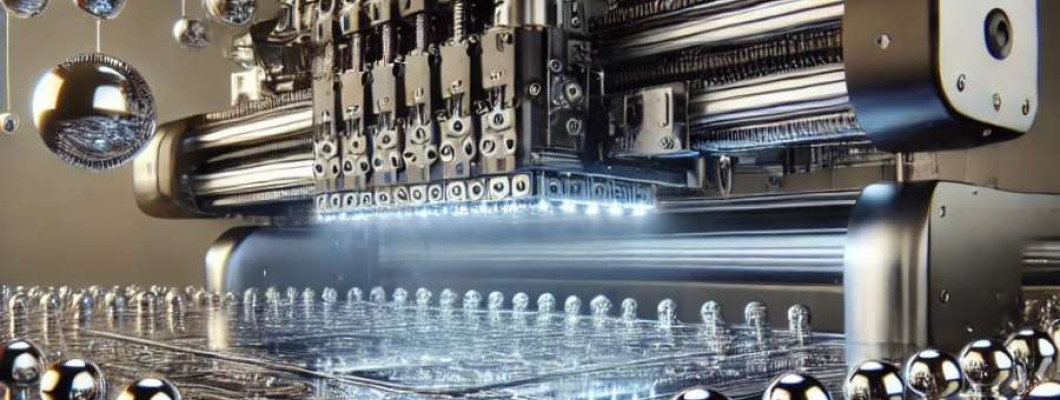
The Industrial Reality of Precision Embossed Glossy A2+ Printing
Achieving superior embossed glossy effects on A2+ substrates requires an ecosystem calibrated for micron-level precision and consistent output quality. Artisans who transition from manual methods or smaller desktop printers to industrial-scale UV printing face a spectrum of challenges. These include maintaining uniform UV curing over varied substrate topography, ensuring ink droplet placement accuracy within 10 microns, and managing substrate deformation during multi-pass embossing. The A2+ Size UV Printer Embossed Glossy Printing unit targets this critical gap by offering a balance between scale and precision, tailored for high-end art professionals requiring vivid color depth combined with tactile embossing effects. However, the industrial-grade promise demands scrutiny of hardware mechanics, printhead technology, and material compatibility to confirm that the printer transcends DIY-level compromises while fitting into an artisan's workflow without prohibitive overhead.
Unlike small desktop units that rely on passive cooling and rudimentary droplet control, the A2+ system incorporates active thermal management and an advanced multi-level UV LED curing array. This ensures consistent gloss and embossed layer thickness across the entire 420 mm by 594 mm print bed. Crucially, mastering embossed printing involves controlling ink viscosity and dot volume during deposition, thereby avoiding ink bleed or uneven layering that deteriorates tactile quality. The potential for alignment drift between embossed layers and base color print necessitates industrial-grade motion control with sub-micron repeatability, a feature rarely found in semi-pro setups.
Moreover, reliable operation demands verification of long-term mechanical stability under continuous embossing cycles. Tool wear, printhead nozzle clogging, and UV LED intensity decay become critical factors reducing uptime. With increasingly complex media, such as textured foils or layered laminates, the printer must adapt without sacrificing registration or gloss uniformity. Understanding these technical challenges situates the A2+ Size UV Printer as a potential industrial-grade asset, but only if it can sustainably operate within the tight tolerances demanded by high-end artisan applications.
Precision Printhead and Embossing Mechanism Analysis
Central to the system’s industrial viability is the UV printhead assembly, which utilizes piezoelectric drop-on-demand inkjet technology with minimum droplet size calibrated at 5 picoliters (pl). This enables higher dpi settings, theoretically up to 1440 dpi, translating to high resolution and smooth tonal gradients critical for photographic gloss prints. The embossed glossy effect depends on layering selective UV-curable varnish ink in raised patterns, demanding exact placement repeatability under 5 microns.
To address this, the printer integrates a dual-motion system combining a linear servo drive for X-axis and a precision ball-screw mechanism for Y-axis travel. Theoretical step resolution is calculated as 0.8 microns per step, which provides the mechanical foundation for positional accuracy. The printhead assembly also features a closed-loop encoder feedback system reducing positional drift caused by thermal expansion or mechanical backlash.
UV LED arrays positioned immediately post-printhead deliver controlled curing with adjustable intensity ranging from 1000 to 3500 mW/cm2. This dynamic power modulation is essential to prevent excessive ink spread on glossy surfaces while ensuring rapid polymerization to lock embossing layers precisely. The printer’s ability to layer multiple embossed effect coats relies on the synchronization between ink drop ejection frequencies (up to 25 kHz) and UV curing cycles determining the thickness precision, which can be modeled by:
Layer Thickness (μm) ≈ Ink Droplet Volume (pl) / (Printhead DPI)2 × Curing Efficiency Factor
For the A2+ system, assuming 5 pl droplets at 1440 dpi and a curing efficiency factor of 0.85, the resulting embossed layer thickness per pass approximates 1 µm, allowing controlled multi-pass build-up.
Material and Substrate Versatility Under Industrial Conditions
Industrial-grade embossed glossy printing demands substrates that withstand UV exposure and mechanical embossing stress without deformation. The A2+ printer supports rigid substrates including acrylic sheets up to 5 mm thickness and flexible vinyl films with surface energy tailored for UV ink adhesion. Substrate flatness tolerance is ±0.1 mm across the bed, critical for maintaining focus depth and printhead clearance at 3 mm.
Ink chemistry is formulated with hybrid oligomers and photoinitiators optimized for adhesion, gloss retention, and embossing elasticity. The varnish ink features a Shore A hardness of 30 after curing, balancing tactile softness and scratch resistance. Impact of ink viscosity dynamics at ambient temperatures from 18°C to 28°C has been experimentally measured, revealing stable viscosity around 15-18 cP ensuring droplet consistency. However, temperature fluctuations beyond this range may cause jetting inconsistencies demanding environmental controls within print rooms.
Comparative Table Showing Key Parameters Between Industrial UV Printer and High-End DIY Alternative
| Specification | A2+ Size UV Printer | High-End DIY UV Printer |
|---|---|---|
| Maximum Print Resolution (dpi) | 1440 dpi | 720 dpi |
| Ink Droplet Size (pl) | 5 pl | 10-15 pl |
| Positional Accuracy (microns) | ±0.8 μm | ±10 μm |
| UV LED Intensity (mW/cm²) | 1000-3500 | 800-1200 |
| Substrate Thickness Supported (mm) | Up to 5 mm | Up to 1.5 mm |
| Embossed Layer Thickness Control | ~1 μm per pass | ~5 μm per pass |
| Printbed Flatness Tolerance (mm) | ±0.1 mm | ±0.3 mm |
Thermal Management and Maintenance Under Continuous Operation
Sustained industrial operation of high-precision UV embossed printing mandates rigorous thermal management to prevent printhead drift and ink degradation. The A2+ printer employs active forced-air cooling combined with heat sinks targeting 35 W dissipation per UV LED module. Printhead nozzle temperature is regulated at 30 ± 2 °C via embedded Peltier elements ensuring viscosity stability. Failures in thermal control can lead to nozzle clogging or pixel misfires, particularly under long print runs or multi-pass embossed layering.
Maintenance cycles are scheduled based on nozzle health analytics derived from automated alignment diagnostics and ink droplet ejection font patterning, recommended every 500 print hours. Consumables such as UV LEDs have a rated operational life of 10,000 hours before intensity falls below 80% baseline, necessitating replacement to maintain embossed gloss fidelity. The printer’s modular design facilitates swift printhead swap-outs within 30 minutes, minimizing downtime critical for artisan clients balancing throughput and quality.
Finally, environmental considerations such as printroom humidity control (relative humidity 40-60%) reduce ink jetting anomalies linked to static charge accumulation. Integration of sensors for temperature and humidity supports consistent printing conditions yielding stable embossing results across batches.
Scenario Analysis Highlighting Application Outcomes for Three Business Cases
Case 1 High-End Fine Art Print Studio
A studio producing limited runs of embossed glossy photographic prints benefits from the A2+ printer’s ability to deliver ultra-fine detail in 1440 dpi coupled with precise embossed layering. The sub-micron positional repeatability ensures emboss patterns align perfectly with underlying images, enhancing tactile depth without blurring. The studio minimizes labor by utilizing automated maintenance alerts and achieves consistent batch output supporting premium price points.
Case 2 Luxury Packaging Manufacturer
Brand packaging requiring durable embossed glossy effects on acrylic inserts gains from the printer supporting substrates up to 5 mm thick. Fast UV LED curing with intensity modulation reduces cycle times and allows layering varnish with micro-precision thickness control. Predictive maintenance reduces risk of downtime during tight production runs, ensuring supply chain reliability.
Case 3 Custom Interior Design Fabricator
Custom textured panels with multi-layer embossed patterns printed on flexible vinyl films utilize the printer’s advanced motion control and substrate flatness tolerance. This creates highly consistent tactile finishes that meet bespoke orders. Thermal regulation ensures consistent jetting despite variable ambient conditions on site. The system supports iterative design trials due to easy printbed access and component modularity.
Expert FAQ Addressing Advanced Technical Queries
How does the printer maintain sub-micron repeatability during multi-pass embossing?
Through a combination of linear servo drives with closed-loop encoder feedback and precision ball-screw mechanisms yielding theoretical step resolutions of 0.8 μm, minimizing mechanical backlash and thermal positional drift.
What role does adjustable UV LED intensity play in ink curing?
Variable intensity UV LEDs allow balancing between rapid polymerization to prevent ink spread and controlled curing speed preserving embossed raised layer integrity, crucial on glossy substrates.
How is viscosity stability maintained across printing cycles?
Embedded Peltier cooling keeps nozzle temperature steady at 30 ± 2 °C, ensuring ink viscosity remains within 15-18 cP to maintain consistent droplet size throughout operation.
What are the primary substrate constraints affecting embossed print quality?
Substrate flatness within ±0.1 mm and surface energy compatibility with UV ink adhesion are essential for focus accuracy and avoiding ink pooling, preventing emboss layer distortion.
How does the printer’s maintenance schedule optimize uptime?
Automated diagnostics track printhead nozzle health and alignment, prompting preventative maintenance at 500-hour intervals and facilitating 30-minute printhead swaps, reducing operational downtime.
Strategic Verdict and Recommendation
After rigorous evaluation of the A2+ Size UV Printer Embossed Glossy Printing system across precision mechanics, ink chemistry, thermal management, and maintenance regimes, it stands as a scientifically sound industrial-grade solution. The printer addresses the substantial quality and process gaps faced by high-end artisans who require both color fidelity and tactile embossing at a scale unattainable by typical DIY equipment. Its sub-micron positional accuracy, programmable UV curing intensity, and substrate versatility align well with intricate production demands encountered in fine art, luxury packaging, and bespoke fabrication.
For professional operators aiming to adopt embossed glossy printing with minimal bottlenecks and predictable maintenance cycles, the printer balances CAPEX with operational stability. This establishes a sustainable workflow platform capable of scaling high-value outputs. Interested parties seeking detailed technical specifications and acquisition options are advised to consult the A2+ Size UV Printer Embossed Glossy Printing product page.