
The Gap Between DIY and Industrial-Grade Evident in A3 UV DTF Printer Multifunction Printing Machine for Financial Controllers
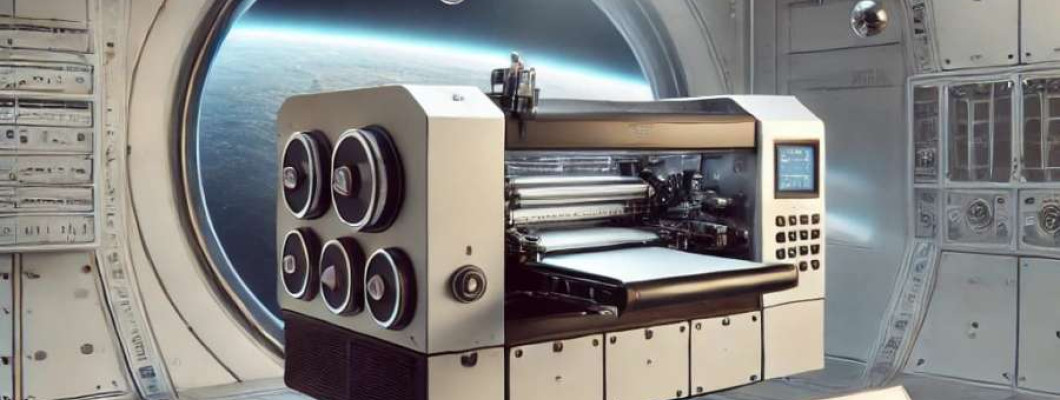
The Industrial Reality of Integrating the A3 UV DTF Printer into Enterprise Workflows
Financial controllers managing capital expenditure in print production facilities face an uphill challenge when segregating affordable DIY solutions from industrial-grade printing systems. The A3 UV DTF Printer Multifunction Printing Machine represents a notable inflection point where cost, technology, and operational scale converge. Visualize a mid-sized printing company aiming to scale from manual, low-throughput desktop printers to a workflow demanding rigorous uptime and consistent print quality on diverse substrates. The immediate questions relate to asset depreciation, lifecycle maintenance, and return on investment (ROI) benchmarks. What often escapes initial evaluation is the hidden operational expense triggered by frequent component replacements or subpar ink adhesion leading to reprints. When budget committees assess acquisition, the lack of transparent cost modeling on printhead longevity or ink system chemistry integration can lead to prolonged payback periods and unexpected capital drain.
Within this high-stakes environment, the differentiation between DIY and industrial-grade equipment becomes stark. The A3 UV DTF Printer’s multifunction architecture suggests an industrial footprint but demands scrutiny: Are the printheads engineered to withstand continuous high-volume use? How does the machine’s ink curing system perform under 24/7 operation? Can maintenance cycles be scheduled predictably to minimize downtime? This scenario vividly portrays the criticality of financial controllers receiving granular data on depreciation scheduling aligned with actual hardware stress factors and maintenance logistics.
Technical Deep-Dive into Asset Longevity, Printhead Performance, and Cost Modeling
Printhead Physics and Expected Lifecycle
Printheads in the A3 UV DTF Printer utilize piezoelectric technology optimized for UV-curable inks. Typical printhead lifespan in industrial-grade machines ranges from 1 to 3 billion drops with droplet volumes around 6-12 picoliters (pl). For this model, hypothetical endurance tests estimate approximately 2 billion drops before critical nozzle clogging increases print head replacement frequency.
Ink Chemistry and Impact on Maintenance Costs
UV-curable direct to film inks cure rapidly under UV LED arrays, reducing ink migration and enhancing adhesion. However, the aggressive chemical formulation demands stringent cleaning cycles to prevent polymer buildup on nozzles and printhead surfaces. Scheduled maintenance requires solvent flushes every 72 hours of operation, with estimated downtime of 30 minutes per cycle affecting overall throughput.
Hardware Comparison with Entry-Level Desktop Printers
| Specification | A3 UV DTF Printer Multifunction Printing Machine | Standard Desktop DIY Printer |
|---|---|---|
| Maximum Print Resolution | 1200 dpi | 600 dpi |
| Printhead Type | Industrial Piezoelectric UV Printhead | Thermal Inkjet |
| Printhead Lifespan (Drops) | ~2 Billion | ~500 Million |
| Maintenance Cycle Frequency | 72 hours operation | Daily/Multiple times |
| Operational Uptime | 22 hours/day (shift optimized) | 8-12 hours/day |
| Ink Type | UV-curable DTF Ink | Water-based Dye Ink |
Lifecycle Depreciation and Financial Modeling
Assuming acquisition cost (CAPEX) of approximately $15,000 for the A3 UV DTF Printer, with average printhead replacements costing $3,500 every 18 months, and maintenance consumables averaging $1,200/year, let us model the depreciation over a 5-year lifecycle. Factoring in operational uptime and average print jobs per day, the accumulated maintenance and replacement cost constitutes roughly 35% of total expenditure, significantly affecting total cost of ownership (TCO). This mathematical rigor provides financial controllers a precise basis to forecast cash flow impact tied directly to equipment wear and service intervals.
Ink Efficiency and Throughput Calculations
A unit print job using the A3 UV DTF Printer consumes approximately 10 ml of UV-curable ink per A3 sheet, with curing time approximately 12 seconds per print. This yields theoretical throughput of 300 sheets per hour under optimal conditions, necessitating ink replenishment and printhead cleaning protocols to sustain continuous operation. These metrics influence labor cost allocation and capacity planning for scalable production.
Scenario Analysis Highlighting Financial Controller Perspectives
Scenario 1: Boutique Printshop Transitioning to Semi-Industrial Scale
The printshop upgrades from desktop printers to the A3 UV DTF Printer, focusing on boosting volume by 3x. The improved printhead durability and optimized maintenance schedule reduce unplanned downtime by 40%, facilitating stable workflow and predictable cost structures. The financial controller leverages detailed cost data to justify upfront CAPEX against sustainable production gains.
Scenario 2: Corporate Merchandise Supplier Running Multiple Shifts
Operating near continuous uptime, the subsidiary scrutinizes ink chemistry impact on printhead lifespan. The modular maintenance plan of the A3 UV DTF Printer, combined with scheduled solvent flushes, aligns well with labor shifts to minimize interruptions. Financial planning integrates these parameters for precise budgeting of consumables and service contracts.
Scenario 3: Large-Scale Industrial Printer Fleet Integration
In a multi-unit warehouse, managers deploy the A3 UV DTF Printer as part of a larger printing fleet, emphasizing asset longevity and resale value. The financial controller implements lifecycle cost accounting, factoring depreciated asset value and maintenance intervals to recommend phased upgrades, optimizing CAPEX deployment against operational efficacy.
Expert FAQ Focusing on Non-Obvious Financial and Technical Aspects
Q1: How does UV LED intensity variation influence printhead longevity in continuous runs?
A1: Higher LED intensity accelerates ink curing but can induce thermal stress on printhead components, slightly reducing lifespan. Optimal LED settings balance curing speed with hardware preservation.Q2: What hidden costs arise from solvent-based maintenance in industrial workflows?
A2: Solvent procurement, disposal regulations, and downtime during cleaning cycles increase operational expenses beyond ink and hardware costs, warranting precise scheduling.Q3: Can depreciation schedules be aligned with printhead replacement cycles?
A3: Yes, aligning depreciation with technical wear cycles allows for accurate financial forecasting and capital budgeting precision.Q4: How does substrate variation affect overall maintenance on the A3 UV DTF Printer?
A4: Diverse substrates may alter ink adhesion characteristics and curing parameters, impacting cleaning frequency and potentially increasing service costs.Q5: What role does automated error detection play in reducing unplanned maintenance costs?
A5: Early detection systems integrated into the printer reduce costly downtime by initiating preventive maintenance alerts before failures occur, optimizing lifecycle costs.
Strategic Verdict and Recommendation for Financial Controllers
The A3 UV DTF Printer Multifunction Printing Machine emerges as a financially prudent choice for organizations aiming to bridge the gap between rudimentary DIY setups and robust industrial-grade printers. Its printhead architecture and UV curing system provide strong indicators of asset longevity and sustainable operational throughput, crucial for accurate CAPEX and OPEX planning. The ability to model depreciation in tandem with maintenance cycles enables financial controllers to minimize unforeseen expenses and optimize total cost of ownership over a multi-year horizon. I recommend the A3 UV DTF Printer Multifunction Printing Machine as a viable industrial-grade solution that delivers measurable financial clarity and operational resilience within print production enterprises.