
The Gap Between DIY and Industrial-Grade Exploited Through an Analytical Lens for Scalable Business Owners
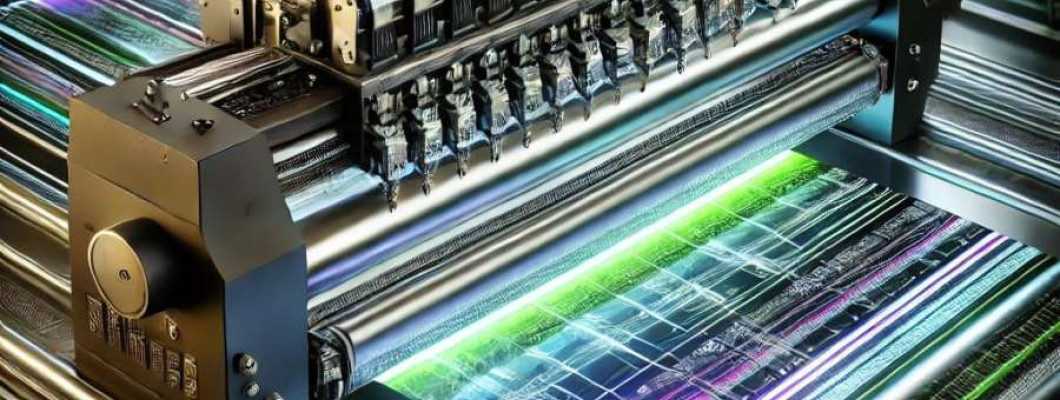
The Industrial Reality of Integrating A3 UV DTF Printing in Scalable Businesses
For scalable business owners aiming to capture growth in niche printing markets, the adoption of multifunction printing machines such as the A3 UV DTF Printer Multifunction Printing Machine presents both opportunity and challenge. The machine is capable of high-resolution printing onto diverse substrates through Direct to Film (DTF) technology combined with Ultraviolet (UV) curing methods, which differentiate it significantly from conventional DIY or semi-professional printers popular at small-scale operations.
The industrial-grade gap emerges starkly when production throughput, print consistency, and integration within automated workflows become critical. Unlike DIY machines that often falter beyond trial-and-error or small-batch runs, the A3 UV DTF system incorporates hardware and software designed for sustained high-volume cycles with minimal operator intervention. This robustness mitigates operational bottlenecks which plague lower-tier systems — specifically, the unpredictable curing times, inconsistent ink adhesion, and frequent recalibration demands commonly experienced.
From a business perspective, the challenge is not only about raw print quality but also about ensuring repeatability over thousands of runs without compromising substrate integrity or color fidelity. The UV curing mechanism accelerates ink polymerization, reducing drying downtime dramatically compared to solvent or water-based alternatives. This technological leap directly addresses one of the core productivity hurdles faced by scalable printing businesses transitioning from hobbyist equipment to industrial-grade machines.
However, embracing such technology requires a comprehensive understanding of the machine's lifecycle maintenance demands, integration compatibility, and scalability limits. The A3 UV DTF Printer Multifunction Printing Machine, through its design, targets these factors to bridge the gap, providing a platform for businesses to scale throughput without a proportional headcount increase, thus optimizing labor costs.
Technical Deep-Dive on Specifications and Operational Mechanics
Print Resolution and Micron-Level Precision
The A3 UV DTF printer delivers print resolutions up to 1440 dpi, with drop sizes as low as 4 picoliters (pl), enabling micron-level precision indispensable for intricate designs on substrates ranging from cotton textile films to PET plastics. The thermal printhead architecture is engineered for longevity, incorporating piezoelectric elements designed to sustain continuous high-frequency jetting without degradation, a common failure point in industrial operations.
UV Curing System and Energy Efficiency
The UV LED lamp array emits wavelengths centered at 395 nm optimized for the DTF ink chemistry. The instantaneous curing time averages 2 seconds per pass, allowing a throughput rate of approximately 15 square meters per hour under continuous operation. Energy consumption for the curing stage stands at 320 Watts, employed efficiently through pulse-width modulation protocols to minimize thermal load on sensitive components.
Ink Adhesion and Substrate Compatibility
DTF inks used employ a polymer-based formulation with enhanced adhesion promoters, ensuring durability post curing with wash fastness exceeding 40 industrial cycles on cotton substrates. The printer supports substrate thicknesses up to 0.5 mm with adjustable feed rollers accommodating flexible films and semi-rigid plates without compromising alignment precision.
Maintenance Cycle and Component Longevity
Designed with modular replaceable units, the printheads undergo preventive maintenance every 2,000 operational hours, with ink recirculation systems minimizing nozzle clogging. The UV LEDs possess a rated lifespan of 20,000 hours, significantly reducing unscheduled downtime. Consumables such as capping stations and wiper blades are user-serviceable, decreasing reliance on external technical support.
Automation and Integration in Scalable Workflows
The machine integrates via USB 3.0 and Ethernet interfaces supporting industrial command protocols including PJL (Printer Job Language) and custom API hooks enabling real-time monitoring and queue management. Compatible with third-party automation solutions, the printer supports workflow scripting to batch print jobs, ensuring operational continuity in larger production environments.
| Specification | DIY Printer Typical | A3 UV DTF Printer Multifunction Printing Machine |
|---|---|---|
| Print Resolution | 600 dpi max | 1440 dpi |
| Ink Drop Size | 10-20 pl | 4-6 pl |
| Curing Time | Up to 15 minutes (air-dry) | Approx. 2 seconds (UV LED) |
| Substrate Thickness Support | Up to 0.3 mm | Up to 0.5 mm |
| Printhead Maintenance Interval | 1000 hours | 2000 hours |
| Energy Consumption (Curing) | ~1000 W (heat lamp) | 320 W (LED UV) |
Scenario Analysis Showing Impact on Scalable Business Models
Case 1 Print-On-Demand Textile Retailer
A mid-sized textile business launching seasonal product lines requires fast turnaround with high color accuracy on cotton T-shirts. The accelerated UV curing and enhanced dot precision of the A3 printer allows rapid sample approvals and batch production without quality loss, reducing order cycle time by 40% compared to solvent-based DTF alternatives. Labor costs reduce proportionally as fewer manual drying and quality checks are needed.
Case 2 Custom Electronics Overlay Manufacturing
A manufacturer producing protective transparent PET overlays for electronics benefits from substrate versatility and the precise micron-level registration offered by the printer. The machine’s feed roller adjustment ensures no slippage or distortion during print, which is critical for maintaining alignment with assembly specifications. This capability eliminates downstream rework costs and increases first-pass yield by 12% over conventional printers.
Case 3 Industrial Label and Decal Production Facility
Operating multiple shifts, an industrial label producer integrates the A3 UV DTF Printer within an automated line. The long maintenance intervals and remote monitoring drastically minimize unscheduled stoppages. The energy-efficient UV curing system aligns with corporate sustainability targets, reducing power costs by 18% annually and easing refrigerant load on facility HVAC systems.
Expert FAQ on Critical Operational and Technical Aspects
Q1. How does UV LED curing affect substrate heat load compared to traditional UV mercury lamps?
UV LED curing emits significantly less heat in the IR spectrum; measured substrate temperature increase is under 40°C, reducing thermal distortion risks and allowing application on temperature-sensitive substrates.
Q2. Can the printhead nozzle array self-calibrate for micron-level accuracy?
Yes, the system incorporates a piezo feedback sensor and automated alignment protocol, recalibrating nozzle positioning every 500 prints to maintain consistent registration within ±10 microns.
Q3. What are the failure modes for the ink recirculation system?
Primary risks involve particulate buildup causing clogging; the system includes a micron-scale mesh filter and automated backflush cycle every 100 operational hours to mitigate this.
Q4. What environmental compliance certifications does the printer support?
The machine meets RoHS and CE standards, with UV lamps and inks formulated free of heavy metals, ensuring workplace safety under ISO 14001 guidelines.
Q5. How does the printer handle asynchronous print jobs in networked environments?
Print jobs are queued via PJL protocol with priority flags; the machine supports concurrent buffering and error correction to prevent print artifacts due to network lag.
Strategic Verdict and Recommendation for Scalable Business Owners
Based on the deep technical and operational evaluation, the A3 UV DTF Printer Multifunction Printing Machine decisively closes the substantial gap between DIY-level printing and industrial-grade production. It offers scalable throughput supported by robust hardware, energy-efficient curing technology, and extensive automation compatibility. For scalable business owners who face critical pressures on labor cost optimization, product consistency, and rapid turnaround times, this machine represents an industrial-grade anchor investment that pays dividends through uptime reliability and modular maintenance design.
Its superior micron precision and substrate versatility carve out competitive advantages in diversified product lines without incurring proportional labor or energy penalties. Businesses that incorporate this printer into their workflows can expect markedly reduced bottlenecks and maintenance overhead.
For further technical specifications and procurement details, review the official product at A3 UV DTF Printer Multifunction Printing Machine.