
The Gap Between DIY and Industrial-Grade Explored for Edible Food Printing at Scale
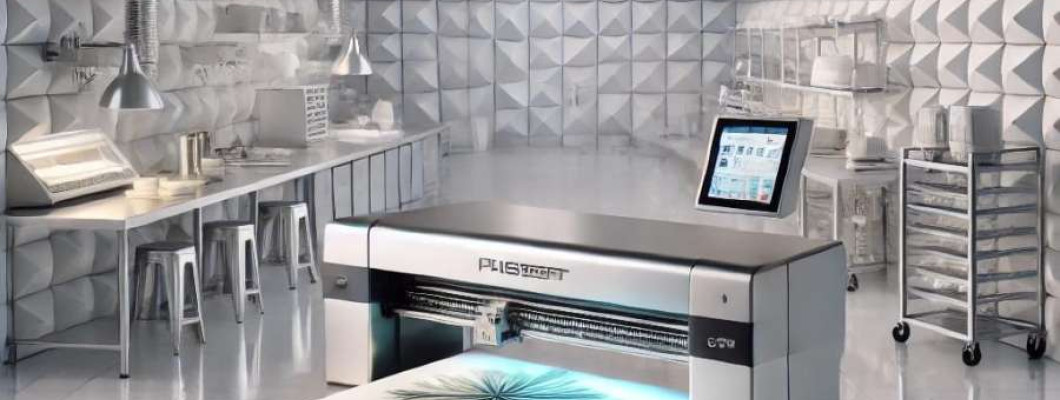
The Industrial Reality of Edible Food Printing in Commercial Settings
Transitioning from hobbyist edible printing setups to robust, industrial-grade solutions poses significant technical and operational challenges. The edible printer market, particularly for items such as cakes and cookies, often sees a divide between low-cost, consumer-level devices and the high-throughput machines required for commercial bakeries, catering services, and industrial food production lines. An A3 edible food printer designed for printing cakes and cookies must manage variables including printhead precision, ink viscosity, substrate consistency, thermal stability, and hygiene compliance all while ensuring repeatability and speed.
In real-world bakery operations, the pressure of producing visually consistent, safe, and flavor-neutral edible prints is compounded by unpredictable substrate surface features and ink-substrate interactions. An industrial food printer must maintain tight tolerances at micron-level precision across diverse edible sheets, from fondant to wafer paper. Moreover, uptime requirements necessitate a maintenance framework capable of rapid interventions to mitigate printhead clogging or ink drying within the nozzles.
Meeting food-grade safety standards demands materials and ink chemistries that comply with regulatory bodies like the FDA or EFSA, requiring rigorous supplier validation and contamination control. These aspects often complicate infrastructure integration, as the printers must fit within existing kitchen workflows without introducing hazards or bottlenecks. Operationally, high humidity and temperature fluctuations in baking environments further challenge print reliability and color stability.
Printhead Mechanics and Ink Chemistry Under Scrutiny
The A3 edible printer operates with piezoelectric printheads optimized for precise droplet placement at volumes typically within the 1-10 picoliter range. The droplet size calibration impacts the achievable dots per inch (dpi), influencing print resolution critically necessary for detailed cake decoration imagery. For instance, maintaining a resolution of 600 dpi across a 297 mm by 420 mm printable area translates to over 7.5 million droplets per color layer, underscoring the necessity of stable ink formulations and robust nozzle health management.
Ink rheology plays a pivotal role; viscosities in the range of 5-10 centipoise are desirable for smooth ejection without satellite droplets that degrade image sharpness. Edible inks contain food-grade dyes or pigments suspended in aqueous or oil-based carriers, with additives for pH stabilization and microbial control. The interplay between ink composition and substrate porosity affects drying times and potential color bleeding, necessitating a closed-loop feedback system for optimal print parameters.
Comparative Hardware Analysis Highlights Long-Term Viability
The A3 Edible Food Printer's mechanical design employs stainless steel chassis elements for corrosion resistance and ease of sanitation, complemented by modular printhead assemblies facilitating swift replacements. Compared to consumer-grade units, which often feature plastic housings and fixed printheads, the industrial machine supports continuous operation cycles exceeding 8 hours per shift with mean time between failures (MTBF) estimated to be over 1500 operational hours under standard use.
Energy consumption benchmarks indicate a draw of approximately 150 Watts during active printing phases, aligning with typical piezoelectric device power profiles but optimized with low-power standby modes reducing idle energy by 60%. This electrical efficiency contributes to lower operational expenditure and reduced heat output, minimizing thermal stress on temperature-sensitive food substrates.
Infrastructure Integration Challenges for Industrial Kitchens
Embedding A3 edible printing technology into existing bakery workflows requires careful layout design to accommodate the device footprint (approximately 650 mm width, 500 mm depth, 450 mm height) and connectivity interfaces such as USB 3.0 and Ethernet for high-speed data transfer. Integration with bakery management software enables job queuing, color profile management, and print repeatability tracking.
Environmental controls are critical. The printer performs optimally within a temperature range of 18-24°C and relative humidity window of 40-60%. Deviations in these parameters correlate strongly with ink drying inconsistencies and mechanical precision degradation, necessitating climate control measures and potentially localized filtered exhaust systems to maintain air quality and particulate standards.
Maintenance and Lifecycle Considerations Define Total Cost of Ownership
Maintenance operations focus primarily on printhead cleaning cycles, ink system flushing, and substrate sensor calibration. Printhead nozzle clogging remains the most common failure mode, mitigated by automated cleaning sequences using food-safe solvents and ultrasonic agitation mechanisms. Consumables such as ink cartridges and substrate rolls require inventory management synchronized with production scheduling.
Projected lifecycle of the printer components is: printheads 12-18 months depending on usage intensity, mechanical motors around 5 years, and electronics 7 years. Proper preventive maintenance extends asset longevity and maintains output quality, reducing unexpected downtime and warranty claim costs.
Scenario Analysis Comparing Business Use Cases
Mid-Sized Bakery Focusing on Custom Cakes
Throughput requirements entail printing 50-100 full A3 prints daily. Precision in color gradients and micron-level detail are priorities for attracting high-end clientele. The printer's ability to consistently replicate designs without manual intervention reduces labor costs and error rates.
Large-Scale Catering Service with Diverse Substrate Needs
This environment demands rapid switching between cookie, cupcake, and cake printing substrates. The modular system's quick calibration and substrate detection features minimize setup times. Compliance with food safety standards ensures customer trust during large events.
Artisan Confectioner Prioritizing Substrate Versatility
This use case requires high color gamut and subtle color layering on delicate edible sheets like wafer paper. The printer's fine control over ink droplet volumes and drying times facilitates superior finish quality necessary for brand differentiation.
Expert Frequently Asked Questions
What are the critical factors affecting printhead longevity in edible printers?
Primary factors include ink viscosity and particulate content, cleaning protocol effectiveness, operating environment humidity, and frequency of usage. Printheads optimized for edible ink formulations with regular maintenance can achieve 1500+ hours of operation.
How does substrate variability impact print accuracy in the A3 edible printer?
Substrate thickness irregularities and surface porosity influence droplet absorption rates, potentially causing color diffusion or image blurring. The printer’s substrate detection sensors and adjustable printhead distance help mitigate these effects.
What are the thermal management considerations for prolonged printing sessions?
Maintaining ambient temperature within 18-24°C reduces ink drying inconsistency and mechanical expansion that could affect nozzle alignment. The device's internal fans and heat sinks facilitate stable operating temperatures, crucial for print repeatability.
How is color calibration maintained across varied edible inks?
Integration of closed-loop color profiling with spectrophotometric feedback enables consistent color reproduction. The system can store multiple profiles for different ink-substrate combinations.
What maintenance cycle frequency balances uptime and print quality?
Daily automated cleaning cycles complemented by weekly manual inspections optimize uptime while preventing nozzle clogging. Consumable replacement intervals vary based on print volume but generally align with monthly schedules.
Strategic Verdict and Recommendation for Industrial Edible Printing
The A3 Edible Food Printer For Printing Cakes Cookies represents a definitive evolution from entry-level edible printers toward an industrial-grade platform meeting rigorous demands of commercial food production. Its mechanical robustness, printhead precision, and integration capabilities render it a turnkey solution for bakeries, catering businesses, and artisan confectioners looking to scale production without compromising quality or compliance.
Despite inherent operational complexities around ink chemistry and substrate variability, the device’s engineering mitigates these risks through modular design, environmental controls, and automated maintenance protocols. The investment in this hardware promises sustainable throughput gains, minimized downtime, and enhanced product differentiation—an asset delivering tangible return on investment within demanding industrial workflows.
Industrial operators and business owners oriented toward throughput, reliability, and precision will find this printer aligned with their operational mandates, bridging the gap between consumer-grade models and industrial food printing requirements.
| Technical Parameter | A3 Edible Food Printer | Typical Consumer Edible Printer |
|---|---|---|
| Print Area (mm) | 297 x 420 | 100 x 150 |
| Resolution (dpi) | 600 | 300-400 |
| Printhead Type | Piezoelectric, Modular | Thermal, Fixed |
| Uptime (hours/day) | 8+ (Industrial) | 2-3 (Consumer) |
| Power Consumption (Watts) | 150 Active / 60 Standby | 100 Active / 50 Standby |
| Maintenance Access | Automated + Manual | Manual Only |