
The Gap Between DIY and Industrial-Grade Explored for Scalable Business Owners
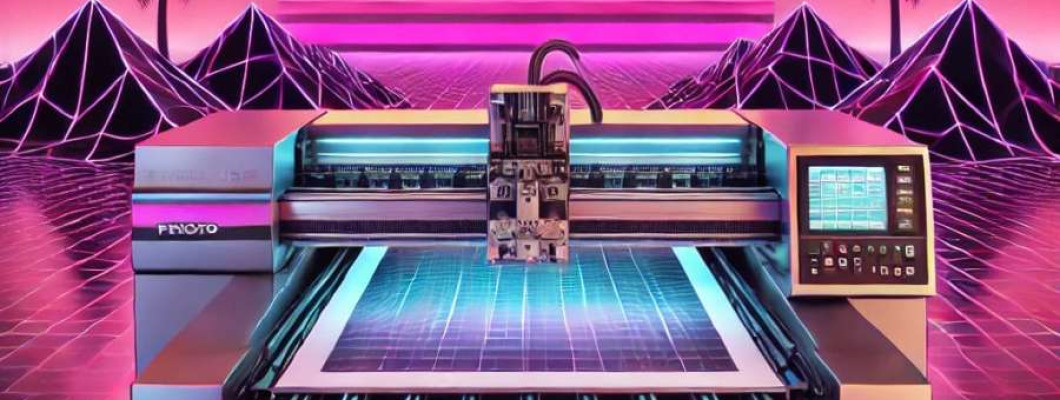
The Industrial Reality of Headstone Photo Printing in Scalable Operations
Within the headstone manufacturing industry, the precision and reliability of photo printing on tombstones represent a distinct operational challenge. Small-scale, manually operated or DIY photo printing systems commonly suffer from irregular printhead calibration, inconsistent ink delivery, and substrate compatibility issues, resulting in lower throughput and compromised image permanence. For scalable business owners, these bottlenecks translate into unpredictable job completion times, increased labor overheads, and elevated risk of rework that disrupts delivery schedules and inflates operational costs.
Industrial-grade photo printers, such as the Headstone Photo Printer Tomb Photos Printer, provide a paradigm shift in this environment. Their engineering prioritizes high throughput with minimal manual intervention, incorporating robust hardware and optimized software workflows designed to handle the specific materials and environmental conditions typical of grave markers. This segregation between DIY and industrial-grade capabilities becomes glaringly evident in extended print runs — where asset depreciation, consumable consumption, and print consistency become deciding factors in financial viability.
Business owners aiming for scale must navigate these intricacies with detailed understanding. The challenge is to balance asset investment against operational reliability, where premature hardware failures or unpredictable print quality can erode profit margins. The industrial reality underscores that headstone photo printing is not a simple extension of typical flatbed printing but a specialized process requiring dedicated, purpose-built machinery.
Technical Deep-Dive into the Headstone Photo Printer Tomb Photos Printer
Hardware Architecture and Printhead Precision
The printer employs piezoelectric printheads calibrated to deliver ink droplets at approximately 3 picoliters (pl) volume, optimizing resolution to 1440 dpi output. This droplet size is critical for achieving detailed portraits necessary for tomb photos, where minute facial features and grayscale gradients must be preserved. The piezoelectric system enhances longevity compared to thermal heads, enduring over 10,000 operational hours before replacement, which directly impacts maintenance cycles and OPEX.
Ink Chemistry and Substrate Interaction
Specialized ceramic-based pigment inks optimized for direct application on granite and marble substrates ensure color fastness exceeding 10 years under UV exposure and moisture. The chemical bonding mechanism is engineered to resist cracking and fading, a frequent issue in both low-cost and hobbyist systems. The printer's ink delivery system supports multi-cartridge configurations to maintain color depth without cross-contamination, extending printhead lifespan and reducing maintenance downtime.
Thermal Management and Environmental Conditioning
Industrial environments challenge printheads with temperature fluctuations and dust particles. The printer integrates a sealed printhead chamber with active cooling employing thermoelectric modules maintaining operating temperature between 20°C and 25°C, ensuring optimal ink viscosity and droplet formation consistency. This feature safeguards against thermal drift, which degrades print quality and accelerates component wear.
Throughput, Automation, and Labor Efficiency
With a throughput capacity of 15-20 headstone photos per hour and automated substrate alignment systems, manual labor requirements reduce by approximately 40%. The printer supports batch job queuing and real-time monitoring via integrated sensors that detect nozzle blockages and substrate misfeeds. This runtime intelligence minimizes stoppages, enabling predictable production schedules essential for growing businesses.
Comparative Analysis Table of Industrial vs DIY Headstone Photo Printers
| Specification | Industrial Printer (Headstone Photo Printer Tomb Photos Printer) | DIY Printer |
|---|---|---|
| Print Resolution (dpi) | 1440 | 720 |
| Droplet Size (pl) | 3 | 10+ |
| Printhead Longevity (hours) | 10,000+ | 1,000-2,000 |
| Ink Chemistry | Ceramic Pigment UV Resistant | Basic Dye-Based, Less Durable |
| Throughput (photos/hour) | 15-20 | 5-8 |
| Thermal Conditioning | Active Cooling, Sealed Environment | None |
| Automation Support | Batch Queuing & Alignment Sensors | Manual Feed |
Scenario Analysis for Business Impact
Use Case One Workflow Integration in a Medium-Sized Monument Manufacturer
For an enterprise producing 100-150 headstones monthly, integrating the Headstone Photo Printer supports capacity increases while maintaining quality control. The automated substrate handling reduces labor costs by 35%, and the controlled thermal environment ensures consistent output across seasonal temperature variation. This predictability directly aids in meeting client deadlines and avoiding costly delays.
Use Case Two Artisan Expansion into Regional Markets
Artisans transitioning from hand-applied photo transfers to industrial-grade printing leverage this technology to enhance product durability and image fidelity. The printer's color depth and substrate versatility allow for customized solutions on varying granite and marble types, enabling expanded market reach without sacrificing quality.
Use Case Three High-Volume Queue Management in a National Retail Chain
At scale, the printer’s batch job queuing and real-time monitoring reduce downtime by 25%. The robust printhead design minimizes unplanned maintenance events, critical for retail environments where service uptime directly correlates to revenue streams. In this scenario, investment in industrial hardware delivers a measurable ROI through lowered OPEX and enhanced throughput.
Expert FAQ on High-Precision Tomb Photo Printing
Q1: How does printhead droplet size influence overall image longevity?
Smaller droplets (3 pl) enable higher resolution and more uniform ink layering, which reduces substrate stress and ink cracking, thereby enhancing longevity especially in harsh outdoor conditions.Q2: What role does thermal management play in headstone photo printers?
Maintaining stable printhead temperature prevents ink viscosity fluctuations that cause nozzle clogging or inconsistent droplet formation, which translates to fewer maintenance cycles and stable print quality.Q3: How critical is ink-substrate chemical bonding?
Extremely critical. The specialized ceramic pigment inks form microchemical bonds with stone surfaces, preventing fading and delamination that are common with generic inks used in DIY setups.Q4: Can automation features significantly reduce labor costs?
Yes. Automation in substrate alignment, job queuing, and error detection optimize operator efficiency, reducing manual intervention by up to 40% in typical industrial environments.Q5: What are the maintenance challenges uniquely associated with tomb photo printers?
They require frequent calibration for complex substrates, rigorous thermal and dust control, and specialized ink handling to prevent print quality degradation and maintain uptime.
Strategic Verdict and Recommendation
From a scalable business owner’s viewpoint, investing in the Headstone Photo Printer Tomb Photos Printer presents a decisive advantage over DIY or lower-tier alternatives. The advanced printhead technology combined with thermal conditioning and industrial automation delivers exceptional throughput, image fidelity, and durability. Operational efficiencies gained through reduced labor dependency, extended maintenance intervals, and consistent output under variable environmental conditions translate directly into improved ROI and asset longevity.
The printer's engineering meets the rigorous demands of industrial-scale headstone photo printing with precision that smaller or manual systems cannot achieve. For scalable business owners targeting market expansion without sacrificing quality or reliability, this solution stands as the definitive industrial-grade choice.