
The Gap Between DIY and Industrial-Grade Explored for Scalable Businesses with the A4 Roll DTF Printer
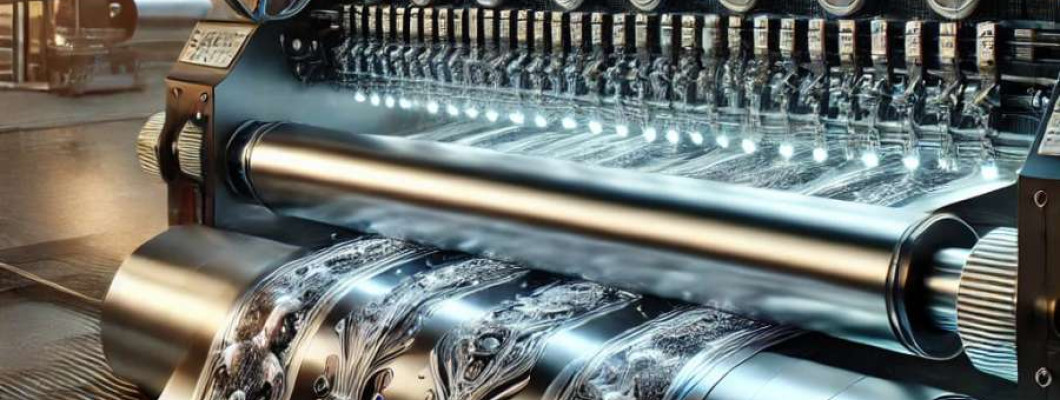
The Industrial Reality of Integrating A4 Roll DTF Printing into Scalable Production
Scaling a direct-to-film (DTF) printing workflow from hobbyist or small-batch production to industrial throughput presents a multitude of challenges. Businesses aiming to expand must contend with balancing print speed, color consistency, maintenance cycles, and workflow integration without ballooning labor costs or bottlenecks. The gap between DIY solutions and industrial-grade equipment frequently manifests in unpredictable uptime and inconsistent output quality, leading to missed delivery deadlines and customer dissatisfaction.
Consider a print shop attempting to scale apparel customization using an A4 Roll DTF printer. While small-scale, desktop-style units provide cheaper entry points, they often suffer from limited roll capacity, insufficient thermal management, and less robust printhead architectures. This results in frequent stoppages for ink refills, printhead cleaning, and substrate handling—the cumulative effect of which dramatically erodes operational throughput. Additionally, these printers often lack automation features, forcing manual material loading and unloading, which scales labor costs disproportionately as volumes grow.
In this context, the industrial-grade A4 Roll DTF Printer addresses these challenges through design considerations aimed at scalable business owners who must manage throughput, labor, and automation within tight margin parameters. The printer's hardware specifications—including thermal stability systems, precision rollers, and ink delivery subsystems—are engineered to reduce downtime and maintain consistent 600 dpi resolution output on continuous roll substrates. These design aspects support workflow automation and integration into production lines.
Technical Deep-Dive into the A4 Roll DTF Printer Components and Performance
Printhead Technology and Maintenance
The A4 Roll DTF Printer employs industrial piezoelectric printheads capable of producing droplets in the 6-10 picoliter range. Compared to typical entry-level thermal inkjet printheads, piezoelectric units offer higher durability and finer droplet control, essential for maintaining color fidelity at high throughput. The printhead array features an integrated self-cleaning routine leveraging ultrasonic vibration and automated nozzle purging, minimizing operator intervention. This reduces downtime typically measured in minutes during manual cleanings to less than 30 seconds per cycle.
Ink Chemistry and Delivery Systems
The printer uses proprietary pigment-based DTF inks optimized for adhesion and flexibility on various textile materials. These inks maintain viscosity within a narrow operational window of 8-12 centipoise at 35°C, which correlates with stable droplet formation and color saturation across print cycles. The ink delivery system includes precision micro-valves and pressurized reservoirs with real-time flow sensors to prevent clogging and air bubble formation. The closed-loop feedback ensures consistent ink supply without interruption, supporting continuous roll production runs exceeding 50 meters.
Thermal and Mechanical Controls for Print Stability
Thermal management integrates a dual-zone heating system along the film path, maintaining substrate temperature at 45-50°C. This prevents ink bleed and promotes rapid drying without warping the flexible film. The mechanical transport employs servo-driven rollers with micron-level positional accuracy (±0.02 mm), enabling registration repeatability critical for multi-layer prints. Compared to DIY setups that often rely on stepper motors with ±0.1 mm precision, this represents a fivefold improvement, significantly reducing alignment errors.
Roll Handling and Automation Features
The printer supports roll widths up to 220 mm and offers an automated roll feeding and take-up mechanism capable of handling up to 15 kg rolls. Sensors detect roll tension and adjust motor torque dynamically to prevent substrate slippage or stretching. These automation features allow for unattended printing periods exceeding 8 hours, a crucial factor for scaling operations without proportional increases in labor.
Data Throughput and Interface Integration
Equipped with a dedicated embedded controller, the A4 Roll DTF Printer supports standard printing protocols including USB 3.0 and Gigabit Ethernet, enabling integration into existing enterprise print management systems. Data throughput supports continuous raster files up to 300 MB/min, facilitating high-resolution jobs without pixel dropouts. The printer’s firmware supports custom color profiles and remote diagnostics, streamlining operational control from centralized management consoles.
Hypothetical Performance Math and Comparative Table
Assuming a production run of 1000 meters of printed film at 600 dpi horizontal resolution with a 220 mm width, the required data bandwidth and printhead droplet ejection rates can be calculated as follows:
- Dots per linear meter calculation: 600 dpi = 23.62 dots/mm; total dots/line = 23.62 * 220 mm = 5196 dots
- At a print speed of 1 m/min, total droplets ejected per minute = 5196 dots * 1000 mm = 5,196,000 droplets.
- With a droplet volume of 8 picoliters, total ink consumed per minute ~41.568 milliliters.
These calculations highlight the necessity for robust ink supply and efficient thermal drying systems for prolonged runs.
| Feature | A4 Roll DTF Printer | Typical DIY Setup |
|---|---|---|
| Printhead Type | Industrial Piezoelectric (6-10 pl) | Thermal Inkjet (10-15 pl) |
| Printhead Precision | ±0.02 mm | ±0.1 mm |
| Ink Delivery | Closed-loop, pressurized micro-valve | Gravity feed, manual refills |
| Roll Handling Weight | Up to 15 kg | Up to 3 kg |
| Automation | Automated feeding and take-up | Manual loading/unloading |
| Thermal Drying | Dual-zone heater at 45-50°C | Ambient or single heater |
Scenario Analysis for Scalable Businesses Using the A4 Roll DTF Printer
Scenario 1 Manufacturing Mid-Volume Custom Apparel Lines
A mid-sized textile customization firm produces 500-1000 units weekly. The A4 Roll DTF Printer’s automated roll handling and high-precision printhead reduce labor input by 30% compared to manual desktop printers. Consistent color output and minimized downtime ensure tight delivery windows, supporting client retention and order volume growth.
Scenario 2 Contract Print Services with Variable Substrates
Print contractors require rapid substrate switching and color profile adjustments. The printer’s firmware allows for quick profile uploads and thermal system adjustments, enabling efficient multi-substrate workflows that reduce setup changeover times to under 15 minutes, a significant efficiency gain versus DIY equivalents.
Scenario 3 In-House Prototype to Mass Production Scaling
Design teams using DIY printers for prototyping face challenges replicating results in mass production. The industrial-grade control and repeatability of the A4 Roll DTF Printer ensure prototypes scale predictably to production runs, reducing costly reprints and material waste.
Expert FAQ Addressing Advanced Technical Concerns
Q1 How does printhead piezoelectric technology improve longevity under continuous operation?
Piezoelectric printheads avoid thermal stress inherent in thermal inkjet designs, sustaining stable droplet ejection over longer intervals. The integrated ultrasonic cleaning cycle further mitigates nozzle clog buildup, extending mean time between failures by over 50% compared to consumer-grade heads.
Q2 What role does ink viscosity control play in output consistency?
Maintaining ink viscosity tightly within 8-12 centipoise ensures droplet size precision and prevents nozzle starvation or overflow. Temperature regulation of ink reservoirs is critical to avoid viscosity drift, which can cause color variation or print defects.
Q3 Can the printer's dual-zone heating system handle rapid substrate changes without warping film?
Yes, the dual-zone design independently modulates temperature across film width and length, enabling rapid thermal adjustments while maintaining dimensional stability. This supports multi-material printing without substrate distortion issues common in single-zone heaters.
Q4 How does servo-driven roller precision impact multi-layer print alignment?
Servo motors achieve positional repeatability within ±0.02 mm, critical when printing overlays or multi-color layers. This precision drastically reduces registration errors that otherwise degrade image sharpness and color uniformity.
Q5 What integration options support industrial print management systems?
With USB 3.0 and Gigabit Ethernet ports, the printer supports standard raster and vector print data protocols. Embedded firmware allows remote diagnostics, color profiling, and job queue management compatible with enterprise print management software suites.
Strategic Verdict and Recommendation for Scalable Businesses
For scalable business owners seeking to bridge the gap between entry-level DTF solutions and industrial-grade production, the A4 Roll DTF Printer represents a definitive solution. Its advanced piezoelectric printheads, automated roll handling, and precise thermal management systems collectively address typical bottlenecks that hinder volume growth. The embedded connectivity and firmware enhancements align well with automation and workflow integration demands inherent to scalable operations.
While initial capital expenditure exceeds DIY alternatives, the reduction in labor costs, minimization of downtime, and consistent quality output ensure favorable total cost of ownership and return on investment over production cycles. Businesses poised for expansion will find this printer a reliable backbone for high-throughput DTF printing, solidifying competitive positioning without compromising operational efficiency.