
The Gap Between DIY and Industrial-Grade Explored for the A3 Roll DTF Printer
The Industrial Reality of Transitioning to the A3 Roll DTF Printer
In high-precision printing environments, bridging the chasm between DIY solutions and true industrial-grade equipment remains an arduous challenge. The A3 Roll DTF Printer, designed for roll-to-roll direct-to-film transfers, exemplifies this transition with distinct operational demands that are frequently underestimated by smaller scale operators. Unlike desktop or hobbyist printers, an industrial DTF printer of this scale demands rigorous infrastructure readiness, including stable power supply with low harmonic distortion, precise environmental controls, and sophisticated printhead calibration systems to maintain micron-level accuracy over extended runs.
The common challenge arises in scaling production throughput while ensuring print consistency at industrial speeds. Variations in film tension, ink viscosity, and ambient humidity impose cumulative errors that may manifest as nozzle clogs, misregistration, or color inconsistencies. Operators who attempt to adapt consumer-grade workflows to the A3 Roll DTF Printer often encounter bottlenecks such as inadequate drying mechanisms and inefficient media handling systems, resulting in costly downtime and material waste. The fundamental difference lies in the necessity for continuous process monitoring and predictive maintenance regimes embedded within the hardware and software stack, elements largely absent in non-industrial solutions.
Technicians must contend with high-frequency piezoelectric printheads operating at firing frequencies exceeding 25 kHz per nozzle array, necessitating precision voltage modulation and thermal stabilization to suppress drop volume fluctuations typically around 4 picoliters. Additionally, the roll media feed system integrates servo-controlled tensioning subsystems calibrated to maintain film planarization within ±0.05 mm tolerance to prevent banding artifacts. These technical prerequisites highlight the inherent gap between DIY DTF setups and a truly professional production environment enabled by devices like the A3 Roll DTF Printer.
Technical Deep-Dive into the A3 Roll DTF Printer's Core Components
Printhead Dynamics and Ink Chemistry
The printer employs piezoelectric drop-on-demand printheads with nozzle diameters designed to eject droplets in the approximate range of 3.0 to 6.0 pl volume. Maintaining this droplet uniformity is critical; any deviation affects color gamut and edge sharpness on garment transfers. The ink chemistry is formulated with high-opacity white and CMYK pigment dispersions optimized for rapid curing and strong substrate adhesion.
Media Handling and Roll Tension Control
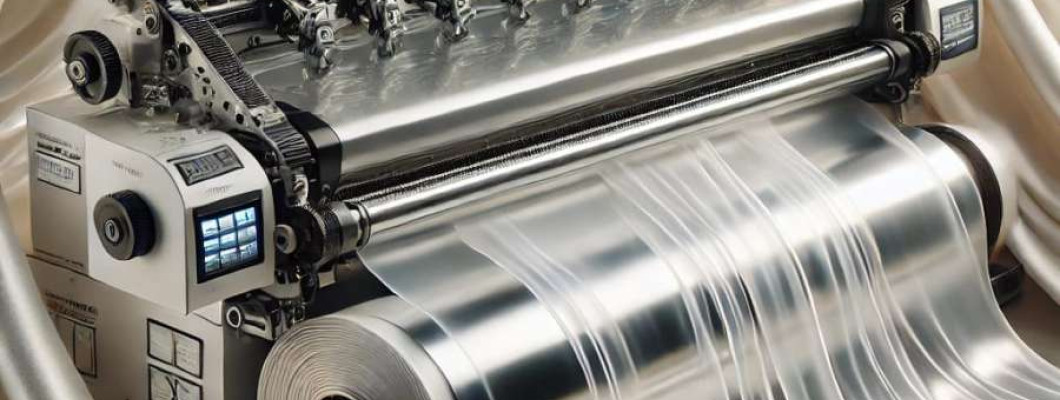
Precise media transport is achieved through a servo-driven roll feed and take-up system with tension control feedback loops. The system maintains a constant tension of 150±10 N across the film width, compensating dynamically for acceleration and deceleration phases to prevent media stretching or wrinkling that could degrade print accuracy.
Thermal and Environmental Control Systems
To maintain consistent print quality, the machine integrates onboard temperature sensors and controlled hot-air drying modules set at 50–60°C with laminar airflow design. This ensures ink curing without excessive heat stress on the film substrate, thus avoiding warping or premature adhesive activation.
Hardware Comparison with Entry-Level DTF Systems
| Specification | A3 Roll DTF Printer | Entry-Level DTF Printer |
|---|---|---|
| Printhead Type | Industrial Piezoelectric, 120 nozzles per color | Thermal Bubble, 60 nozzles per color |
| Print Resolution | Up to 1440 dpi | 900 dpi |
| Media Width | 320 mm | 200 mm |
| Roll-to-Roll Support | Yes, with servo tension control | Limited/no |
| Drying Module | Hot air, adjustable temperature | Passive or non-integrated |
| Operational Speed | Up to 3.2 m²/h | 1.0–1.5 m²/h |
Hypothetical Throughput Calculation
Assuming the printer operates at maximum speed (3.2 m²/h) with an average substrate width of 320 mm, the effective linear speed is approximately 10 m/min. Over an 8-hour shift, this results in 25.6 m² of printed substrate. Factoring downtime for maintenance and roll changes (~15%), net output reduces to around 21.8 m² per shift, a viable throughput for mid-scale garment decoration operations.
Scenario Analysis on Business Impact
Scenario 1: Scalable Small-Batch Production
A garment manufacturer expanding from sample runs to low-volume production benefits from the A3 Roll DTF Printer’s roll-fed continuous operation. The enhanced tension control and drying speed reduce media waste compared to sheet-fed DIY systems, substantially lowering per-unit costs and increasing operational uptime.
Scenario 2: High-Precision Color Proofing
For color-critical applications requiring micron-level precision and consistent color matching, the printer’s industrial-grade printheads and calibrated temperature modules enable repeatable output. This ensures stringent quality control standards are met without manual recalibration after every job, a limitation with entry-level devices.
Scenario 3: Integration into Automated Workflow Lines
Enterprise users deploying automated finishing and curing lines integrate the A3 Roll DTF Printer using its compatible digital control interfaces. The device’s robust hardware allows for remote monitoring, predictive maintenance scheduling, and error reporting, reducing labor intensity and enabling 24/7 operations with minimal intervention.
Expert FAQ
Does the A3 Roll DTF Printer support white ink circulation to prevent nozzle clogging?
Yes, it features automated white ink circulation pumps that maintain pigment suspension, reducing clog incidences and minimizing the need for manual purging cycles.
What is the recommended maintenance interval for the piezoelectric printheads under continuous operation?
Under standard conditions, printhead maintenance should be scheduled every 1000 operational hours, including nozzle cleaning and voltage recalibration, to preserve droplet consistency.
How does the printer handle color management across different batches?
The integrated RIP software supports ICC profiling compatible with industrial color standards, allowing precise color matching and batch-to-batch consistency.
What measures are in place to manage environmental variables like humidity?
Humidity sensors in the print chamber trigger alarms if relative humidity deviates beyond 40–60%, prompting preemptive adjustments in drying temperature and print speed to compensate.
Is the printer compatible with third-party ink formulations?
While optimized for manufacturer-supplied inks, the printer’s firmware includes adjustable firing parameters allowing limited compatibility with select third-party pigment dispersions, subject to testing.
Strategic Verdict and Recommendation
The A3 Roll DTF Printer exemplifies a methodical leap from amateur or DIY printing solutions to a rigorously engineered industrial-grade device. Its advanced media handling, precision thermal control, and high-frequency piezoelectric printheads converge to meet the demanding throughput and quality requirements of mid-size industrial textile printing operations. Organizations seeking to elevate their production capacity with predictable uptime and repeatable quality will find this printer a reliable asset that justifies its capital expenditure through reduced waste, enhanced automation integration, and minimized operator intervention. The comprehensive operational design inherently closes the gap between hobbyist and enterprise-level workflows, establishing it as a definitive solution in the contemporary roll-to-roll DTF printing market.