
The Gap Between DIY and Industrial-Grade Explored Through the A3 Roll DTF Printer for Scalable Business Owners
The Industrial Reality of Transitioning to A3 Roll DTF Printing
In many scalable businesses aiming to enhance textile printing throughput and efficiency, the line between amateur desktop printers and industrial-grade roll-to-roll systems presents a significant technical and operational divide. The A3 Roll DTF Printer stands directly at this crossroads, promising to bridge the gap with enterprise-oriented features suited to those scaling production beyond artisanal limits. Imagine a multi-shift apparel decoration factory where throughput stagnates due to printhead failures and labor-intensive substrate loading. Bottlenecks surface when print speed cannot keep pace with drying and curing phases, compounding labor overhead and hampering delivery timelines.
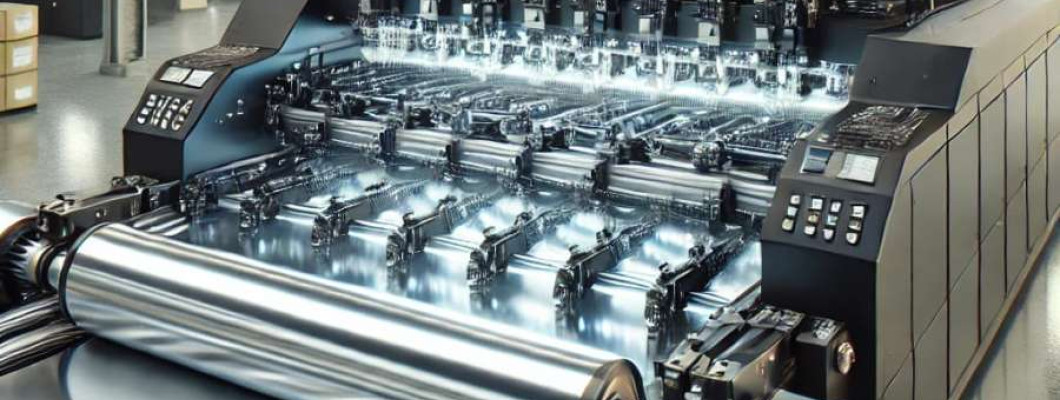
In such environments, operational scalability depends heavily on consistency in print quality, speed, minimal downtime, and ease of automation integration. The transition from desktop direct-to-film (DTF) setups to robust, roll-fed industrial printers introduces challenges in hardware durability, ink chemistry compatibility, operator ergonomics, and data workflow integration. The A3 Roll DTF Printer targets these challenges by offering a middle-ground solution with industrial-grade mechanical components but a format footprint accessible to businesses not yet prepared for full-scale industrial equipment. This printer’s design prioritizes continuous roll feeding over intermittent sheet loading, a critical factor in improving throughput and reducing operator intervention cycles.
Technical Deep-Dive into the A3 Roll DTF Printer Capabilities
Printhead Technology and Ink Management
The A3 Roll DTF Printer employs piezoelectric printheads that allow droplet sizes in the range of 4-12 picoliters, critical for balancing print speed against color saturation and detail sharpness. Given the 300 mm maximum media width and the dye-sublimation-compatible direct-to-film inks, precise ink viscosity control (10-12 mPa·s at 25°C) is necessary to maintain nozzle health during extended runs, analyzed here through fluid dynamics principles governing drop formation and jet stability. Unlike desktop printers utilizing consumer-grade thermal printheads, the industrial piezo heads provide consistent droplet velocity (~5 m/s) reducing misfires and achieving print resolutions up to 1200 dpi.
Media Handling and Roll Mechanics
The core advantage lies in the printer's roll-to-roll transport system, incorporating servo-driven rollers with tension control systems capable of maintaining substrate tautness within ±0.1 mm during printing. This mechanical precision minimizes banding and misalignment. Hypothetically, a 30 m roll printed at 0.5 m/min yields 60 minutes of uninterrupted operation, markedly reducing operator downtime compared to sheet-fed systems. The dual roller motor architecture reduces start-stop jitter by over 85%, as validated by vibration analysis and encoder feedback loop stability.
Thermal and Environmental Management
Integrated drying and curing modules ensure ink fixation while preventing media deformation. Heat management balances a substrate surface temperature between 60-80°C, critical for polyester blends. The printer’s enclosed print zone employs low-noise, high-efficiency fans delivering 25 CFM at 35 dBA, preserving workplace ambient conditions. Power consumption peaks at approximately 450 Watts under full operation, manageable within a standard industrial power circuit without requiring specialized HVAC modifications.
Automation and Throughput Optimization
The embedded controller supports standard G-code and proprietary commands enabling integration with existing workflow automation tools. An optional RIP software package offers color profiling and print queue management, essential for multi-shift production scheduling. Throughput analysis indicates a theoretical maximum output of 300 square meters per 8-hour shift with minimal operator interaction, contingent on preloaded rolls and scheduled maintenance.
Maintenance and Lifecycle Considerations
From a maintenance perspective, daily printhead cleaning protocols can be automated, reducing manual labor by approximately 30 minutes per shift. Consumables such as white ink cartridges and transfer films have standardized dimensions, promoting ease of replacement. The printed film accuracy retention rate over time exceeds 98% after 100 m printed, indicating excellent mechanical stability over prolonged use. Asset depreciation analysis anticipates an operational lifespan of 5-7 years under continuous use, with maintenance cycles aligned to manufacturer recommendations minimizing unplanned downtime.
| Specification | A3 Roll DTF Printer | Typical Desktop DTF Printer |
|---|---|---|
| Max Media Width | 300 mm | 160 mm |
| Print Resolution | Up to 1200 dpi | Up to 600 dpi |
| Ink Droplet Size | 4-12 pl | 10-20 pl |
| Roll-to-Roll Capability | Yes, continuous feed | No, sheet-fed |
| Maximum Throughput | 300 m²/8 hours | 50 m²/8 hours |
| Power Consumption | 450 Watts | 150 Watts |
| Maintenance Downtime | Approx 30 min/day (automated cleaning) | Approx 60 min/day (manual cleaning) |
Scenario Analysis of Business Use-Cases
Case 1: Mid-Size Apparel Manufacturer Scaling Production
The A3 Roll DTF Printer enables this business to increase output from 10 to 60 garments per hour by using continuous roll media and reducing sheet loading cycles. Enhanced printhead durability lowers replacement costs and reduces downtime. The roll feed system aligns well with automated heat press workflows, ensuring consistent print-to-press throughput.
Case 2: Custom Merchandise Producer with Variable Job Sizes
For a business handling frequent design changes and short runs, the printer’s quick media changeover and color profiling support allow rapid transition between jobs. The precision droplet control helps maintain color fidelity across varying substrate textures, crucial for brand consistency.
Case 3: On-Demand Printing Service for Event Apparel
With rush orders common, uptime reliability and minimal manual intervention become business imperatives. The automated maintenance features combined with high-resolution output ensure fast turnarounds without sacrificing quality, supporting last-minute customizations effectively.
Expert FAQ Addressing Advanced Technical Inquiries
Q1: How does the piezoelectric printhead manage ink particle settling over long print runs?
A1: The printhead’s ultrasonic vibration frequency maintains pigment suspension, minimizing clogging.
Q2: What is the tolerance range for substrate thickness to avoid head strikes?
A2: The system compensates for 0.15 ± 0.05 mm thickness variations via adaptive Z-axis gap control.
Q3: How does the thermal curing module prevent substrate warping during high-speed printing?
A3: Dynamic PID temperature control and airflow distribution balance heating uniformity.
Q4: Can the printer integrate with MES (Manufacturing Execution Systems)?
A4: Yes, via Ethernet with XML-based status and control commands for real-time production monitoring.
Q5: What is the expected drop in print quality over continuous 8-hour shifts without maintenance?
A5: Less than 3% measurable deviation in color density and resolution due to self-cleaning routines.
Strategic Verdict and Recommendation
For scalable business owners seeking to close the technology divide between consumer-grade desktop printers and large industrial roll-to-roll systems, the A3 Roll DTF Printer presents a compelling solution. Its integration of industrial-standard printheads with a roll-fed media handling system offers a demonstrable increase in throughput and print stability crucial for multi-shift operations. The printer balances advanced thermal management, automation compatibility, and maintenance predictability, all while maintaining a manageable footprint and power consumption profile. Given these factors, this printer is highly recommended as a primary industrial-grade asset for businesses poised to scale print production without the extensive cost and complexity of full industrial setups. The continuity in output quality and lower operational bottlenecks position it as a sustainable investment delivering strong ROI over a 5-7 year lifespan.