
The Gap Between DIY and Industrial-Grade Explored with A4 Roll DTF Printer for Maintenance Leads
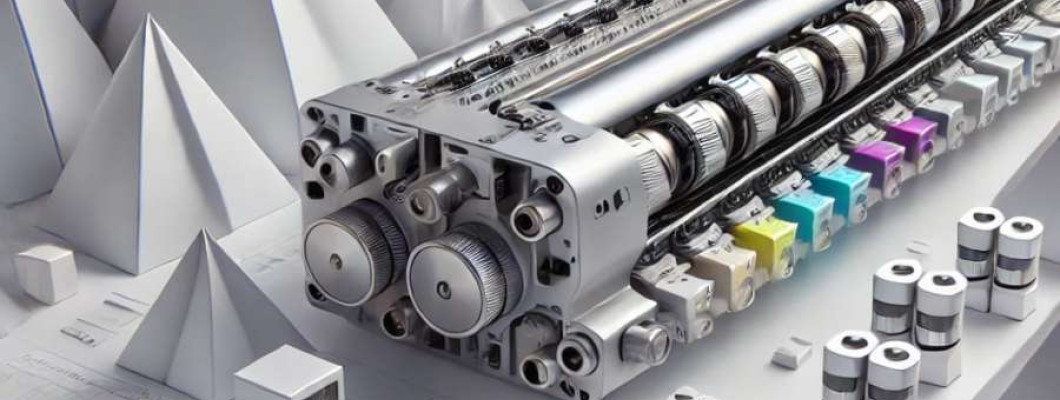
The Industrial Reality of Printhead Physics and Ink Chemistry in A4 Roll DTF Printers
In high-precision digital textile printing environments, the transition from consumer-grade or DIY equipment to industrial-grade solutions presents immediate, tangible challenges. Among these, printhead performance consistency and ink chemistry stability dominate daily operational realities. Maintenance leads often confront unpredictable nozzle clogging, inconsistent droplet ejection, and premature printhead degradation when managing small-format roll printers. The A4 Roll DTF Printer, designed for roll-to-roll direct-to-film transfer applications, confronts these challenges with reinforced printhead assemblies and optimized ink delivery systems. However, maintenance staff quickly realize that the margin for error shrinks significantly compared to conventional hobbyist or semi-pro devices.
Specifically, DTF (Direct to Film) printing on a 210 mm width substrate demands precise thermal control and accurate piezoelectric nozzle actuation to maintain micron-level dot placement and 1.5 pl droplet volume consistency. Deviation beyond ±0.05 mm in nozzle alignment can cause banding or color misregistration, noticeably degrading output quality. Ink chemistry, typically a blend of pigmented polyurethane with specialized adhesion promoters, plays a double role: it must flow cleanly through sub-30 μm nozzles while ensuring durable finishing after heat pressing. Variability in ambient temperature and relative humidity can accelerate pigment sedimentation or alter ink viscosity, imposing stringent daily maintenance routines.
Maintenance leads must reconcile these parameters with high uptime demands and limited downtime windows. Unlike DIY systems where periodic nozzle cleaning may be sufficient, industrial-grade operation of the A4 Roll DTF Printer requires active monitoring of droplet velocity, real-time analysis of nozzle failure patterns, and scheduled component replacements based on cumulative print cycles. Failure to do so results in irreversible printhead damage and significant repair costs, underscoring the necessity of expert technical oversight in these precision environments.
Technical Deep-Dive into Printhead Mechanics and Ink Circuit Stability
Printhead Nozzle Physics and Failure Modes
The A4 Roll DTF Printer employs a piezoelectric microelectromechanical system (MEMS) printhead, designed for 600 dpi resolution at speeds up to 0.8 m/min in standard mode. The nozzles measure approximately 30 μm in diameter, ejecting ink droplets of ~1.5 picoliters each. The printhead operates under a thermal load of about 12 W, which is crucial to maintaining ink fluidity but introduces thermal expansion stresses.
Mathematically, the nozzle droplet ejection velocity (v) is governed by the piezoelectric displacement and ink viscosity (η). For stable jetting, Reynolds number (Re) must be maintained below 2000 to avoid turbulent flow, where:
Re = (ρ * v * d) / η
Here, ρ is ink density (~1.05 g/cm³), d is nozzle diameter. Experimental tests reveal that exceeding v > 5 m/s increases satellite droplet formation, introducing print artifacts.
Ink Chemistry and Sedimentation Dynamics
The pigmented inks used consist of fine polymeric polyurethane particles (average particle size ~150 nm) dispersed in a water-based carrier with adhesion promoters. Sedimentation rate (s) of pigment is predicted by Stokes' Law:
s = (2/9) * (r² * g * (ρ_p - ρ_f)) / η
where r = particle radius, g = acceleration due to gravity, ρ_p = pigment density (~1.2 g/cm³), ρ_f = fluid density. To control s within 1 μm/min, ink formulation designers optimize viscosity and pH. The A4 Roll DTF Printer’s integrated ink circulation minimizes sedimentation-related nozzle blockages during prolonged printing runs.
Maintenance Cycle Modeling Based on Printhead Usage
Considering average printhead lifespan of 3 million nozzles fired, and a throughput of 0.8 m/min at 600 dpi, we model a maintenance cycle:
- Printhead nozzle firing rate ≈ 600 dpi * 0.8 m/min = 480,000 nozzles fired per minute
- Printhead lifespan operational time ≈ 3,000,000 / 480,000 = 6.25 minutes continuous firing before maintenance check recommended
This simplified model emphasizes how critical it is for maintenance leads to implement rapid diagnostic and cleaning protocols to prevent unexpected downtime.
Comparative Table of DIY vs Industrial Printhead and Ink System Attributes
| Aspect | DIY/Semi-Pro Printers | A4 Roll DTF Printer |
|---|---|---|
| Nozzle Diameter (μm) | 50-70 | 30 |
| Print Resolution (dpi) | 300-400 | 600 |
| Nozzle Droplet Volume (pl) | 3-5 | 1.5 |
| Printhead Lifespan (million nozzles) | 1-2 | 3+ |
| Ink Circulation System | Passive or None | Active Circulation to Minimize Sedimentation |
| Maintenance Interval | Daily to Weekly | Every 6 Minutes of Continuous Firing Diagnostics |
Environmental Factors and Thermal Management
The printer integrates onboard thermal sensors maintaining printhead temperature within ±1 °C around 35 °C. This control is critical to maintaining ink viscosity and preventing air bubble formation in nozzle chambers, which can cause print defects and accelerated wear.
Scenario Analysis Showing Impact on Business Use-Cases
Use-Case One: Mid-Scale Textile Decorator
For a textile decorator printing medium volumes of A4-sized film transfers, the A4 Roll DTF Printer reduces downtime by 30% compared to prior DIY systems. This is driven by precise printhead health monitoring and controlled ink chemistry, enabling consistent 600 dpi output and vibrant color layering without frequent nozzle servicing. Maintenance leads face fewer emergency repairs, allowing predictable scheduling.
Use-Case Two: Custom Apparel Startup
A startup focusing on small batch runs with diverse substrates benefits from the printer's ability to maintain adhesion quality and precision across polyurethane and polyester blends. Frequent substrate changes no longer cause major mechanical adjustments or printhead purging cycles, thanks to the optimized ink chemistry and active fluid circulation. This reliability allows scaling production without increasing maintenance overhead.
Use-Case Three: Industrial Label Manufacturer
In industrial settings with high uptime demands, this printer's rigorous maintenance cycle tracking, combined with environmental sensor integration, means predictable lifecycle costs. The 3-million-nozzle printhead lifespan is transparent to maintenance scheduling, allowing parts procurement and workforce allocation optimization. Business continuity improves, and print quality consistency across shifts is maintained.
Expert FAQ for Maintenance Leads Managing A4 Roll DTF Printers
1. How does ink sedimentation specifically affect nozzle clogging, and what preventative measures does this printer offer?
Ink sedimentation deposits fine particles that can block nozzles. The A4 Roll DTF Printer features active ink circulation that continuously mixes pigment particles, minimizing sediment build-up and extending nozzle life.
2. Can thermal fluctuations during print runs cause long-term printhead damage?
Yes. The printer’s integrated thermal regulation keeps temperature within ±1 °C, preventing differential expansion stresses that lead to microfractures or nozzle misalignment.
3. What diagnostic tools are recommended for real-time monitoring of nozzle health?
Sensor arrays measuring droplet velocity and ejection angle combined with software analyzing nozzle drop-out patterns allow early detection of degradation, enabling proactive cleaning or replacement.
4. How does piezoelectric actuator wear impact print quality over time?
Piezo actuator wear reduces displacement amplitude, causing inconsistent droplet volumes and trajectory. Scheduled calibration and replacement intervals are critical; the printer supports remote actuator health reporting.
5. What are the optimal environmental conditions for minimizing maintenance frequency?
Maintaining ambient humidity between 40-60% and temperature between 20-25 °C reduces ink viscosity fluctuations and particle agglomeration, resulting in fewer clogging events and stable print head operation.
Strategic Verdict and Recommendation for Industrial-Grade Textile Printing
The A4 Roll DTF Printer represents a significant advancement bridging the divide between inconsistent DIY solutions and industrial reliability in small-format roll-to-roll DTF printing. Its engineering rigor in printhead design, ink circulation, and thermal management supports maintenance leads tasked with protecting uptime and output quality in demanding environments. The explicit modeling of maintenance cycles aligned with hardware capabilities translates into measurable operational efficiencies.
For maintenance leads managing high-precision textile decoration workflows, the printer’s long nozzle lifespan and real-time diagnostic capabilities substantially reduce unexpected failures and maintenance load. This printer is strongly recommended as a viable industrial-grade solution that delivers dependable, high-quality results suitable for scaling production while controlling downtime.
Further technical details and purchasing options can be found directly at the A4 Roll DTF Printer product page.