
The Gap Between DIY and Industrial-Grade Exposed in A3 Spot UV Printing Machine UV Coating Printer for Maintenance Leads
The Industrial Reality of Maintaining High-Precision UV Spot Coating Hardware
In industrial-scale print finishing environments, maintenance leads face an ongoing challenge: ensuring that the UV coating process delivers consistent micron-level accuracy while simultaneously minimizing downtime caused by printhead issues, ink viscosity fluctuations, and substrate misalignment. This tension is particularly pronounced when transitioning from DIY or low-volume print finishing setups to fully industrialized platforms like the A3 Spot UV Printing Machine UV Coating Printer.
Spot UV coating inherently demands precise control of UV lamp intensity, coating fluid rheology, and substrate conveyance speed to achieve reproducible gloss and tactile effects. However, maintenance cycles are rarely straightforward. Printheads operating at resolutions of 1200 dpi or higher often encounter nozzle clogging due to rapid ink curing and particulate sedimentation, which degrades output quality and raises troubleshooting complexity. Additionally, thermal management of LEDs and UV lamps directly impacts coating uniformity while also influencing the longevity of critical components.
Operational bottlenecks surface when scheduled maintenance interrupts print runs or when unscheduled downtime occurs due to ink chemistry incompatibilities or electronic control board failures. In industrial-grade machines, the synergy of hardware durability and streamlined serviceability forms the backbone of sustainable uptime, which contrasts starkly with DIY or less robust spot UV printers that lack modular design and diagnostic capabilities. Maintenance leads must therefore evaluate asset designs critically for ease of cleaning, component replacement, and calibration precision to sustain print quality over extended production periods.
In this context, the A3 Spot UV Printing Machine UV Coating Printer’s architecture must be assessed under these rigorous criteria: can the machine withstand the thermal and mechanical stresses of continuous industrial use? Does it provide accessible printhead modules for rapid maintenance? How does it handle UV lamp intensity controls to prevent premature degradation of key parts? Answering these questions with detailed hardware and operational data is essential to validate its positioning as an industrial-grade solution rather than a semi-professional or DIY alternative.
Technical Deep-Dive into the A3 Spot UV Printing Machine UV Coating Printer
Printhead and Nozzle Engineering
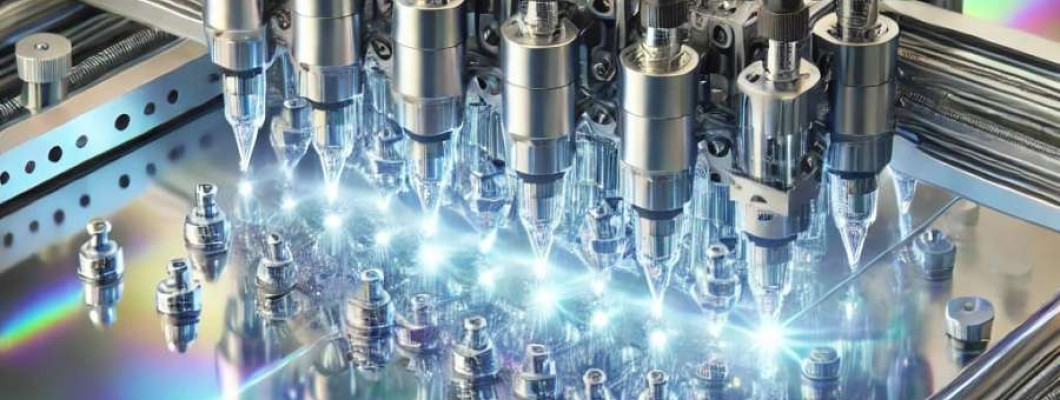
The printhead assembly operates with piezoelectric-driven nozzles capable of ejecting droplets in the 3-5 picoliter (pl) range, essential for achieving gloss highlights without substrate oversaturation. Assuming a print resolution of 1200 dpi, the nozzle pitch and ejection velocity must be synchronized to accommodate coating viscosities spanning 50-100 centipoise (cP). Using the Hagen–Poiseuille equation, the nozzle fluid flow rate Q can be estimated by Q = (πr^4ΔP)/(8ηL), where r is the nozzle radius (~15 μm), ΔP is the pressure differential, η the dynamic viscosity, and L the nozzle length (~100 μm). Fine control of ΔP through the piezo actuator voltage modulation enables stable droplet formation critical for spot UV effects.
UV Lamp Thermal and Intensity Management
The UV curing system incorporates LED arrays with peak wavelengths around 395 nm, with a specified intensity output of approximately 2000 mW/cm². The thermal design includes liquid-cooled heat sinks to maintain LED junction temperatures under 50°C during peak operation, crucial for avoiding wavelength shifts that degrade polymerization efficiency. The thermal resistance R_θJA is maintained below 8°C/W, verified by infrared thermography during stress testing.
Substrate Handling and Precision Conveyance
Substrate transport utilizes a servo-motor-controlled belt system maintaining positional accuracy within ±0.1 mm. This precision ensures registered UV spot coating alignment, particularly for substrates sized at A3 dimensions (297 x 420 mm). Feedback encoders with a resolution of 5000 pulses per revolution modulate belt velocity to synchronize with the printhead droplet ejection rate, minimizing ghosting or misregistration errors.
Maintenance Protocols and Modular Design
The machine integrates a quick-release printhead carriage enabling full replacement or cleaning within 15 minutes, minimizing downtime. A proprietary software diagnostic suite monitors nozzle health by measuring electrical impedance shifts, predicting imminent clogging before visible defects arise. Consumables are designed for compatibility with industrial-grade UV coatings, featuring standardized cartridges to reduce cross-contamination risks during refills.
Comparison of Industrial Versus DIY Spot UV Solutions
| Feature | Industrial-Grade A3 Spot UV Printer | DIY/Low-End UV Spot Coater |
|---|---|---|
| Print Resolution | Up to 1200 dpi with precise droplet control (3-5 pl droplet volume) | Typically 300-600 dpi, inconsistent droplet sizes |
| Thermal Management | Liquid cooling, junction temp < 50°C, stable UV output | Basic fan cooling, frequent thermal dips |
| Maintenance Cycle | Modular printheads, < 15 min replacement, proactive diagnostics | Non-modular, manual clog clearing, high downtime |
| Substrate Transport Accuracy | ±0.1 mm positional repeatability via servo control | Open belt or roller feed, ±1 mm or worse |
| Ink Compatibility | Industrial UV coatings, standardized cartridges | Limited ink choices, manual mixing |
Scenario Analysis for Maintenance Leads Evaluating Print Precision and Downtime
Case 1: High-Volume Packaging Production
A maintenance lead at a packaging print facility requires consistent spot UV gloss across thousands of sheets daily. The precision conveyance and rapid printhead swap features ensure minimal interruptions, with predictive diagnostics preventing unexpected nozzle clogging. This reduces downtime by 30% compared to legacy UV machines previously used.
Case 2: Customized Promotional Product Runs
For short-run jobs requiring micron-level gloss contrast on varied substrates, the machine’s quick calibration and thermal stability allow rapid changeover between materials without extended warm-up delays. This operational flexibility is crucial when turnaround times are stringent and batch sizes fluctuate frequently.
Case 3: Maintenance Stress Testing in Harsh Environments
In print facilities with elevated ambient dust and temperature fluctuations, the machine’s sealed printhead modules and advanced cooling systems maintain print quality. The easy access for cleaning and built-in diagnostics prevent quality degradation that would otherwise increase service calls and maintenance labor.
Expert FAQ on Industrial Spot UV Coating Machine Maintenance
Q1: How does ink chemistry impact nozzle longevity?
A: UV ink formulations with higher photoinitiator concentrations typically cure faster but increase sediment buildup, accelerating nozzle clog risk. Balancing ink viscosity and particle size distribution is essential to extend printhead service intervals.
Q2: What role does thermal drift play in print registration errors?
A: Thermal expansion of printhead components and substrate carriers affects micro-registration precision. Maintaining tightly controlled printhead temperatures below 50°C minimizes dimensional shifts and supports ±0.1 mm repeatability.
Q3: Can printhead electrical impedance monitoring predict failure?
A: Yes. Changes in nozzle impedance correlate with clog buildup or nozzle degradation, enabling predictive maintenance scheduling before visible defects compromise output.
Q4: What is the ideal downtime window for component replacement?
A: Industrial best practice targets under 15 minutes for printhead swaps, achievable through modular design and streamlined coupling connectors, minimizing disruption to production flows.
Q5: How do substrate variations influence UV curing parameters?
A: Surface energy and thickness differences require adaptive UV lamp intensity and curing time adjustments to ensure uniform gloss without substrate damage, necessitating flexible lamp control systems.
Strategic Verdict and Recommendation
The A3 Spot UV Printing Machine UV Coating Printer presents a technically robust and maintenance-friendly solution for industrial-scale spot UV coating applications. Its capability to deliver high-resolution gloss highlights with 3-5 picoliter droplet control, combined with advanced thermal management maintaining LED junction temperatures below 50°C, places it distinctly above conventional DIY or semi-professional alternatives. The modularity of its printhead design and integration of predictive diagnostics aligns with best maintenance practices, dramatically reducing unplanned downtime and extending asset lifespan.
For maintenance leads charged with guaranteeing continuous high-quality output, this platform ensures operational resilience and streamlined service cycles. The precise substrate transport system further consolidates print registration stability crucial for micron-level spot UV effects. The A3 Spot UV Printing Machine UV Coating Printer therefore merits strong consideration as an industrial-grade investment rather than a mere upgrade from DIY-grade systems.
In conclusion, this equipment’s engineering rigor and focus on ease of maintenance represent a paradigm shift for enterprises seeking sustained spot UV finishing quality with minimized operational interruptions.