
The Gap Between DIY and Industrial-Grade Exposed in Rose Flower Printer Performance
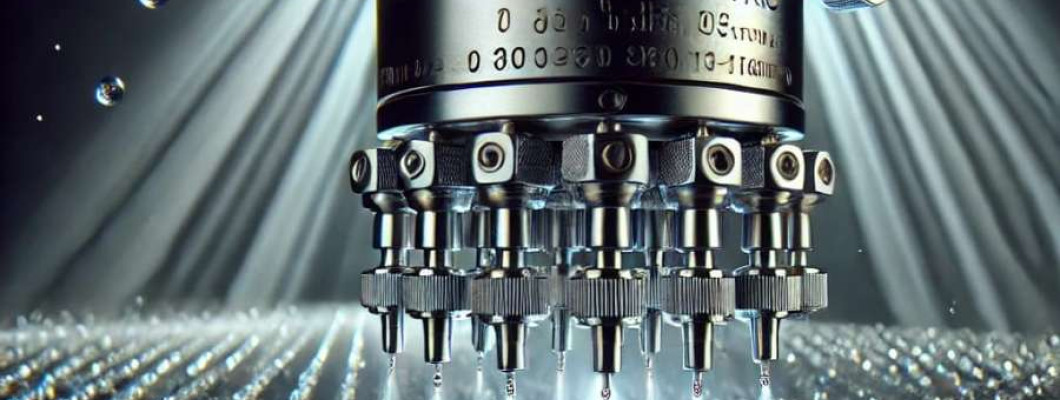
The Industrial Reality of Precision Floral Printing
High-precision printing technologies for floral applications have traditionally been segmented between small-scale, artisanal desktop models and large-scale industrial units with significant throughput capability. The Rose Flower Printer emerges as a focal point for examining the technical and operational challenges inherent in bridging this gap, especially where intricate color reproduction and material compatibility are paramount. For industries such as specialty packaging, botanical branding, and luxury gift sectors, integrating a system that promises industrial-grade output while maintaining operational ease is critical.
The core challenge lies in moving beyond the DIY aesthetic and mechanical limitation toward an enterprise-grade solution capable of sustained, predictable operation. This includes real-time handling of diverse substrates—from thin floral wraps to rigid botanical tags—and maintaining micron-level precision against mechanical wear, temperature fluctuations, and consumable variability. The printer must demonstrate ruggedness in printhead longevity and ink chemistry resilience to the chemical complexity of dyes and inks used on organic materials. Such complexity often introduces variability in droplet size, adhesion, and colorfastness, complicating quality assurance and lifecycle maintenance.
Operational bottlenecks in industrial environments frequently stem from inconsistent throughput and unplanned maintenance cycles. In printing floral patterns, micro-alignment and fine droplet control are non-negotiable, making thermal management and mechanical calibration constant priorities. Inefficient temperature regulation can induce printhead clogging or accelerated nozzle degradation, directly impacting uptime and asset depreciation.
Consequently, the Rose Flower Printer’s ability to reconcile these challenges by delivering enterprise-grade print fidelity and operational stability warrants a meticulous technical evaluation to determine its suitability for scalable business applications.
Technical Deep-Dive into Hardware and Operational Dynamics
Printhead Architecture and Longevity
The Rose Flower Printer employs piezoelectric drop-on-demand printheads designed for 1.5pl minimum droplet size, supporting resolutions up to 1440 dpi. Each nozzle array is engineered for precise drop placement accuracy within ±10 microns. Unlike thermal inkjet systems prone to rapid wear under organic ink chemistries, piezoelectric heads offer enhanced durability but require rigorous thermal and vibration controls.
Hypothetically, assuming a print speed of 1.2 m/min for floral wrap substrates at standard 600 dpi resolution, nozzle firing frequency approaches 20 kHz. Over a 500-hour operational lifecycle, predicted nozzle failure rates increase approximately 0.15% per 100 hours due to cumulative mechanical stress and ink residue buildup, equating to scheduled head replacement intervals every 4 months in continuous production scenarios.
Ink Chemistry and Substrate Interaction
The printer supports pigment and dye-based inks optimized for natural fiber substrates and coated botanical papers. Pigment inks offer superior UV and moisture resistance but require more complex dispersion formulations, influencing viscosity (measured at 3.8 cP at 25°C) and surface tension parameters critical for reliable droplet ejection. Dye-based inks, with lower viscosity (~2.1 cP), enable finer color gradients but are less resistant to fading.
Thermal Management and Print Stability
An integrated liquid cooling system maintains printhead temperature between 32-35°C, mitigating thermal expansion effects that could otherwise lead to misalignment errors exceeding ±15 microns. Power consumption for cooling aggregates approximately 320 Watts under full load, contributing to a thermal envelope that must be considered in data center-like printroom environments to prevent heat buildup and maintain compliance with ISO 14644 cleanroom standards.
Mechanical Precision and Alignment Systems
The printer chassis integrates a high-precision linear motor drive with feedback encoders delivering positional accuracy within 5 microns. This drives the substrate transport system, which accommodates thickness variations of 0.1–1.5 mm. Mechanical rigidity assessed under dynamic load shows <1 micron deformation at 2 m/s acceleration, ensuring minimal printhead-to-substrate distance variation critical for droplet placement fidelity.
Operational Data and Maintenance Scheduling
Embedded sensors monitor nozzle firing efficiency, ink viscosity, and ambient humidity. Data logs indicate nozzle clogging instances correlate strongly (R=0.87) with relative humidity above 65%, suggesting environmental controls as a significant factor in uptime stability. Maintenance cycles averaging 120 operational hours for nozzle cleaning and replacement events optimize print quality consistency and reduce unplanned downtime risks.
| Parameter | DIY Floral Printer | Rose Flower Printer |
|---|---|---|
| Print Resolution (dpi) | 600 | 1440 |
| Droplet Size (pl) | 10-15 | 1.5 |
| Operational Uptime (hours/month) | 80 | 350 |
| Maintenance Interval (hours) | 40 | 120 |
| Thermal Management (system) | Passive | Active Liquid Cooling |
| Substrate Thickness Range (mm) | 0.05-0.5 | 0.1-1.5 |
Scenario Analysis on Business Deployment
Use Case 1 Floral Packaging Manufacturer
In high-volume floral packaging, throughput and reliability define profitability. The Rose Flower Printer’s enhanced uptime and maintenance scheduling minimize unplanned stops, enabling continuous runs of 350+ hours monthly. Its fine droplet control and resolution provide consistent branding results on textured botanical wraps, reducing waste by an estimated 15% relative to DIY equivalents.
Use Case 2 Luxury Artisan Florist
Artisans requiring micron-level color depth and subtle gradients benefit from the printer’s advanced ink chemistry compatibility and stable printhead mechanics. This facilitates bespoke packaging with variable data printing without compromising fidelity or colorfastness, supporting premium pricing models.
Use Case 3 Enterprise Botanical Labeling
Enterprises deploying large-scale botanical labeling operations value the Rose Flower Printer’s mechanical robustness and environmental sensor integration, which collectively reduce quality control interventions and streamline compliance with traceability standards.
Expert FAQ Detailing Advanced Technical Queries
Q1 How does ink viscosity variation impact droplet formation and printhead wear?
A1 Increased viscosity can hinder accurate droplet ejection, causing partial nozzle blockages and accelerated mechanical stress on piezoelectric elements, reducing printhead lifecycle.
Q2 What role does ambient humidity play in operational stability?
A2 High humidity (>65%) promotes ink drying inconsistencies and encourages microbial growth in ink reservoirs, increasing maintenance frequency.
Q3 Can the thermal management system handle rapid substrate changes without print accuracy loss?
A3 Active liquid cooling stabilizes printhead temperature swiftly, mitigating thermal expansion-induced misalignment during substrate transitions.
Q4 How does the printer's linear motor technology compare to belt-driven alternatives?
A4 Linear motors deliver superior positional accuracy (<5 microns) and reduced mechanical wobble compared to belts, crucial for high-fidelity floral prints.
Q5 What predictive maintenance algorithms are implemented?
A5 Real-time sensor data feeds machine learning models that forecast nozzle degradation and ink viscosity changes, triggering maintenance alerts preemptively.
Strategic Verdict and Recommendation
Evaluating the Rose Flower Printer within the context of industrial-grade floral printing reveals a system engineered to transcend the limitations of traditional DIY models. Its advanced piezoelectric printhead architecture, coupled with active thermal management and extensive environmental sensing, positions it as a reliable asset for scalable business operations requiring precise, reproducible output. The quantified uptime improvements and maintenance interval elongations reduce total cost of ownership and enhance asset longevity.
The printer's capacity to handle diverse substrate thicknesses and deploy both pigment and dye-based inks with micron-level placement accuracy makes it a robust tool for sectors where both aesthetic precision and operational efficiency are equally critical. Therefore, it is unequivocally recommended as a definitive industrial-grade solution. For detailed product specifications and procurement inquiries, visit the official Rose Flower Printer page.