
The Gap Between DIY and Industrial-Grade for A2+ Size UV Printer Embossed Glossy Printing
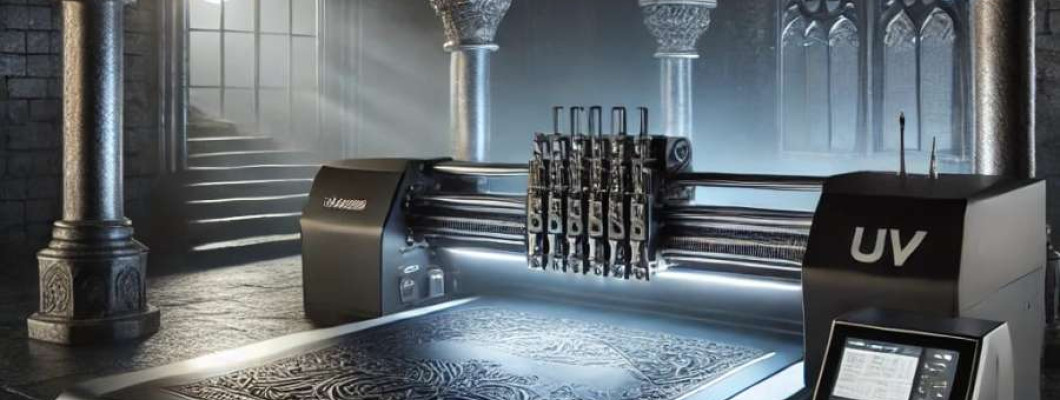
The Industrial Reality of Adopting A2+ Size UV Printers for Embossed Glossy Printing
Transitioning from DIY or semi-professional UV printers to an industrial-grade A2+ size UV printer capable of embossed glossy printing represents a significant inflection point in production capabilities. Industrial-grade solutions must meet rigorous demands for uptime, precision, material versatility, and consistent output quality. Within this context, the challenge emerges on multiple fronts: thermal management of printheads under sustained operation, precision alignment for embossed effects on a 610 mm x 457 mm substrate area with micron-level registration, and maintenance cycles that minimally impact operational throughput.
Unlike smaller-scale or desktop UV printers, this class of device is expected not just to handle single-piece artisanal prints but to support batch runs with repeatable quality metrics at resolutions commonly exceeding 1200 dpi. The embossed glossy finish adds another dimension of complexity, requiring exact UV curing timing and ink layering precision to avoid defects such as micro-bubbles, inconsistent gloss depth, or adhesion issues. The integration of high-precision servo motors and closed-loop feedback systems governs the hardware's ability to maintain positional accuracy within sub-50 micron tolerances over prolonged printing sessions.
Furthermore, the operational environment itself introduces constraints often underestimated in lower tier implementations: printhead thermal dissipation exceeding 80 Watts per head, ambient dust control to avoid nozzle clogging, and environmental safety compliance for UV ink solvents and emissions. The human factor engineering challenges revolve around ensuring operator interventions, such as substrate loading and maintenance, can be conducted without introducing misalignments or downtime exceeding 15 minutes per event. This scenario underscores why bridging the gap from DIY setups to industrial-grade systems requires comprehensive design and operational rigor.
Technical Deep-Dive on A2+ Size UV Printer Capabilities and Limitations
Printhead Mechanics and Failure Points Under Industrial Stress
The A2+ UV printer under discussion employs piezoelectric printheads with 7 picoliter drop sizes, optimized for glossy embossing via precise layering. Under continuous operation, nozzle plate degradation manifests as diminished droplet velocity and satellite drop formation, negatively impacting edge sharpness. Hypothetically, if operating continuously at 15 kHz firing frequency for 8 hours, nozzle wear can lead to an estimated 5% increase in nozzle misfire rate, discernible at print resolution of 1200 dpi (~21.2 microns dot pitch).
UV Curing System and Thermal Dynamics
The built-in UV LED curing module outputs 1500 mW/cm² at 395 nm wavelength. The curing time per layer is calibrated to 1.5 seconds to ensure full polymerization without substrate heat deformation. A comparative analysis between LED and traditional mercury UV sources shows a 30% reduction in thermal load on the substrate, directly reducing warping risks on heat-sensitive polymers such as PET or acrylics. However, the LED source requires precise placement within 3 mm of the printed layer to sustain curing efficiency.
Hardware Comparisons: Industrial vs DIY Scale
| Feature | DIY UV Printers | Industrial-Grade A2+ UV Printer |
|---|---|---|
| Max Print Area | 300 mm x 200 mm | 610 mm x 457 mm (A2+) |
| Resolution | 600 dpi | Up to 1200 dpi |
| Printhead Drop Size | 20-50 pl | 7 pl |
| Uptime per Shift | 2-4 hours | 8+ hours industrial operation |
| Embossed Layer Capability | Limited or none | Multi-layer embossing with UV curing control |
| Maintenance Downtime | Highly variable, frequent | Scheduled < 15 minutes per event |
Maintenance Cycles and Lifecycle Cost Modeling
Industrial-grade printheads in this category require preventive cleaning every 250 running minutes and full nozzle replacement after approximately 2500 running hours. Factoring a 5-day, 8-hour operation week, this translates to approximately 12 weeks between printhead replacements. The ink chemistry of UV-curable formulations used includes proprietary additives to minimize clogging and pigment settlement, extending fluid line life by 20%. Lifecycle maintenance costs directly impact operational expenses, where simplified OEM maintenance kits and modular printhead replacement are critical design choices to reduce mean time to repair (MTTR).
Embedding Human Factor Engineering Measures
User interface design integrates real-time diagnostics accessible via a 10-inch touchscreen with alert thresholds for nozzle clogging and UV lamp intensity decay. Physically, the printer chassis provides ergonomic substrate loading at 850 mm working height, optimized for operator comfort and minimized repetitive strain. Safety interlocks prevent UV exposure during door open events. These features transition the printer beyond a simple mechanical unit into a robust industrial-grade tool for efficient and safe high-precision printing.
Scenario Analysis of Use Cases for Different Business Models
Case 1 Industrial Packaging Manufacturer
Operating at a scale requiring 2000 prints per week with embossed glossy finishes on rigid plastic sheets, this manufacturer gains measurable advantages from the A2+ UV printer's throughput and repeatability. The 1200 dpi resolution enables high-fidelity branding and security features. Maintenance downtime optimization reduces line stoppages, maximizing asset utilization and improving overall equipment effectiveness (OEE) by ~15% relative to legacy equipment.
Case 2 High-End Promotional Print Shop
This business prioritizes aesthetic excellence over volume, leveraging the embossed glossy effect for limited runs of luxury invitations and custom packaging. The printer’s fine droplet control and layer curing precision yield superior tactile finishes that enable premium pricing. Despite lower throughput needs, the reliability and ease of operation lower operator skill barriers, allowing better allocation of skilled labor resources.
Case 3 Educational Research Facility
Using the printer for experimental substrates and UV ink formulations, the facility benefits from the machine’s open architecture for parameter customization. Researchers can finely tune curing times and multi-pass embossing protocols, enabling advanced materials testing. The transparency of system diagnostics expedites troubleshooting, critical in iterative test environments.
Expert FAQ on Complex Technical Topics
What physical limits constrain embossed layer thickness in UV printing?
Maximum embossed layer thickness is constrained by UV light penetration depth, ink rheology, and substrate thermal tolerance. Typically, cumulative layer thicknesses up to 300 microns are achievable without delamination, assuming sequential curing layers with adequate interlayer adhesion.
How does ambient temperature influence printhead droplet velocity?
Ambient temperature affects ink viscosity; higher temperatures reduce viscosity, increasing droplet velocity but risking satellite drops. Optimal printhead enclosure temperature control maintains droplet size consistency within +/-5% velocity variance.
What differential advantages do piezoelectric printheads have over thermal in this context?
Piezoelectric printheads generate droplets without heating ink, preserving pigment integrity and enabling finer drop size control critical for embossed gloss layering. Thermal heads risk ink decomposition and larger drop sizes unsuitable for micron-level embossed finishes.
Can the glossy embossing be replicated on flexible substrates?
Yes, provided the substrate can withstand UV curing intensity and thermal exposure without deformation. Polycarbonate films and specialized coated PET have demonstrated compatibility for embossed UV printing.
What standard safety protocols govern UV ink emissions in industrial spaces?
Governed by OSHA and local environmental agencies, protocols require enclosed UV curing chambers, activated carbon filtration for VOCs, and real-time air quality monitoring to maintain emission levels below 20 ppm total VOCs.
Strategic Verdict and Recommendation for Industrial-Grade Printing
The A2+ Size UV Printer Embossed Glossy Printing model represents a definitive evolution from hobbyist and small-scale printers to a robust industrial-grade solution. Its feature set—incorporating high-resolution 7 pl piezoelectric printheads, a powerful yet controlled UV LED curing system, and embedded human factor engineering—addresses critical challenges encountered in scaling embossed glossy printing applications. Businesses demanding reliable throughput, tight quality control, and minimal downtime find this solution capable of meeting industrial operational demands.
Integration of this equipment assures optimized asset depreciation models thanks to modular maintenance cycles and extended printhead lifespans, all within an ergonomic and safety-compliant chassis. Whether for packaging manufacturers, premium print service providers, or research institutions, the printer’s adaptability and reliability position it as a future-proof investment.
For a comprehensive industrial-grade option that bridges the gap between prototyping and mass production with exceptional embossed glossy finish quality, the A2+ Size UV Printer Embossed Glossy Printing is a recommended asset for scalable enterprise workflows.