
The Gap Between DIY and Industrial-Grade for A3 Edible Food Printers in High-Precision Production
The Industrial Reality of Edible Printing Precision and Consistency
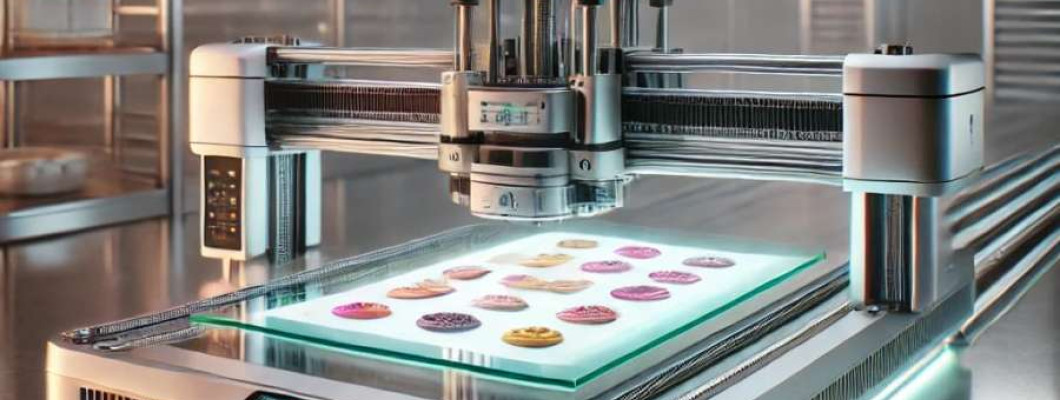
Producing edible prints with consistent quality at industrial scale presents an intersection of challenges unseen in conventional printing or artisanal cake decoration. An A3 edible food printer designed for cakes and cookies must navigate the balance between precision, speed, and food-safe operations while ensuring throughput that meets commercial demands. Unlike DIY models, industrial-grade machines operate on the boundary between complex fluid dynamics of edible inks and the mechanical precision of printhead movement within a sterile environment. Flavorless, non-toxic ink formulations with optimal viscosity must be deposited at micron-level accuracy to maintain image fidelity on highly variable substrates such as fondant, royal icing, and cookie dough surfaces, each with different absorption and texture characteristics. This requirement fundamentally separates a true industrial printer from hobbyist devices.
Key operational bottlenecks emerge when scaling edible printing from prototype or small batch to continuous production lines. Ink drying time, printhead clogging risk due to sugar crystals or dye sedimentation, and substrate deformation due to environmental humidity drastically affect uptime and print quality. Moreover, the 300 x 450 mm A3 printable area, while ample for multi-cake layouts, introduces motion control complexity in maintaining consistent DPI across the entire bed. Without industrial-grade hardware and precise environmental controls, the risk of microscopic misalignment or color bleeding grows exponentially. This technical challenge has often forced businesses to rely on manual finishing or multiple printers, increasing labor costs and workflow complexity.
Printhead Mechanics and Ink Deposition Physics Explored
At the core of industrial edible printing lies the piezoelectric printhead technology optimized for viscous, food-safe inks. Unlike typical inkjet printers using solvent or pigment inks, edible inks composed of food dyes suspended in aqueous solutions require printheads that can maintain droplet size stability around 4-8 picoliters (pl) at frequencies exceeding 20 kHz. The physics of droplet formation involves balancing nozzle orifice size, piezoelectric actuation voltage, and waveform shape to ensure consistent droplet volume and velocity. Any perturbation results in inconsistent pixel density and color saturation.
For this A3 edible printer, a 600 dpi native resolution is critical to achieve detailed imagery on curved, textured cake surfaces. Using hypothetical calculation, a 600 dpi print translates to pixel spacing of approximately 42.3 microns. Given the edible ink droplet diameter averages near 50 microns, precise droplet overlap is mandatory to avoid pixel gaps or smudging. The mechanical gantry system employs stepper motors capable of 1.8-degree steps combined with microstepping to achieve positional repeatability better than 10 microns. This allows tight control over printhead carriage velocity, critical for consistent ink layering and color blending in CMYK or extended color sets.
Comparing this to two competing technologies in industrial edible printing:
| Specification | A3 Edible Food Printer | Competing Industrial Model A |
|---|---|---|
| Maximum Resolution (dpi) | 600 | 480 |
| Print Area (mm) | 300 x 450 | 250 x 350 |
| Droplet Size (pl) | 4-8 | 6-10 |
| Print Speed (sqm/hr) | 2.5 | 1.8 |
| Ink Type | Food-safe aqueous dye | Food pigment solvent-based |
Maintenance Realities and Lifecycle Cost Implications
A critical divergence from DIY or hobbyist printers is the rigorous maintenance protocol necessary in industrial edible food printing. Printhead clogging, primarily caused by sugar crystallization and inconsistent ink viscosity, demands daily maintenance cycles, including nozzle purging and detailed printhead cleaning. Unlike water- or solvent-based inks, edible inks require food-safe cleaning agents and processes that add time and cost. The A3 edible printer benefits from modular printhead assemblies that can be hot-swapped, reducing downtime during preventive maintenance.
Lifecycle depreciation must also consider daily operational hours, estimated at 8-12 hours in a commercial bakery environment. Printhead longevity averages 1,200 operational hours before requiring replacement, with a cost of approximately $3,500 per printhead. Ink consumption analysis reveals that per square meter printing utilizes roughly 90 ml of ink, with consumables costing approximately $120 per liter. Factoring in these consumables and maintenance periods, the total cost of ownership for this printer is competitive within industrial bakery units but distinctly above DIY solutions, justified by significant gains in reliability and throughput.
Infrastructure and Integration Challenges in Commercial Bakery Settings
Integrating the A3 edible food printer into existing bakery production lines introduces considerations around power, environmental control, and workflow automation. The printer’s power draw averages 350 Watts during peak operation, compatible with standard single-phase AC power. However, ambient humidity control is paramount; fluctuations over 60% RH can cause substrate warping and ink drying delays. Installation in climate-controlled rooms with humidity stabilized around 45-55% is standard.
For batch scalability, the printer interfaces with bakery ERP systems via USB and Ethernet, allowing print job queuing and automated scheduling. Output format compatibility includes common image types and direct connections to cake decoration CAD software. This level of integration closes gaps between artisanal decoration and full industrial automation.
Material Compatibility and Human Factor Engineering Considerations
Substrate versatility is essential for a commercially viable edible printer. The A3 printer supports printing on fondant sheets, rolled icing, edible paper, and cookie dough surfaces pre-baked or freshly chilled. However, human factors such as operator training on substrate handling, alignment precision, and ink refill protocols impact output consistency. The printer’s user interface is designed with simplicity but demands knowledge of substrate preparation to prevent print defects.
Ergonomic placement of ink cartridges and cleaning modules reduces operator fatigue during maintenance. The printer chassis dimensions and weight (approx. 45 kg) balance portability and industrial robustness, allowing deployment in various kitchen sizes without extensive infrastructure adjustments.
Scenario Analysis of Business Use-Cases Emphasizing Throughput and Automation
Use-case 1: Boutique Cake Shop - Throughput demands here are moderate, with production of 50-80 custom cakes per week. The A3 printer enables rapid turnaround for high-detail printed imagery with minimal labor. The large print area allows batch printing of multiple cake toppers simultaneously, reducing manual decoration time by approximately 60%. High DPI and fast drying inks improve finished product consistency, translating to higher customer satisfaction and repeat business.
Use-case 2: Mid-Sized Bakery Chain - With production scaling to 300+ units per day, automation integration becomes critical. The printer’s USB/Ethernet connectivity to scheduling software supports continuous print job queuing without operator intervention. The robust printhead and maintenance modularity reduce unplanned downtime, maintaining daily uptime above 92%. This use case highlights the printer’s ability to reduce labor costs by approximately 30%, offsetting CAPEX through operational efficiencies within 18 months.
Use-case 3: Large Commercial Food Manufacturer - Production volumes exceed 1,000 printed items daily, demanding near-24/7 operation with minimal interruptions. The printer’s print speed (2.5 sqm/hr) and large format support multi-item batch printing essential for SKU variety. Environmental controls are strictly managed to optimize print quality. Integration with upstream dough presses and downstream packaging lines allows seamless end-to-end production flow. Total cost of ownership is carefully calculated against output volume, demonstrating a payback period under two years.
Expert FAQ for Advanced Industrial Edible Printing
Q1: How does viscosity variation in edible inks affect nozzle lifespan?
Higher ink viscosity increases mechanical strain on piezo elements, accelerating wear and clogging. Maintaining viscosity between 8-12 cP ensures optimal printhead longevity.Q2: Can the printer handle multi-layer edible prints without substrate deformation?
Yes, printhead software controls layer curing and drying intervals, preventing over-saturation and substrate warping by balancing droplet density and drying time.Q3: What are the limitations of print speed on print quality?
Exceeding recommended carriage speeds (>100 mm/s) risks incomplete droplet placement, causing pixelation and color inconsistency, especially at 600 dpi.Q4: How does environmental humidity influence ink drying and color accuracy?
High humidity slows ink drying, causing color bleed and substrate deformation. Maintaining <55% RH is critical for sharp image reproduction.Q5: What maintenance protocols optimize uptime in continuous operation?
Daily nozzle purging, weekly printhead ultrasonic cleaning using food-safe solutions, and monthly dust seal replacement are recommended to achieve >90% uptime.
Strategic Verdict and Recommendation for Industrial-Grade Edible Printing
The A3 Edible Food Printer For Printing Cakes Cookies establishes itself as a robust solution distinctly bridging the divide between boutique DIY edible printing and scaled industrial production. Its 600 dpi resolution, extensive 300 x 450 mm print area, and advanced piezoelectric printhead technology deliver precision and throughput meeting commercial bakery throughput demands while minimizing operational downtime through modular maintenance design. The printer’s integration capabilities with production line automation systems represent a forward-looking investment that reduces labor costs and enhances workflow efficiency.
Considering lifecycle maintenance costs, consumable expenses, and print quality metrics, this printer strikes an optimal balance between CAPEX and OPEX for scaling edible printing operations beyond artisanal limits. For businesses intent on expanding into industrial-scale edible decoration, the A3 Edible Food Printer For Printing Cakes Cookies offers definitive industrial-grade technology designed to meet the demanding realities of food-safe, high-precision edible print production.