
The Gap Between DIY and Industrial-Grade for A3 Edible Food Printers in Precision Baking
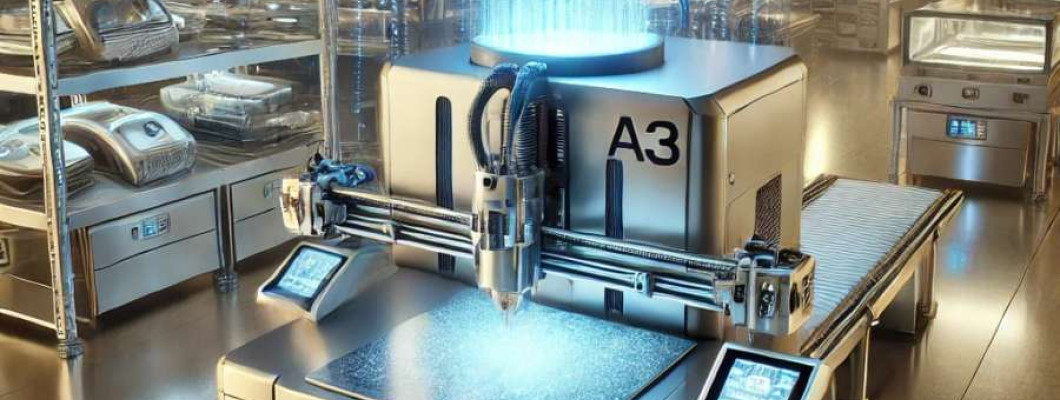
The Industrial Reality of Scaling Edible Food Printing
Transitioning from artisanal, hobbyist food decoration to consistent, industrial-grade edible printing embodies a multifaceted technical challenge. Precision printing on cakes and cookies using an A3 format edible food printer demands exacting control over printhead mechanics, substrate compliance, and ink behavior under continuous operation. Unlike DIY systems, which often target occasional use with limited throughput and tolerance for variability, an industrial-grade printer must guarantee micron-level accuracy, sustained color consistency, and strict food safety compliance across extended printing cycles.
Consider a mid-sized bakery aiming to print on thousands of cookie units daily. The printer must maintain ±0.1 mm registration accuracy to avoid image overlap or blurring, a requirement beyond typical consumer models. The A3 printable surface introduces mechanical complexity—managing flatness and substrate feeding without jamming or skewing. Environmental factors such as humidity affect edible ink viscosity and drying times, introducing operational bottlenecks often overlooked in DIY devices.
Operational uptime becomes critical: printhead clogging due to sugar-based inks, rapid wear of nozzles, and maintenance downtime directly impact throughput and cost-effectiveness. Additionally, lifecycle maintenance costs soar if the printer uses components unsuitable for industrial use, such as consumer-grade ink delivery systems without real-time monitoring. These factors construct a technology gap populated by idealized home-use printers and robust industrial machines. Bridging this gap demands system architecture capable of thermal management, precise motion control, and scalable consumable workflows.
Technical Deep-Dive into Industrial Edible Printing Challenges
Printhead Mechanics and Micron-Level Precision
Industrial-grade A3 edible printers integrate piezoelectric drop-on-demand printheads engineered for droplet sizes ranging from 4 pl to 10 pl, allowing color resolution exceeding 1200 dpi. The printhead stage employs linear motors or high-precision stepper motors with sub-micron feedback encoders to maintain continuous positional accuracy. A closed-loop control system compensates for mechanical backlash and thermal expansion.
Hypothetically, nozzle displacement tolerance (D) must stay under 25 µm across the 297 mm width of A3 format to preserve image fidelity. Using a PID controller with proportional gain Kp and derivative gain Kd, positional error (e) is minimized by adjustments u(t) = K_p e(t) + K_d δe/δt. Lacking such control, printhead jitter results in image banding visible to the human eye.
Ink Chemistry and Drying Dynamics
Edible inks require precise formulation for viscosity (~10–15 cP at 25°C), surface tension (~30–40 mN/m), and pigment stability under thermal cycling. Sugar-based inks tend to crystalize within nozzles if not maintained between 20–35°C. The printer integrates an ink recirculation system with micro-agitation to prevent sedimentation and clogging. Drying speed is regulated by infrared heaters calibrated to maintain substrate surface temperature at 40–45°C for optimal setting without substrate deformation.
Material Handling and Feeding Systems
Substrate (cakes, cookies) support requires a conveyor or platen system with vacuum holding to prevent movement during printing. The feeding tolerance must remain below 0.2 mm on the X and Y axes. Sensors and optical markers enable real-time alignment correction. Comparative analysis shows belt feeding systems introduce ±0.5 mm variance versus vacuum platens achieving ±0.15 mm.
Thermal and Environmental Management
Extended industrial operation generates heat from motors, electronics, and heating elements. An integrated cooling system dissipates up to 150 Watts of thermal load across the printhead assembly. The printer chassis includes humidity sensors to adjust ink drying parameters dynamically, maintaining environmental stability to within ±3% relative humidity.
Maintenance and Consumable Lifecycle Costs
The system employs modular printhead cartridges rated for 500 hours continuous use before requiring replacement. Scheduled maintenance protocols automate nozzle purging cycles every 6 hours, each consuming approximately 5 ml of ink. Consumable tracking software logs usage to predict replacement cycles and minimize downtime.
| Parameter | DIY Edible Printer | Industrial-Grade A3 Edible Printer |
|---|---|---|
| Max Print Area | A4 (210 x 297 mm) | A3 (297 x 420 mm) |
| Print Resolution | 300-600 dpi | 1200 dpi+ |
| Droplet Volume | 10-20 pl | 4-10 pl |
| Positional Accuracy | ± 0.5 mm | ± 0.1 mm |
| Printhead Uptime per Cycle | 2-4 hours | 8+ hours with auto-purging |
| Consumable Cost per Hour | Low but high failure rate | Optimized ink use with tracking |
Scenario Analysis of Business Use-Cases for Industrial Edible Printing
High-Volume Bakery Chain
A bakery network requiring rapid turnaround on customized cookies benefits from the A3 printer's large format and multitasking ability. With ±0.1 mm precision and high throughput, production lines maintain consistent image quality without operator intervention, reducing labor costs by an estimated 15% over manual decoration.
Upscale Cake Design Studio
For boutique cake decorators, color depth and micron-level detail are paramount. The printer's capability to handle high pigment density inks and precise droplet control enables photo-realistic edible prints, expanding creative possibilities and premium pricing models.
Event Catering and Small Batch Production
In event catering, flexibility and rapid job switching are crucial. The industrial-grade printer supports varied substrates ranging from fondant sheets to cookie surfaces with rapid drying cycles, minimizing setup times and maximizing uptime.
Expert FAQ on Industrial Edible Printing Technologies
Q1 What prevents nozzle clogging with sugar-based inks?
A: Continuous micro-agitation and temperature-controlled ink reservoirs prevent crystallization, combined with automated purging protocols every 6 hours to maintain flow integrity.Q2 How is substrate warping avoided during drying?
A: Use of calibrated infrared heaters with feedback from surface temperature sensors keeps substrates within 40–45°C, avoiding thermal deformation common in delicate confectioneries.Q3 Can the printer compensate for slight dimensional variations in cakes?
A: Yes, integrated optical sensors detect fiducial marks and adjust X/Y axis positioning dynamically to maintain print registration with ±0.1 mm tolerance.Q4 What maintenance cycles are critical for printhead longevity?
A: Automated purging every 6 hours and cartridge replacements after approximately 500 hours of continuous operation are verified to prevent premature nozzle failure.Q5 How does this printer handle color consistency across large production runs?
A: Real-time color calibration routines with inline spectrophotometers adjust pigment dosing to compensate for ink batch variation and environmental changes.
Strategic Verdict and Recommendation for Industrial Edible Food Printing
The A3 Edible Food Printer For Printing Cakes Cookies represents a decisive leap in closing the gap between hobbyist food decoration and industrial-scale edible printing. Its technical architecture addresses critical bottlenecks such as positional accuracy, ink chemistry stabilization, thermal management, and maintenance automation that define industrial reliability. For enterprises aiming to scale customized edible printing—whether bakery chains, artisan studios, or event caterers—this hardware platform offers a durable, precise, and cost-efficient solution with a well-defined lifecycle and operational workflow.
Although the capital expenditure is higher than consumer-grade models, the operational advantages—reduced labor, minimized downtime, and enhanced product quality—ensure superior ROI and asset longevity. The integrated consumable monitoring and automated printhead maintenance extend uptime significantly, increasing throughput potential. Industrial operators with rigorous throughput and quality demands will find this printer indispensable for maintaining competitive differentiation in an expanding market segment.