
The Gap Between DIY and Industrial-Grade for A3 Edible Food Printing on Cakes and Cookies
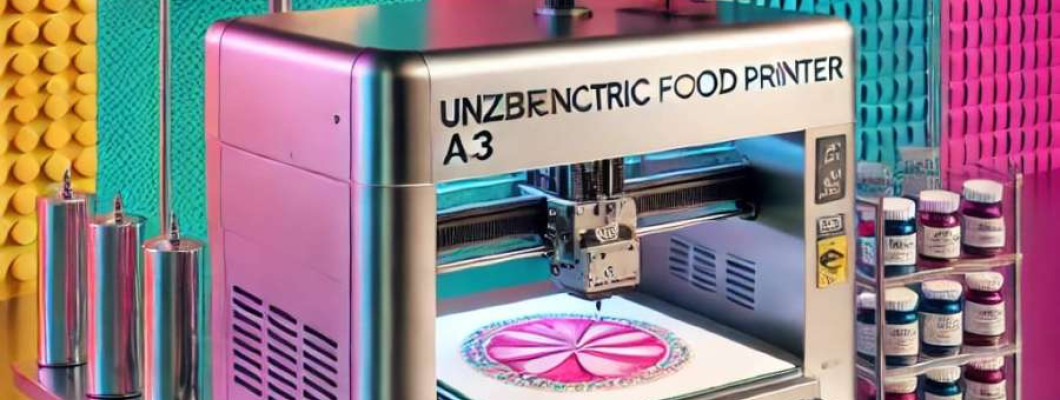
The Industrial Reality of Edible Food Printing in Commercial Settings
Within industrial bakeries and large-scale dessert production facilities, the transition from artisanal edible food printing methods to robust, production-grade hardware is fraught with technical challenges. Operators often confront the dichotomy between consumer-grade edible printers—typically limited in throughput, color accuracy, and substrate compatibility—and the stringent demands of commercial environments requiring consistent micron-level precision, high-volume output, and seamless integration into existing workflow automation.
Applying edible ink onto substrates such as fondant cakes and cookie surfaces involves managing variables absent in traditional paper printing. For instance, edible substrates exhibit differing surface textures and moisture contents, which impact ink absorption rates and drying times. This introduces operational bottlenecks that DIY or entry-level printers cannot mitigate, leading to inconsistent prints and increased waste. Moreover, food safety compliance imposes material constraints on printheads and ink formulations. Industrial-grade devices must sustain rigorous hygiene protocols, including clean-in-place capabilities and use of food-grade certified consumables.
Thus, the imperative for industrial operators is a printer that resolves these challenges without sacrificing throughput or output fidelity. The A3 Edible Food Printer For Printing Cakes Cookies emerges as a candidate engineered specifically to bridge this divide, promising scalability with precision hardware and calibrated consumables optimized for edible media.
Technical Deep-Dive into the A3 Edible Food Printer Architecture
Printhead Engineering and Ink Delivery Precision
The printer employs piezoelectric inkjet printheads capable of ejecting droplets at volumes as low as 1.5 picoliters. Compared with typical consumer edible printers which operate at 10–20 pl, this enables micron-level dot placement and superior gradient rendering. Printhead nozzle density reaches 1200 nozzles per inch, facilitating resolutions up to 1200 dpi, which is essential for high-fidelity image reproduction on textured cake surfaces.
Substrate Handling and Mechanical Stability
The printer's platen accommodates A3-sized sheets up to 297 mm x 420 mm with a vacuum-assisted hold mechanism ensuring substrate immobilization. Mechanical stability is maintained with a ±0.05 mm positional accuracy per axis, allowing consistent layer registration between multiple print passes, crucial when printing multi-color edible designs on flexible media like fondant or wafer paper.
Ink Chemistry and Drying Dynamics
Ink formulations are certified food-grade, water-based, and incorporate fast-drying agents optimized for porous edible surfaces. Drying occurs via an integrated low-heat UV LED system delivering approximately 5 W/cm², which reduces ink bleed and substrate warpage. The printer’s drying cycle averages 12 seconds per full A3 output, balancing throughput with quality control.
Throughput Metrics and Asset Utilization
Under continuous operation, the printer achieves a throughput of approximately 8 full A3 edible prints per minute. Factoring in 8-hour shifts and 5-day workweeks, this translates to an effective output of 19,200 edible prints monthly. Given the hardware's mean time between failures (MTBF) of 2,500 operational hours and modular component design, downtime for maintenance is minimal, supporting lean production schedules.
Comparative Table on Print Capability and Longevity
| Specification | Consumer-Grade Edible Printer | A3 Edible Food Printer For Printing Cakes Cookies |
|---|---|---|
| Print Resolution (dpi) | 300–600 | Up to 1200 |
| Droplet Volume (pl) | 10–20 | 1.5 |
| Substrate Size | A4 (210 x 297 mm) | A3 (297 x 420 mm) |
| Throughput (prints/hr) | 90–120 | 480 |
| MTBF (hours) | 500–1000 | 2500 |
| Food Safety Compliance | Basic | Certified Food-Grade Components |
Scenario Analysis Addressing Business Use-Cases
1. Boutique Bakery with Moderate Volume Needs
The bakery requires high-resolution prints on custom birthday cakes and small batches of decorated cookies. The A3 printer's micron-level precision and larger substrate compatibility reduce print setup times and allow seamless multi-item printing on single sheets, improving labor efficiency and reducing cake decoration turnaround times.
2. Large Cake Decorating Facility with Automation
For industrial-scale production of edible cake toppers, the A3 printer integrates with conveyor-based workflows due to its reliable vacuum platen and consistent print registration. Its 8 prints per minute throughput supports volume demands while maintaining compliance with food safety standards, enabling just-in-time manufacturing without sacrificing quality.
3. Event Catering and Customization Service
Here, rapid turnaround and versatility in edible media substrates are paramount. The printer's advanced ink chemistry and quick drying facilitate diverse substrate types from fondant sheets to rice paper, offering color accuracy essential for brand logos or photographic images, thereby elevating the client's customization capabilities and customer satisfaction.
Expert FAQ on High-Precision Edible Food Printing
Q1: How does droplet volume affect print quality on edible substrates?
Smaller droplet volumes (1.5 pl) enable finer detail and smoother gradients by reducing dot overlap and ink bleed, critical on porous edible surfaces which otherwise cause color smudging at higher volumes.
Q2: What operational bottlenecks emerge from edible ink drying?
Extended drying times lead to substrate deformation and production slowdowns. The low-heat UV LED system ensures rapid curing, mitigating these risks while maintaining substrate integrity.
Q3: How does the vacuum platen improve throughput?
By securely clamping substrates, it prevents micro-movements caused by mechanical vibrations, ensuring precise layer alignment and enabling multi-pass printing without registration errors.
Q4: What are the maintenance implications of high nozzle density printheads?
High-density nozzles require frequent cleaning cycles to prevent clogging from pigmented edible inks; modular printhead design expedites replacement, reducing downtime compared to monolithic designs.
Q5: How does substrate variability impact print consistency?
Variations in substrate texture and moisture affect ink spread and absorption; calibration routines and pre-print sensor measurements help adjust ink ejection parameters dynamically to maintain uniform output quality.
Strategic Verdict and Recommendation of the A3 Edible Food Printer
The A3 Edible Food Printer For Printing Cakes Cookies manifests as a definitive solution for bridging the gap between artisanal edible printing and industrial-grade production. Its technical strengths—micron-level droplet control, robust substrate stabilization, rapid drying technology, and compliant ink chemistry—address the core operational challenges that constrain scalability in food decoration environments. Furthermore, the printer’s throughput and maintenance profile support lean manufacturing and consistent uptime, vital for commercial applications.
For scalable business owners and production managers prioritizing both precision and volume without sacrificing compliance or operational continuity, this printer represents a sound capital investment with tangible ROI through reduced waste, elevated product quality, and workflow automation compatibility. Thus, it merits strong consideration as the industrial-grade edible printing hardware standard in the near to mid-term horizon.