
The Gap Between DIY and Industrial-Grade For A3 UV Varnish DTF Printer Machine Label Printer
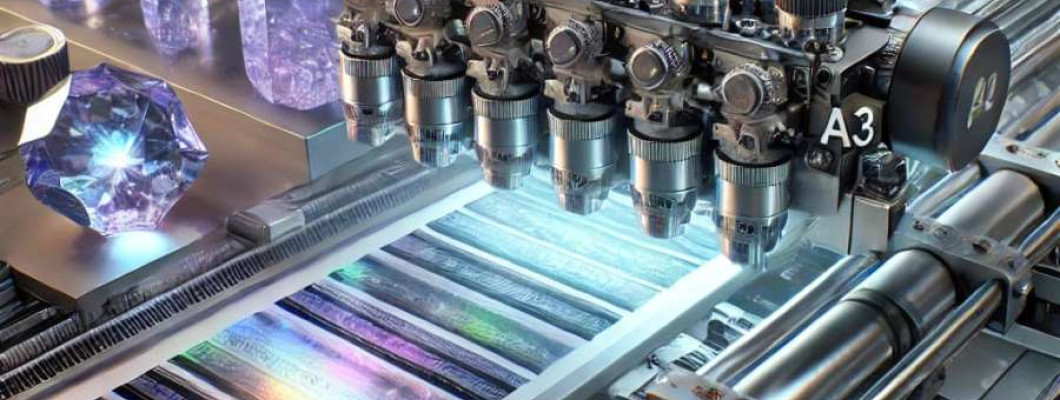
The Industrial Reality of Scaling UV Varnish DTF Label Printing
In high-precision labeling workflows, the transition from a small-scale, DIY setup to a fully industrial-grade A3 UV varnish DTF printer machine presents multiple technical and operational challenges. Businesses seeking consistent quality, reliability, and throughput often confront the reality that DIY or semi-professional devices struggle to match the rigorous demands of enterprise-level production. UV varnish application combined with Direct-to-Film (DTF) printing demands not only precise ink deposition but also finely tuned substrate handling and curing mechanisms to maintain micron-level print fidelity and abrasion resistance in labels.
The A3 UV Varnish DTF Printer Machine Label Printer steps into this landscape addressing these core deficiencies. Unlike smaller DIY units, industrial models integrate robust firmware-controlled printheads designed to reduce nozzle clogging and print inconsistencies. UV curing lamps are engineered for uniform irradiance over the entire A3 platen measuring approximately 320mm by 450mm, ensuring varnish polymerization is complete and repeatable with minimal heat stress on heat-sensitive label substrates.
However, moving to such high-specification hardware introduces new complexities. The repeatability of micron-scale varnish layering requires exact calibration of ink flow and motion control systems. This is a side where many DIY solutions falter due to limited hardware resolution and inconsistent environmental controls. Industrial-grade machines implement closed-loop feedback and high-precision stepper motors enabling positional accuracy below 10 micrometers, creating uniform gloss and textured effects as dictated by the digital design.
The reality extends to daily operational throughput and maintenance cycles. Industrial workflows demand a duty cycle measured not in hours but in multi-shift days, with uptime exceeding 95%. The mechanical architecture of the A3 UV Varnish DTF Printer is constructed with high-grade linear rails and hardened lead screws that reduce backlash and mechanical wear. This translates into less downtime and longer maintenance windows compared to consumer-level devices prone to premature component failure from constant production stress.
Technical Deep Dive on Industrial-Grade Components and Performance
Printhead Architecture and Ink Delivery Precision
Industrial-grade DTF printers typically employ piezoelectric printheads with nozzle diameters between 10 to 21 picoliters (pl), allowing fine drop control essential for sharp label text and smooth varnish gradients. Unlike thermal inkjets in some DIY units, piezo heads avoid heat, preserving ink chemistry and substrate compatibility.
UV Varnish Application and Curing Physics
The varnish layer thickness targets between 3 to 10 micrometers per pass to achieve optimal gloss and protective qualities. UV LED lamps emitting in the 385-405 nm wavelength range provide rapid cross-linking of photoinitiators. A key metric is the irradiance uniformity over the platen area, typically aimed at >90% homogeneity. Uneven curing can cause varnish cracking or delamination under mechanical stress, a frequent failure mode in lesser setups.
Mechanical Motion Control and Accuracy
Through precise lead screw pitch (commonly 5 mm per revolution) and micro-stepping drivers, the printer achieves positional repeatability under 10 micrometers. Closed-loop encoders monitor axis position, correcting real-time drift. This prevents image skew and ensures registration accuracy between varnish and DTF ink layers, critical for multi-pass prints requiring exact overlay.
Thermal and Environmental Management Systems
The operation generates moderate heat from UV LEDs and stepper motors, requiring forced air cooling and heat sinks to maintain component longevity. Relative humidity control in the print chamber prevents dot gain caused by ink droplet spreading on hygroscopic substrates. Industrial models include filtered air flow to reduce particulate contamination on varnish surfaces.
Comparative Data Analysis Table on DIY vs Industrial-Grade Systems
| Parameter | DIY DTF Printer | Industrial A3 UV Varnish DTF Printer |
|---|---|---|
| Print Resolution | Up to 1200 dpi | Up to 1440 dpi with enhanced droplet control |
| Nozzle Size | 15-25 pl | 10-21 pl with piezoelectric heads |
| Varnish Layer Thickness | Variable, manual adjustment | 3-10 micrometers, automated control |
| Positioning Accuracy | ~50 micrometers | <10 micrometers with closed loop control |
| UV LED Irradiance Uniformity | <70% | >90% uniformity across platen |
| Duty Cycle | Intermittent use | Multi-shift industrial operation |
| Maintenance Interval | Weekly to biweekly | Monthly with predictive monitoring |
Scenario Analysis of Industrial Applications for the Printer
Scenario 1 Manufacturer of High-Volume Durable Labels
A label manufacturing enterprise producing outdoor weatherproof vinyl labels requires consistent gloss finish and abrasion resistance. The precise varnish layering and rapid curing enable them to maintain a throughput of 400 labels per hour with minimal rework. The printer’s high positional accuracy ensures multi-color DTF prints perfectly overlay varnish patterns, reducing waste by 15% compared to previous setups.
Scenario 2 Boutique Packaging Supplier Needing Premium Finish
In a boutique packaging application focusing on limited runs of luxury product labels, this printer’s ability to handle diverse substrates including synthetics and coated papers with micron-level varnish effects adds significant aesthetic value. The operator benefits from advanced automation reducing manual intervention and ensuring repeatable results, critical when employing variable data for QR codes and serialized branding.
Scenario 3 Mid-Sized Printer Integrating Automation for Print-to-Cut Workflow
A mid-sized print service provider integrates the A3 UV Varnish DTF Printer into an automated print-to-cut line. Its reliable duty cycle and minimal heat distortion allows continuous multi-shift operation, keeping pace with automated cutting and finishing equipment. This reduces labor dependency and increases the overall factory uptime, driving down operational cost per label unit.
Expert FAQ for Industrial Use Questions
- How does the UV varnish affect substrate heat sensitivity?
- UV LED curing emits minimal heat compared to older mercury lamps; typical substrate temperature rise is under 40°C. This prevents warping of heat-sensitive films and papers, preserving label dimensional stability.
- What maintenance routines optimize printhead lifespan?
- Daily nozzle checks using automated diagnostics and weekly ultrasonic bath cleaning minimize clogging. Piezo printheads have typical lifespan over 10,000 operational hours under these regimens.
- How critical is environmental control inside the print chamber?
- Maintaining relative humidity between 40-60% prevents ink droplet feathering and varnish delamination. Industrial systems include humidity sensors and filtered airflow to stabilize conditions.
- Can the machine print spot varnish and textured finishes?
- Yes. Precise inkjet control combined with variable varnish layer deposition allows spot varnish effects and textured patterns without additional mechanical steps.
- What safety compliance standards apply to UV curing in industrial printing?
- Machines incorporate interlocked UV shielding to prevent operator exposure, and electrical systems comply with IEC 61010 and CE safety regulations.
Strategic Verdict and Recommendation for the A3 UV Varnish DTF Printer Machine Label Printer
Considering its robust hardware design, precise motion control, and advanced UV curing system, the A3 UV Varnish DTF Printer Machine Label Printer emerges as a definitive solution bridging the critical performance gap between consumer-level and industrial-grade printing needs. Its ability to sustain multi-shift production with micron-level varnish application accuracy aligns perfectly with the demands of high-throughput label manufacturing and premium packaging. The machine’s engineering quality significantly reduces downtime and maintenance overhead, translating into a hard return on investment measurable in reduced waste and increased output consistency.
For businesses scaling from prototype to mass production or integrating into automated workflows, this printer delivers thermal, mechanical, and process control advantages that DIY or semi-professional units cannot approach. Consequently, it is strongly recommended for enterprises requiring reliable, repeatable, and high-fidelity print and varnish output in an industrial environment.