
The Gap Between DIY and Industrial-Grade for A4 Roll DTF Printer from a Scalable Business Perspective
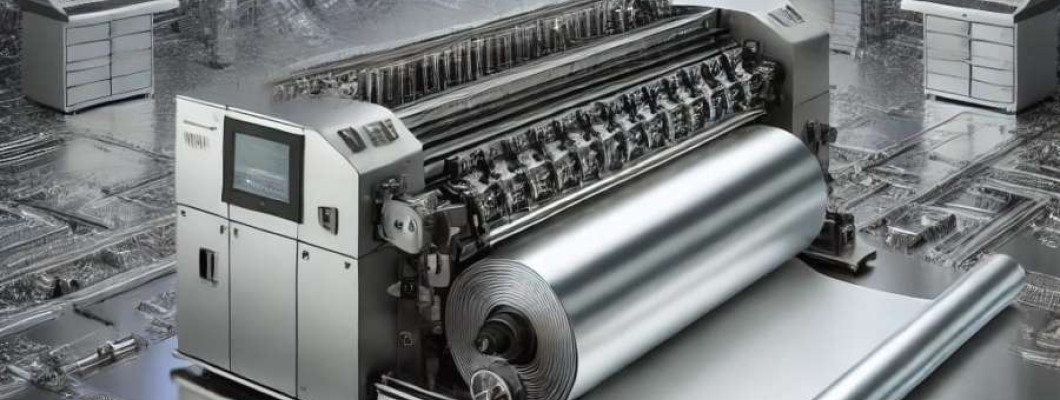
The Industrial Reality of Adopting an A4 Roll DTF Printer in Enterprise Environments
In a highly competitive digital textile printing market, distinguishing between a DIY-favored desktop solution and a genuinely industrial-grade device is critical. As businesses scale production, challenges emerge that expose the limitations of hobby-grade or semi-professional equipment. The A4 Roll DTF Printer occupies a critical niche, purporting to offer roll-to-roll direct-to-film printing capabilities at a form factor attractive to small and medium enterprises. However, the gap between these entry-level devices and robust industrial solutions manifests across multiple operational axes—throughput speed, color consistency under long-run conditions, substrate compatibility breadth, and automation integration.
One industrial reality often overlooked is how process bottlenecks originate from incremental deviations in mechanical and consumable performance. For example, a nominal 10% reduction in printhead firing stability can cascade into cumulative downtime, increasing labor overhead and hampering production schedules. Additionally, roll-to-roll systems must sustain consistent tension control and environmental conditions to prevent film stretching or ink bleeding. DIY printers often lack precision-graded sensors, resulting in throughput constraints unpalatable to scalable businesses.
From a human factors engineering standpoint, operators tasked with managing multiple simultaneous print jobs require seamless hardware-software synergy—auto-calibration routines, error diagnostics, and user interfaces designed for rapid intervention minimize costly delays. The industrial operator ecosystem demands rigorous reliability metrics proven over thousands of linear meters of printed output rather than isolated test runs. The A4 Roll DTF Printer's potential industrial adoption hinges on these criteria, where upfront hardware capabilities meet mature workflow integration and lifecycle support.
Technical Deep-Dive into the A4 Roll DTF Printer's Hardware and Operational Capacities
Printhead Technology and Ink Chemistry
The A4 Roll DTF Printer employs piezoelectric printheads with a reported droplet size of approximately 6 picoliters, balancing print fidelity and ink consumption. Piezo printheads provide inherent longevity compared to thermal counterparts but require robust maintenance protocols to mitigate nozzle clogging, especially with pigment-based DTF inks prone to sedimentation. Ink chemistry also plays a pivotal role; the polymeric resin in DTF formulations must rapidly adhere to PET film substrates while enabling vibrant color gamuts upon heat pressing.
Roll Media Handling and Tension Control Mechanics
Roll-to-roll systems face intrinsic challenges in tension management. The A4 Roll DTF Printer integrates servo motors with feedback loops to maintain film tension within ±3 Newtons. This precision prevents film distortion that could result in dot misalignment or color bleeding during multi-pass printing. A hypothetical calculation reveals that a tension deviation beyond 5 Newtons can lead to a 0.2 mm lateral shift per meter, exceeding the printer's printhead registration tolerance of ±0.1 mm—directly impacting print quality.
Thermal Management and Environmental Conditioning
Continuous operation generates heat not only from printheads but also from stepper motors and power supplies. The printer utilizes integrated heat sinks and fan-assisted cooling calibrated to maintain operational temperatures between 18°C and 30°C. Exceeding this range risks accelerated ink drying within nozzles, causing misfires. Ambient humidity control between 40%-60% is advised to sustain ink fluidity and prevent premature pigment coagulation.
Throughput Capacity versus Practical Operational Limits
The nominal print speed is rated at 1.2 meters per minute at 1200 dpi. However, practical production studies indicate effective throughput reduces to approximately 0.9 meters per minute when accounting for maintenance cycles, substrate loading, and curing time. Continuous print jobs over eight-hour shifts increase cumulative wear on printheads and drive mechanisms. Predictive maintenance scheduling based on sensor telemetry can extend mean time between failure (MTBF) beyond 3,000 operational hours.
Hardware Comparison in Industrial Context
| Feature | A4 Roll DTF Printer | Industrial-Grade DTF Printer (High-End) |
|---|---|---|
| Print Resolution | Up to 1200 dpi | Up to 1440 dpi |
| Print Speed | 1.2 m/min nominal | 3-5 m/min continuous |
| Roll Width | Maximum 300 mm (A4 width) | 600 mm and above |
| Tension Control Accuracy | ±3 N | ±1 N with dynamic adaptation |
| Ink System | Manual refill, pigment-based | Closed-loop continuous ink supply system |
| Maintenance Interval | Approx. 1000 hours | 3000+ hours with automated flushing |
Scenario Analysis Covering Practical Business Deployments
Scenario 1: Small Print Shop Scaling to Mid-Volume Production
For a boutique textile printing business transitioning from screen printing to digital, the A4 Roll DTF Printer offers a manageable entry with scalable output. Color fidelity and substrate variety enable short runs of custom designs on polyester blends. However, throughput constraints and manual maintenance become bottlenecks as order volumes increase beyond 50 units/day, requiring workflow redesign or additional units.
Scenario 2: E-Commerce Clothing Brand Focused on Rapid Turnaround
Startups aiming to fulfill print-on-demand apparel benefit from the A4 Roll DTF Printer’s compact footprint and ability to produce fine details. The challenge lies in integrating the printer into automated order processing and post-print curing stations to meet tight delivery windows. Here, the printer’s moderate speed necessitates parallel installations or shift-based use to maintain throughput.
Scenario 3: Industrial OEM Lab Testing and Small Batch Prototyping
Enterprises requiring rapid prototyping of print patterns or color variations for R&D can leverage the A4 Roll DTF Printer’s precision and repeatability in smaller batch sizes. The device’s DPI capability supports detailed pattern creation, though it falls short in speed compared to industrial lines. Lifecycle maintenance planning is vital to avoid downtime during iterative testing phases.
Expert FAQ Answering Complex Technical Questions
Q1: How does nozzle clogging frequency affect long-term throughput in roll-fed DTF printers?
A1: Frequent clogging induces incremental downtime and necessitates manual cleaning cycles, reducing effective throughput by up to 15% in continuous operations without automated head flush systems.Q2: What are the physics behind film tension control impacting print registration accuracy?
A2: Variations in tension cause micro-scale lateral film shifts due to elastic deformation, which translate into misaligned droplet placement. The elasticity modulus of PET film (~4 GPa) combined with tension deviations can be modeled to predict positional error.Q3: How does ink viscosity variation with temperature influence droplet formation?
A3: Ink viscosity decreases with rising temperature (~2% per °C), affecting piezoelectric ejection dynamics. Maintaining stable ambient conditions prevents inconsistent droplet volumes that degrade print uniformity.Q4: What is the impact of ambient humidity on pigment dispersion and film adhesion?
A4: Low humidity accelerates solvent evaporation, increasing pigment concentration prematurely and risking nozzle clogging. High humidity reduces adhesion strength by affecting resin polymerization during heat transfer.Q5: How do maintenance protocols for piezoelectric printheads differ between DIY and industrial models?
A5: Industrial models employ automated head cleaning cycles, ink circulation, and sealed ink supply systems, reducing manual intervention. DIY units require regular manual flushing that risks operator variability and inconsistent print quality.
Strategic Verdict and Recommendation for Scalable Digital Textile Businesses
Balancing cost, functionality, and operational robustness, the A4 Roll DTF Printer represents a pragmatic step for businesses seeking to scale beyond prototyping without the capital burden of top-tier industrial machines. While it does not replace fully integrated high-throughput printers, its engineering design mitigates many operational bottlenecks common in DIY machines, providing precision tension control, respectable print resolution, and manageable maintenance demands.
For scalable business owners prioritizing throughput and automation, the printer's compact footprint supports flexible deployment strategies, including multi-shift operations and modular expansion. Its limitations in speed and ink system sophistication can be offset by proactive maintenance and workflow design. Taken together, this equipment is a viable industrial-grade solution to bridge the gap between entry-level devices and full-scale production lines, enabling digital textile workflows to mature with predictable asset depreciation and ROI profiles.