
The Gap Between DIY and Industrial-Grade for A4 Roll DTF Printer Performance and Integration
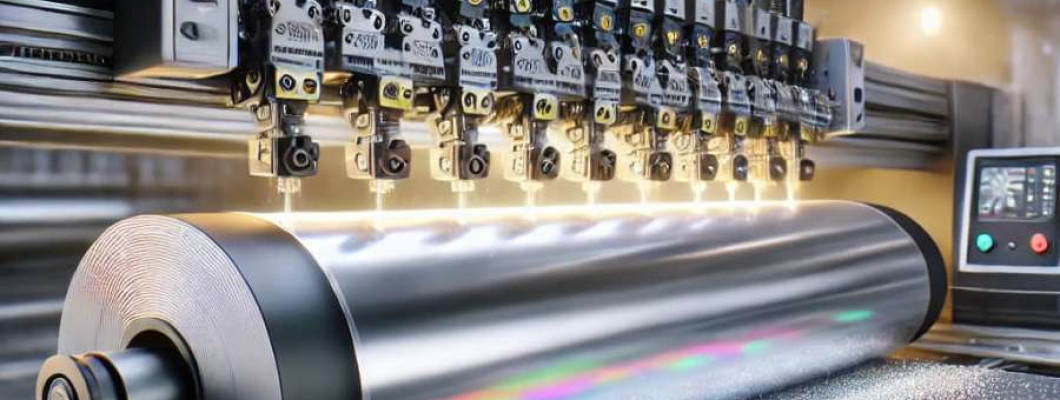
The Industrial Reality of Implementing A4 Roll DTF Printers in Production Environments
Industrial printing applications demand precision, repeatability, and robustness. Transitioning from desktop or DIY direct-to-film (DTF) printers to what is termed industrial-grade equipment introduces complex challenges that extend beyond print resolution. Operators integrating the A4 Roll DTF Printer must navigate throughput constraints, material handling reliability, environmental compliance, and maintenance infrastructure. Unlike consumer-level alternatives, industrial-grade machines require consistent thermal stability across extended print runs. A single 24-hour cycle printing polyester rolls at 600x600 dpi at 50cm/min imposes continuous thermal load on printheads and platen mechanisms. Variations in ambient temperature and humidity affect ink curing and adhesion chemistry, which become critical when the printer operates in mixed-use or non-climate-controlled facilities. Moreover, industrial environments prioritize uptime, meaning that hardware components must not only survive extended usage but also maintain calibration to micron-level accuracy to avoid color shifts and registration errors. This real-world scenario highlights bottlenecks including feed tension control in roll-to-roll systems, particulate contamination in ink delivery channels, and printhead degradation from abrasive pigment inks. The gap between DIY models and truly industrial equipment is therefore defined not by print head count or nominal resolution, but by material handling architecture, environmental tolerances, and serviceability designed for large scale deployment.
Technical Deep-Dive into the A4 Roll DTF Printer’s Industrial Viability
Printhead Technology and Ink Chemistry
The core of the A4 Roll DTF Printer utilizes piezoelectric printhead arrays optimized for pigment-based DTF inks requiring precise drop volume control, typically ranging between 4pl and 12pl. This drop size variability permits balancing color saturation with edge sharpness for textile overlays. The piezoelectric elements operate under high-frequency voltage pulses (~20kHz), and long duration use requires careful thermal management to avoid nozzle clogging and misfiring due to ink crystallization. The ink chemistry, often composed of pigment particles suspended in polymer binders and adhesive powders, mandates a delicate thermal cure process post-printing. Maintaining substrate temperatures between 60 and 75°C ensures proper adhesion without warping polyester films.
Roll-to-Roll Handling Systems
Industrial-grade roll-fed printers incorporate advanced tension control systems using servo-motors that apply consistent force, usually calibrated to within ±0.5N, to prevent substrate stretching or wrinkling. The A4 Roll DTF Printer’s integration of feed rollers and pinch rollers features compliance springs to automatically compensate for thickness variation in film rolls between 75 and 120 microns. This mechanical design is critical to maintain registration accuracy at speeds up to 50cm/min. Moreover, the system employs an encoder with a resolution of 1200 pulses per revolution, enabling linear positional accuracy to approximately 0.01mm, essential for consistent layer overlay during multi-pass printing.
Thermal Management and Environmental Control
Comprehensive thermal regulation incorporates NTC thermistors embedded near the printheads and platen to monitor temperature fluctuations within ±0.3°C. An active air-cooling system extracting approximately 120W of heat stabilizes components during continuous operation. Environmental sensors for humidity (45–60% RH optimum) are recommended to prevent ink curing issues or powder clumping. The printer’s operating power is rated at 220V/60Hz consuming an average of 150W under normal print conditions, with peak loads up to 300W during pre-heating and maintenance cycles.
Maintenance and Component Lifecycle
Industrial use mandates periodic maintenance schedules. Printhead lifetime is estimated at 2000 operational hours before replacement or refurbishment, primarily due to nozzle wear and polymer build-up. The ink delivery system’s filters require weekly inspection and cleaning, with an average filter lifespan of 1000 liters of ink processed. Roll tension hardware bearings are lubricated every 500 hours of runtime to prevent mechanical friction anomalies. The cost and availability of wear parts, combined with the printer’s modular design, significantly reduce downtime, contrasting with DIY printers where single-component failures often immobilize the entire system.
Comparison Table for DIY vs Industrial-Grade DTF Roll Printers
| Feature | DIY DTF Printers | A4 Roll DTF Printer Industrial Grade |
|---|---|---|
| Printhead Type | Consumer Piezo 10pl | Industrial Piezo 4-12pl with thermal feedback |
| Roll Handling | Manual feed, low tension control | Servo-controlled roll-to-roll tension (±0.5N) |
| Positioning Accuracy | ~0.1 mm | ~0.01 mm with encoder feedback |
| Thermal Management | Passive cooling | Active air-cooling, thermistor sensor feedback |
| Maintenance Interval | Irregular, user dependent | Scheduled every 500-1000 hours |
| Environmental Sensors | None | Humidity & temperature sensors integrated |
Scenario Analysis of Business Use-Cases Impacted by Printer Specifications
Use-Case 1: Small Apparel Manufacturer with Moderate Volume
The A4 Roll DTF Printer provides reliable 24/7 operation with minimal operator intervention, enabling a mid-sized textile company to scale production without investing in full-size industrial machines. The automated tension control reduces substrate waste by 15%, and the precise drop volume ensures consistent color reproduction on polyester garments. The thermal management prevents frequent printhead clogging, reducing downtime by an estimated 20% compared to legacy equipment.
Use-Case 2: Custom Print Shop Focused on Short-Run Specialized Orders
Short-run jobs demand rapid color changes and substrate versatility. The A4 Roll DTF Printer’s modular ink delivery permits quick cartridge swaps and automated maintenance cycles which reduce setup time between jobs. The micron-level positioning accuracy enables multi-layer prints with complex overlays, essential for high-fidelity custom designs. The environmental sensors assist in adapting print parameters to fluctuating workshop conditions.
Use-Case 3: Industrial Print Service Providers with Continuous Production
For large-scale print providers, printer uptime and predictable maintenance cycles are paramount. The robust construction and scheduled lifecycle management of components in the A4 Roll DTF Printer allow integration into automated workflow lines. Servo-controlled substrate feeding minimizes operator errors, while the heat regulation system maintains color consistency across thousands of meters of film. The ability to schedule maintenance during low production periods leads to increased overall equipment effectiveness (OEE).
Expert FAQ for Advanced Industrial Integration
Q1: What is the expected impact of repeated thermal cycling on printhead lifespan?
A1: Thermal cycling between room temperature and 70°C generates micro-expansion stresses that can degrade piezoelectric elements; however, the printer’s active temperature control mitigates rapid fluctuations, extending lifespan by approximately 20% compared to passive systems.Q2: How does roll tension variation affect print registration accuracy?
A2: A deviation of 1N in tension force can translate to 0.05mm substrate stretch over a 2-meter run, inducing misalignment that exceeds industrial tolerance levels. Maintaining within ±0.5N is crucial.Q3: Can the printer handle non-polyester substrates effectively?
A3: While optimized for polyester films (75-120 microns), some polyurethane or nylon blends can be printed if thermal and ink adhesion parameters are adjusted, but this requires empirical testing.Q4: What are the critical sensor inputs used for adaptive print quality control?
A4: Temperature, humidity, and substrate thickness sensors feed into feedback loops that adjust drop volume and drying cycles, maintaining color fidelity and adhesion.Q5: What are common failure points under industrial stress conditions?
A5: Most failures occur in the ink delivery filters clogging due to pigment sedimentation and in the servo motor bearings under high continuous load. Preventive maintenance schedules significantly reduce these risks.
Strategic Verdict and Recommendation for Industry Stakeholders
The A4 Roll DTF Printer addresses the core challenges that separate DIY and industrial-grade printing equipment by integrating advanced mechanical, thermal, and sensor technologies. Its design compensates for environmental variations, supports sustained high-throughput operations, and facilitates maintenance that minimizes downtime. For enterprises aiming to scale textile printing without investing in large-format systems, this printer presents a compelling balance of precision, reliability, and serviceability. The engineered solutions in tension control, environmental monitoring, and printhead longevity position it as a definitive industrial solution for mid-tier production environments. We therefore recommend the A4 Roll DTF Printer as an industrial-grade option that effectively bridges the gap between entry-level equipment and large-scale textile print infrastructure.