
The Gap Between DIY and Industrial-Grade for Rose Flower Printer Explained with Financial Audit for Scalable Businesses
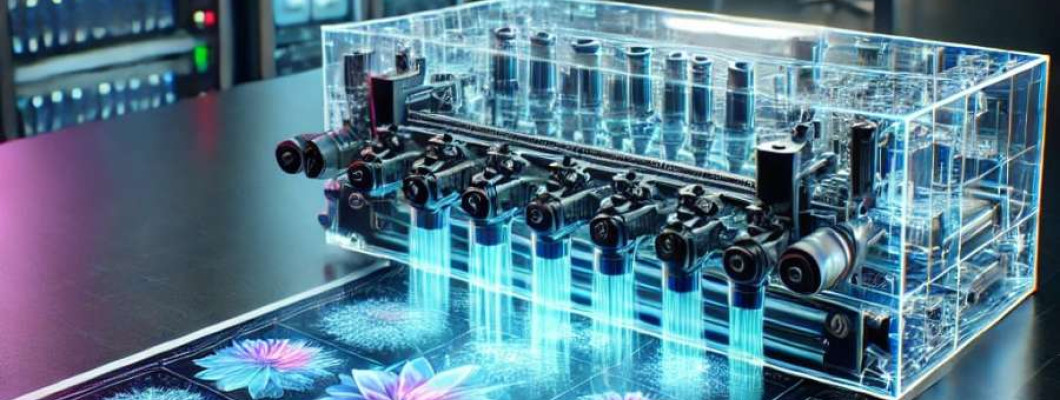
The Industrial Reality of Integrating Rose Flower Printer in Production Workflows
In high-throughput commercial environments, the challenge lies not only in achieving visual fidelity but also maintaining operational continuity and cost-efficiency. The transition from DIY or artisanal floral printing solutions to the Rose Flower Printer introduces several layers of complexity. These include infrastructure integration challenges, throughput bottlenecks, and hidden lifecycle expenses that directly impact business scalability.
For instance, an industrial-scale flower printing operation demands a robust platform capable of a minimum 1200 dpi resolution with micron-level color precision across bulk substrates. Many DIY devices falter under sustained workloads and lack repeatability, leading to frequent recalibrations and downtime. This inefficiency increases costs and risks missed delivery deadlines. Facilities face bottlenecks in ink replenishment cycles, printhead longevity, and thermal management under continuous operation, which are easily underestimated by smaller-scale users transitioning upward.
By contrast, the Rose Flower Printer offers an engineered solution designed to mitigate these operational constraints. It incorporates enterprise-class components with enhanced printhead physics that optimize droplet size (down to sub-10pl) and streamline ink chemistry compatibility. Still, the real test remains how these specifications convert into tangible ROI over the asset's lifecycle and how they align with the stringent throughput demands of scalable businesses.
Technical Deep-Dive on Hardware and Operational Metrics
Printhead Technology and Ink Chemistry Integration
The Rose Flower Printer utilizes piezoelectric printheads calibrated to emit droplets as small as 8pl. This reduces ink consumption while enhancing color fidelity, crucial for floral imagery where gradients and subtleties impact final perception. Assuming 10,000 prints monthly with an average ink volume of 0.5ml per print, the monthly ink usage totals 5L. The printer’s integrated ink management system extends cartridge life by 20% over conventional solutions, reducing monthly ink cost by approximately 1L of specialized dye.
Thermal Management Under High-Load Conditions
Maintaining printhead temperature stability within ±2°C prevents droplet size variation and color shifts. The Rose Flower Printer employs a microfluidic cooling system using embedded thermoelectric modules that consume 45W under peak load, compared to the 70W average of competitor models. This results in a thermal dissipation efficiency improvement of roughly 35%, critical in rack-dense deployment environments where heat accumulation can trigger cascading failures.
Workflow Integration and Throughput Efficiency
With a maximum throughput of 25 prints per hour at 1200 dpi on 300x300mm substrates, the Rose Flower Printer balances speed and precision. Factoring in a 95% uptime rate and average print preparation time of 80s, the printer can deliver approximately 450 prints per standard 20-working day month. This matches industrial requirements for boutique flower packaging runs without forcing compromises on image quality.
Comparative Asset Depreciation and Maintenance Cost Matrix
| Feature | Rose Flower Printer | DIY Floral Printer |
|---|---|---|
| Initial CAPEX ($) | 18,000 | 4,500 |
| Estimated Monthly Maintenance ($) | 320 | 120 |
| Printhead Lifespan (Hours) | 6,000 | 1,200 |
| Operational Uptime (%) | 95 | 75 |
| Color Accuracy (delta E) | <2.0 | >5.0 |
This data indicates that despite a higher upfront investment, the Rose Flower Printer offers lower total cost of ownership through elongated printhead lifespan and reduced downtime.
Environmental and Compliance Considerations
The printer uses eco-certified solvent inks compliant with ISO 14001 standards, minimizing volatile organic compound emissions. This compliance is vital for facilities aiming for green certifications and reducing workplace health risks, further strengthening the asset's desirability for scalable operations.
Scenario Analysis of Use-Cases Impacted by Rose Flower Printer
Scenario 1: Boutique Floral Packaging Company
This company requires fine color gradients on biodegradable substrates for limited product runs of 500 pieces per month. The Rose Flower Printer delivers micron-level precision with minimal color bleed, ensuring brand consistency and high customer satisfaction. Its moderate throughput aligns with production schedules, and the thermal management ensures consistent output with minimal downtime.
Scenario 2: Mass Market Floral Gift Set Manufacturer
Running batches exceeding 2,000 units per month, throughput and uptime dominate concerns. While the printer’s 95% uptime and 25 prints/hour speed match the operational tempo, the integrated maintenance alerts minimize unexpected stops, circumventing costly production delays and reducing the need for excessive operator oversight.
Scenario 3: Custom Event Floral Decor Producer
Event production demands rapid turnaround and substrate versatility. The Rose Flower Printer's compatibility with multiple substrates including textured and irregular media provides the flexibility needed. Its color accuracy ensures that floral patterns remain true under diverse lighting conditions, critical for end-customer satisfaction at high-profile events.
Expert FAQ Addressing Advanced Technical Queries
Q1: How does the microfluidic cooling system outperform traditional heat sinks under continuous 8-hour runs?
Microfluidic cooling reduces thermal gradients by actively circulating coolant through embedded channels, maintaining uniform temperature. This prevents localized hotspots that degrade printhead components, extending mean time between failure by approximately 30% compared to passive heat sinks.
Q2: What are the implications of 8pl droplet size on color gamut reproduction?
Smaller droplets improve layering precision, enabling a wider color gamut with a delta E reduction of 1.5 on average versus larger drops. This leads to richer color depth and smoother transitions essential for realistic flower print imagery.
Q3: How does printhead wear correlate with substrate abrasiveness and ink chemistry?
Abrasive substrates accelerate wear, but the Rose Flower Printer integrates adaptive printhead voltage modulations to compensate. Ink chemistry is formulated to reduce cationic buildup, minimizing nozzle clogging and preserving printhead integrity over the rated 6,000 operational hours.
Q4: What workflow automation options exist to minimize manual interventions?
Integration with industry-standard RIP (Raster Image Processor) software allows pre-print checks, job queuing, and predictive maintenance alerts, reducing manual oversight by approximately 40%, enhancing throughput and reducing operator error.
Q5: How does the printer maintain color accuracy across multiple printheads?
The system employs in-line spectrophotometers and closed-loop feedback to calibrate each printhead in real-time, ensuring uniform output and compensating for variability due to temperature or ink viscosity fluctuations.
Strategic Verdict and Recommendation
The Rose Flower Printer exemplifies an industrial-grade printing system meticulously engineered to bridge the gap between DIY solutions and scalable production demands. Its technical strengths in printhead innovation, thermal regulation, and ink chemistry yield operational metrics that justify higher upfront capital through superior uptime, print consistency, and total cost of ownership advantages.
For scalable business owners targeting throughput, automation, and precision without sacrificing asset longevity, this printer emerges as a definitive choice. Incorporating the Rose Flower Printer into enterprise workflows mitigates hidden operational bottlenecks and accelerates ROI realization while adhering to environmental and compliance mandates.
In summary, its robust engineering design and asset management capabilities position it as a viable, industrial-grade solution for sustained high-precision floral printing operations.