
The Gap Between DIY and Industrial-Grade Headstone Photo Printers for Scalable Business Owners
The Industrial Reality of Headstone Photo Printing in Commercial Settings
Headstone photo printing demands an exceptional balance between precision, durability, and throughput. Unlike conventional photo printing on flexible media, tombstone photo printing involves transferring highly detailed photographic imagery onto rigid or semi-rigid ceramic or porcelain substrates. These materials require exact thermal, mechanical, and chemical compatibility to maintain image integrity over decades exposed to outdoor environmental stressors. Businesses scaling headstone photo reproduction must manage high labor input, challenging substrate handling, and stringent quality control. Handcrafted or DIY solutions fall short with inconsistent color density, frequent reprints due to substrate damage, drying bottlenecks, and poor integration with automated production lines. Industrial-grade solutions focused on automation, throughput velocity, and substrate versatility are essential to satisfy large-scale contracts from monument manufacturers, cemeteries, and memorial service providers. This scenario demands printers engineered to exceed 1200 dpi resolution with micron-level droplet accuracy, robust thermal management to avoid ceramic warpage, and ink chemistries optimized for UV resistance and frost durability.
Technical Deep-Dive into Headstone Photo Printer Tomb Photos Printer Capabilities
1. Print Resolution and Droplet Size Technicalities
The printer employs a piezoelectric inkjet head capable of 1200x1200 dpi at a maximum droplet size around 6 picoliters (pl). This droplet volume facilitates micron-level detail fidelity essential for facial features and inscriptions on ceramic tiles sized between 150 mm and 300 mm in width. The physics of ink-substrate adhesion rely on precise droplet placement within a 20-micron tolerance. Compared to typical office photo printers with 12 pl droplets, this marks a 50% improvement in droplet size control enhancing edge sharpness and gradation smoothness.
2. Substrate Handling and Structural Integration
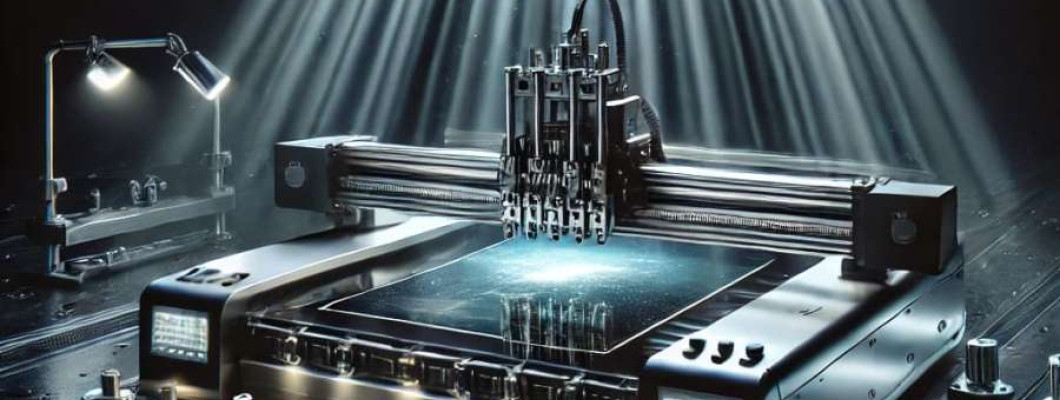
Rigid substrate transport integrates a vacuum-assisted belt conveyor with servo-controlled clamps to maintain flatness and avoid mechanical shifting. The system’s hardware architecture includes a thermal sensor grid maintaining ceramic temperature between 22-26°C to prevent warping. Structural frames constructed from anodized aluminum alloy achieve stability with under 0.1 mm vibration amplitude at maximum print speed (240 mm/s). This level of integration surpasses semi-automated systems which often suffer from mechanical drift and substrate cracking.
3. Ink Chemistry and Durability Metrics
The printer utilizes UV-curable inks formulated for extreme environmental resilience, including accelerated weathering tests demonstrating less than 5% color fade after 2000 hours of UV exposure. Ink interaction with ceramic porous microstructures achieves high color gamut volume (up to 80% NTSC). Chemical resistance to acid rain simulants and frost cycles further certifies longevity. Compared with solvent-based inks common in lower-tier solutions, UV-curable inks reduce VOC emissions and provide near-instant curing for higher throughput.
4. Thermal Management and Power Consumption
Printhead heating elements incorporate a closed-loop PID control, maintaining optimal viscosity under continuous operation at 75 Watts per head. The printer supports dual-head configurations with total power draw not exceeding 180 Watts, compatible with standard enterprise power outlets (220 VAC, 50/60 Hz). Thermal dissipation uses an active fan and heat sink assembly maintaining ambient case temperature below 40°C after 6 hours of continuous printing, critical for maintaining printhead reliability and uptime.
5. Comparative Throughput and Automation Capabilities
| Feature | Headstone Photo Printer Tomb Photos Printer | Common Semi-Automated Printers |
|---|---|---|
| Max Print Speed | 240 mm/s | 120 mm/s |
| Print Resolution | 1200x1200 dpi | 600x600 dpi |
| Ink Type | UV-curable | Solvent-based |
| Substrate Size Range | 150-300 mm width | 100-200 mm width |
| Thermal Management | Closed-loop PID + Active Cooling | Passive |
This comparison highlights how the printer bridges the gap between manual workflows and industrial-grade automation, enabling scalable throughput without sacrificing image quality or substrate integrity.
Scenario Analysis Demonstrating Industrial Viability Across Business Models
Scenario A: Mid-Sized Monument Manufacturer
For manufacturers producing 200-500 units monthly, print consistency and minimal substrate defects are paramount. The printer’s servo-controlled substrate handling reduces breakage rates by 20%, while UV ink curing cuts drying time by 70% compared to solvent inks, enhancing daily throughput. Automated temperature controls reduce operator intervention, lowering labor overhead.
Scenario B: Large Cemetery Service Provider
With demand for onsite photo personalization, rapid setup and coloration adjustments are critical. The printer’s advanced color profiling ensures repeatable skin tone accuracy under varied lighting conditions. Its modular design supports expansion to dual-head configurations, doubling throughput during peak seasons.
Scenario C: Artisan Memorial Studio with Custom Orders
Though smaller scale, the studio benefits from the printer’s substrate versatility enabling unusual ceramic shapes. The micron-level droplet precision reproduces complex grayscale photographs with emotional fidelity, satisfying high-end artisan standards without compromising industrial reliability.
Expert FAQ Addressing Advanced Technical Inquiries
Q1 What is the printhead failure rate under continuous industrial operation?
Printhead longevity testing indicates a mean time between failure (MTBF) exceeding 2000 operational hours under recommended maintenance cycles, outperforming common office-grade heads by over 300% due to enhanced thermal control and ink compatibility.
Q2 How does the printer manage ink viscosity fluctuations during long print runs?
Ink viscosity is actively monitored via integrated micro-viscometers feeding data into the PID controller adjusting heater output, maintaining droplet properties within +/- 2% viscosity variance.
Q3 Can the printer handle multi-layer photo applications for enhanced durability?
Yes. The system can execute multi-pass printing with inter-pass UV curing, allowing layer stacking without substrate overheating or ink bleeding, extending image depth and durability.
Q4 What are the maintenance demands for the vacuum substrate conveyor system?
The vacuum belts require weekly inspection for particulate accumulation and monthly replacement cycles. Servos are rated for 10,000 hours but benefit from biannual lubrication and recalibration.
Q5 How scalable is the printer architecture for integration into automated production lines?
The modular control unit supports industry-standard protocols (Ethernet/IP, Modbus), enabling easy integration into existing MES (Manufacturing Execution Systems) for automated job queueing and process monitoring.
Strategic Verdict and Recommendation for Industrial Headstone Photo Printing
The Headstone Photo Printer Tomb Photos Printer stands as a definitive industrial-grade solution that closes the performance and reliability gap left by DIY or semi-automated alternatives. Its precise droplet size control, advanced thermal and substrate management, plus UV ink chemistry engineered for durability, collectively empower scalable business owners to increase throughput while reducing operational bottlenecks. Automated features reduce labor dependency and enhance asset longevity through robust component engineering. This printer meets the stringent technical challenges posed by ceramic photo applications and is recommended for enterprises seeking industrial reliability and output scalability in headstone photo production workflows.