
The Gap Between DIY and Industrial-Grade Heat Press Machines Examined for Scalable Business Owners
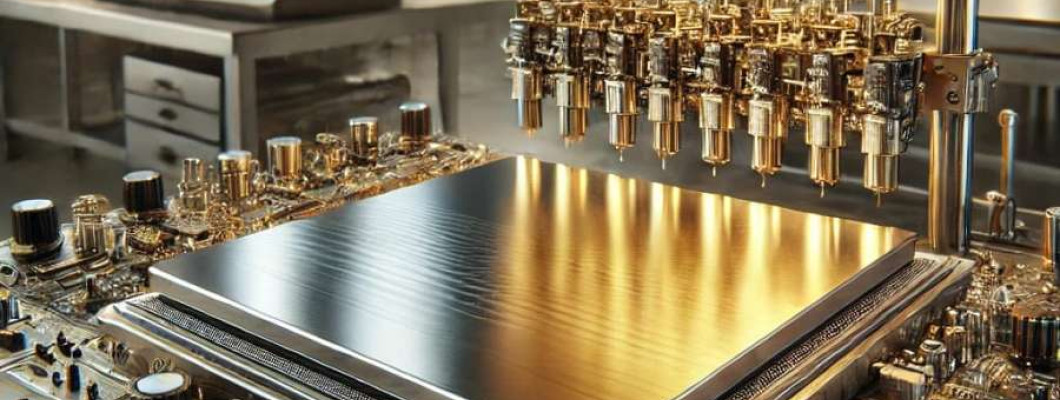
The Industrial Reality of Scaling Heat Press Operations for Business Owners
In high-volume printing environments, the transition from budget or DIY heat press solutions to industrial-grade equipment presents a tangible technological inflection point. Business owners aiming to expand throughput while controlling labor and automation costs frequently encounter operational bottlenecks rooted in thermal inconsistencies, suboptimal platen size, and inadequate pressure controls. The 40*60CM Heat Press Machine embodies a median size industrial asset, designed to bridge workflow demand for medium-scale production lines where substrate versatility and repeatability are non-negotiable.
Imagine a scenario where a medium-sized apparel manufacturer seeks to scale from low-volume batch customization to a continuous workflow with minimal downtime. The challenge lies not only in output quantity but also in thermal homogeneity across the heating platen, critical for consistent dye sublimation and vinyl adhesion. DIY machines often fall short in sustaining calibrated temperatures at 40 cm by 60 cm platen dimensions, leading to uneven prints, increased scrap rates, and operator intervention overhead. This translates into hidden indirect costs that throttle profitability.
Furthermore, mechanical robustness of the pressing mechanism that delivers consistent force across the platen area is mandatory to avoid substrate distortion and maintain image fidelity. Industrial-grade components, including precise pneumatic pressure control or digitally actuated hydraulic systems, extend machine longevity and reduce day-to-day maintenance, critical for high-production uptime targets.
Performance Parameters Defining Industrial Viability of the 40*60CM Heat Press Machine
Key performance metrics for industrial heat press machines revolve around platen temperature accuracy, pressure uniformity, cycle time, and machine duty cycle. The 40*60CM Heat Press Machine targets an operational temperature rage from ambient to approximately 220°C with a tolerance of ±0.5°C across the entire platen, achievable through embedded resistive heating elements paired with solid-state temperature feedback controllers. This precision is vital given the thermal activation thresholds for various heat transfer media, such as plastisol transfers and sublimation papers.
Thermal Management Analysis
The platen heating system typically integrates nichrome wire arrays with embedded thermocouples. Given the 40 cm by 60 cm surface, we can estimate the thermal power dissipation (P) needed to reach 220°C from room temperature in a 5-minute cycle using the specific heat capacity equation:
P = m × c × ΔT / t
Assuming a platen mass (m) of 4.5 kg (aluminum alloy), specific heat capacity (c) of 900 J/kg·°C, ΔT = (220-25) = 195°C, and t = 300 seconds, we calculate:
P = 4.5 × 900 × 195 / 300 = 2,632.5 Watts
Thus, the machine’s power supply must sustainably deliver roughly 2700 Watts to accommodate losses and maintain temperature stability.
Pressure Control Systems
Uniform pressure application is equally critical. Pressure uniformity is quantitatively measured in N/cm2. Industrial models typically sustain 30-40 N/cm2 pressure with less than 5% variance across the entire platen. For the 40*60 cm platen, this translates to a total force application between 7,200 and 9,600 Newtons. Mechanical systems employing pneumatic cylinders with servo-controlled valves or hydraulic actuators handle this effectively, avoiding the pitfalls of manual screw adjustments or simple lever mechanisms common in DIY press models.
Cycle Time and Duty Cycle Considerations
Cycle times vary based on substrate and transfer media but generally range from 30 to 90 seconds. The 40*60CM Heat Press Machine is designed for continuous operation with a duty cycle above 70%, ensuring less than 9 minutes of cooling or idle time per hour of operation. This contrasts sharply with low-end models that necessitate prolonged cooldowns to prevent overheating, reducing throughput.
Comparison Table Highlighting Key Differentiators
| Specification | DIY Heat Press (Typical) | 40*60CM Heat Press Machine |
|---|---|---|
| Platen Size | 30x40 cm | 40x60 cm |
| Temperature Accuracy | ±5°C | ±0.5°C |
| Max Pressure | 15-20 N/cm2 | 30-40 N/cm2 |
| Power Consumption | 1200-1500 W | 2700 W |
| Duty Cycle | <50% | >70% |
| Automation Potential | Minimal | High (pneumatic/hydraulic control) |
The Impact of Heat Press Specifications Across Business Use-Cases
Use-Case One - Apparel Customization Startups Scaling to Medium Volume
Startups transitioning beyond manual heat press units will find the 40*60CM platen dimension critical to increasing batch sizes without compromising precision. The ability to maintain strict thermal uniformity reduces variable print quality, minimizing customer rejections and internal waste.
Use-Case Two - Promotional Merchandise Providers with Diverse Substrate Needs
Enterprises requiring diverse substrate handling, from cotton to polyester and coated materials, benefit from the precise pressure calibration this machine provides. It enables repeatable adhesion for vinyl, sublimation, and plastisol transfers, expanding product offering range without multiple machine changes.
Use-Case Three - Automated Production Lines Integrating Robotic Loading
High-throughput environments tapping into automation can leverage the electrical and mechanical interface readiness of the 40*60CM Heat Press Machine, integrating pneumatic activation and electronic temperature control into broader MES (Manufacturing Execution Systems) workflows. This reduces human error and labor overhead significantly.
Expert FAQ for Advanced Industrial Heat Press Applications
How does platen material composition affect heat transfer efficiency?
Aluminum alloys with high thermal conductivity (~205 W/mK) are preferred platen materials. Their uniform thermal distribution reduces hotspots compared to steel, enabling faster ramp-up times and stable temperatures across the transfer surface.
What are the long-term maintenance implications of pneumatic versus hydraulic pressure systems?
Pneumatic systems typically require regular valve and seal inspections due to air moisture and particulate contamination but offer faster actuation and simpler control. Hydraulic systems, while more complex and susceptible to fluid leaks, provide more consistent and higher force control over extended periods with appropriate filtration and maintenance.
How does platen size directly correlate with throughput and labor costs?
Larger platen sizes allow for simultaneous pressing of multiple smaller items or larger single items, reducing cycle counts per batch. This directly reduces operator intervention frequency, lowering labor costs and increasing overall throughput.
Can the 40*60CM Heat Press Machine handle substrates thicker than standard textiles?
Yes, the machine’s adjustable pressure range and platen clearance accommodate thicker substrates such as foam boards or layered composite materials, expanding its industrial applicability beyond apparel and flat fabrics.
What safety mechanisms are integrated to prevent operator thermal injury during continuous operation?
The machine includes insulated handle grips, emergency stop circuits, and thermal cutoffs that trigger when temperature thresholds exceed preset limits. Automated platen opening at cycle completion also reduces operator exposure time to hot surfaces.
Strategic Verdict and Recommendation for Scalable Business Owners
In assessing the transition from DIY to industrial-grade heat press solutions, the 40*60CM Heat Press Machine emerges as a robust, technically sound asset for medium-scale businesses aiming to optimize throughput and labor cost efficiency. Its advanced thermal management ensures consistent print quality, while pneumatic or hydraulic pressure systems facilitate automation integration essential for scalable workflows. The platen size balances flexibility and volume, making it suitable across a range of substrates without sacrificing precision or uptime.
For enterprises with growth trajectories involving batch size expansion and diversified product lines, this machine addresses critical operational bottlenecks and hidden costs prevalent in lower-tier models. The comprehensive design and engineering specifications make it a decisive upgrade.
Business owners can explore detailed specifications and acquisition options by accessing the manufacturer’s site at 40*60CM Heat Press Machine.