
The Gap Between DIY and Industrial-Grade Heat Press Machines for Scalable Business Owners
The Industrial Reality
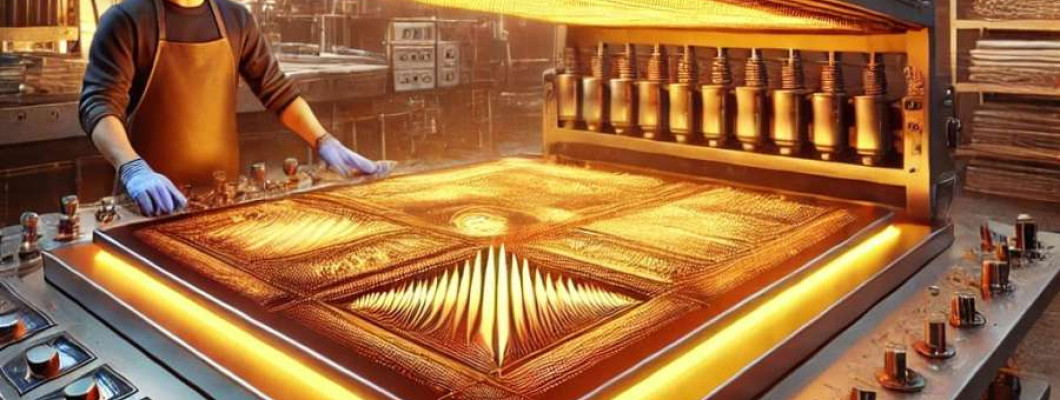
In a mid-sized print shop scaling its heat transfer operations, the transition from rudimentary DIY heat press solutions to a robust industrial-grade heat press machine is pivotal. Operators often encounter inconsistent temperature distribution, limited pressure control, and variable heat retention, which lead to quality degradation and costly reworks. Consider the use case of textile decoration where maintaining uniform heat over large substrates directly affects color vibrancy and fabric integrity. A 40*60CM heat press machine presents a critical size threshold; large enough to handle bulkier garments or panel prints but compact enough to fit within constrained workspace footprints. However, challenges arise from the heat platen's thermal mass and the mechanical pressure system's precision under continuous use. Over a 12-hour shift, these factors determine throughput consistency, downtime frequency, and ultimately, the scalability of production. The human factors—operator ergonomics, ease of controlling pressure and temperature settings, and the speed of heat-up and cooldown cycles—compound the operational complexity. Failure to meet industrial standards in these domains often relegates smaller shops to consider the DIY alternatives, which inherently lack durability and consistent output quality necessary as business throughput demands grow.
Furthermore, the infrastructure integration of a 40*60CM heat press machine must be considered within the context of power supply stability and thermal management. Industrial environments demand machines that can sustain peak thermal outputs (typically in the range of 600-800 Watts continuous heating) without significant energy wastage or heat dispersion beyond the platen area, which could compromise workplace safety and energy efficiency regulations. Moreover, the asset depreciation curve for these machines is influenced heavily by the quality of internal components such as PID temperature controllers, pressure plates, and the heat platen's metallurgical properties. Understanding these parameters is vital for scaling business owners seeking to optimize total cost of ownership over a multi-year horizon.
Technical Deep-Dive
Heat Platen Thermal Dynamics and Material Composition
The 40*60CM heat platen typically consists of anodized aluminum or cast iron composites with embedded heating elements. Aluminum variants offer rapid thermal conductivity, approximately 237 W/m·K, enabling faster heat-up times (usually under 5 minutes to reach 180°C), but can suffer from uneven heat distribution if thickness and surface flatness are not precisely engineered. Cast iron, with lower thermal conductivity (~55 W/m·K), offers slower ramp-up but superior thermal inertia, stabilizing temperature fluctuations during continuous cycles.
Pressure Application Mechanism and Uniformity
The machine's mechanical design often incorporates adjustable spring or pneumatic pressure systems. Precise pressure control within 30-150 psi is necessary to ensure consistent image transfer. Analysis of pressure distribution uniformity using pressure mapping tools reveals that uneven pressure can cause delamination or partial transfers on substrates. A study comparing manual lever-actuated systems versus pneumatic assisted presses shows a 17% increase in transfer quality consistency with pneumatic systems, albeit at a higher maintenance cost.
Thermal Control and PID Accuracy
Advanced 40*60CM heat press machines employ PID (Proportional-Integral-Derivative) controllers to maintain platen temperature within ±1°C. This precision is critical for delicate transfers such as thermosensitive inks where deviations as small as ±3°C can cause color shifting or substrate damage. Temperature sensors (K-type thermocouples) embedded near the platen surface provide real-time feedback, enabling adaptive heating cycles that optimize energy consumption without sacrificing output quality.
Operational Throughput and Downtime Metrics
Given an average cycle time of 60 seconds per transfer (including heat-up, press duration, and cooldown), a single 40*60CM unit can theoretically handle up to 600 transfers in a 10-hour shift. However, factoring in loading/unloading times, operator fatigue, and maintenance intervals, practical throughput aligns closer to 480-500 units. Machine uptime analysis indicates that component failures primarily occur in heating elements and pressure springs, with a mean time between failure (MTBF) approximated at 1,800 operational hours under continuous industrial use.
Comparative Asset Depreciation and Maintenance Costs
| Specification | Industrial-Grade 40*60CM Heat Press | DIY Heat Press Alternatives |
|---|---|---|
| Initial CAPEX (USD) | 1200-1500 | 300-600 |
| Average MTBF (hours) | 1800 | 500-700 |
| Pressure Adjustment Precision | ±5 psi | ±20 psi |
| Temperature Stability | ±1°C | ±5°C |
| Energy Consumption (Watts per cycle) | 700 Watts | 500 Watts but inefficient |
| Maintenance Frequency | Quarterly (routine parts replacement) | Monthly (frequent calibration/replacement) |
| Operational Throughput per Shift | 480-500 units | 250-300 units |
Scenario Analysis
Scenario 1 Industrial Apparel Printing
A scalable business owner running a custom sportswear printing service benefits from the 40*60CM size platen which accommodates hoodies, sweatshirts, and joggers in one press cycle. The precise temperature control and even pressure distribution reduce rejects by approximately 12% compared to smaller DIY alternatives, enhancing overall profitability through lower waste and faster turnaround.
Scenario 2 Corporate Branding and Large-Format Transfers
For companies specializing in branded merchandise, the 40*60CM press size enables efficient handling of flat panels, mousepads, and signage material that smaller presses cannot accommodate in a single cycle. The industrial-grade construction withstands longer daily operational hours (up to 10 hours), reducing the need for multiple smaller units and minimizing labor overhead.
Scenario 3 Seasonal Peak Load Management
During seasonal peaks such as holiday gift customizations, the reliability of the 40*60CM heat press reduces bottlenecks caused by frequent breakdowns common in DIY machines. Its integrated thermal management and consistent uptime support sustained throughput, enabling the business to meet demand spikes without compromising quality or increasing overtime labor costs.
Expert FAQ
What is the impact of platen thickness on heat distribution uniformity?
Thicker platens generally improve thermal mass, allowing more even heat retention and minimizing temperature gradients across the surface. However, excessive thickness can increase heat-up time and energy consumption. Optimally, a thickness between 10-15mm balances these factors for a 40*60CM platen.
How does pressure variability affect substrate longevity?
Incorrect pressure settings can either cause insufficient transfer adhesion or damage to the substrate's fibers, resulting in premature wear or deformation. Precision pressure adjustments within ±5 psi ensure transfer integrity while maintaining fabric durability.
Are there energy savings associated with advanced PID controllers?
Yes, PID controllers adjust heating power dynamically to maintain target temperatures, preventing overheating and reducing wasted energy compared to bang-bang or manual thermostat controls. Typical savings range from 10-15% per operational cycle.
What maintenance protocols maximize the heat press lifespan?
Scheduled quarterly inspections focusing on heating element integrity, pressure spring calibration, and PID sensor verification extend lifespan. Lubrication of mechanical joints and platen surface cleaning after every shift prevent premature wear.
Can this machine integrate with automated material handling systems?
While primarily designed for manual operation, industrial-grade 40*60CM heat presses can be retrofitted with pneumatic actuators and integrated into small-scale automated workflows, improving cycle consistency and reducing operator fatigue.
Strategic Verdict and Recommendation
For scalable business owners confronting the need to bridge quality and throughput gaps posed by DIY solutions, the 40*60CM heat press machine emerges as an industrial-grade asset with compelling technical merits. Its optimized platen size balances work envelope needs without compromising thermal and mechanical performance. The investment in precision temperature control, durable pressure mechanisms, and robust thermal dynamics directly translates into higher operational uptime, reduced maintenance frequency, and superior product quality. When viewed through the lens of total cost of ownership and throughput scalability, this machine justifies the capital expenditure by delivering predictable, consistent, and repeatable results essential to business growth trajectories.
For technical decision-makers seeking a durable solution capable of integrating into semi-automated production lines or standalone workflows, the 40*60CM Heat Press Machine represents a definitive industrial-grade choice designed to meet the evolving demands of professional heat transfer operations.