
The Gap Between DIY and Industrial-Grade Heat Press Machines for Scalable Businesses
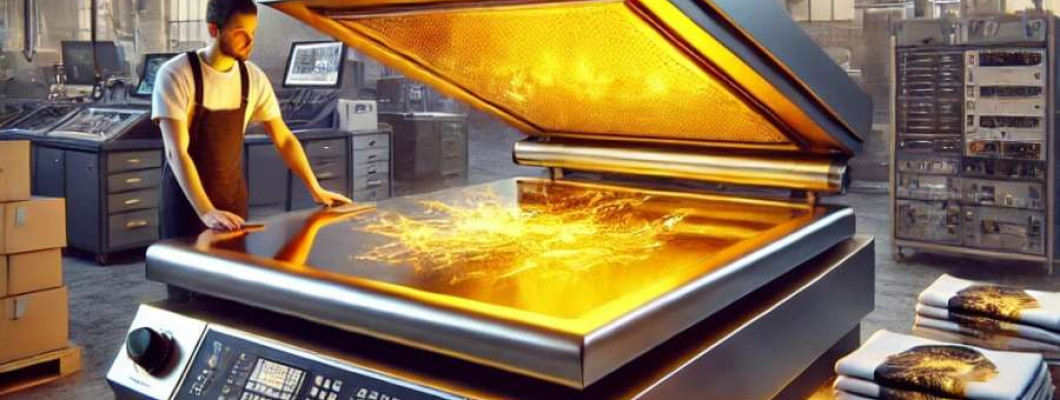
The Industrial Reality of Integrating a 40x60CM Heat Press Machine into Production Lines
In the scalable business environment, bridging the divide between simple desktop heat press models and robust industrial-grade machines poses significant challenges. The 40x60CM Heat Press Machine sits at a critical juncture: its footprint and capacity make it a viable candidate for businesses aiming to scale throughput without stepping into heavy industrial equipment territory. However, the practical reality involves addressing throughput limitations, thermal consistency, and labor dependencies often hidden beneath surface specs.
Consider a mid-sized print shop upgrading from a 30x30cm heat press to this 40x60CM model. The enlarged platen area theoretically doubles the printing area per press cycle, yet operational bottlenecks such as heat-up time, pressure uniformity, and cooling cycles impose constraints on productivity. Furthermore, the human factor—operator fatigue and precision alignment—remains a critical variable influencing output repeatability.
The business must grapple with infrastructure integration: ensuring power systems deliver stable and sufficient 220-240V single-phase supply, implementing exhaust or ventilation strategies given the heat expelled during operation, and managing floor space constrained by workflow layout. The machine's semi-automated nature demands labor allocation strategies that minimize downtime while maintaining quality control.
Technical Deep-Dive into the 40x60CM Heat Press Machine’s Industrial Viability
Thermal Dynamics and Pressure Uniformity
Heat press efficiency depends on uniform temperature distribution and consistent platen pressure across the 400x600mm area. The platen's surface temperature is typically controlled via embedded nichrome heating elements regulated by a PID controller, targeting a range of 0 to 220 °C with ±2 °C accuracy.
Using Fourier’s heat conduction equation, the platen's thermal gradient \( \nabla T \) can be modeled as \( \frac{d^2T}{dx^2} = -\frac{Q}{kA} \), where \( Q \) is heat flux, \( k \) is thermal conductivity (steel ~50 W/m·K), and \( A \) is cross-sectional area. Design optimization aims to minimize \( \nabla T \) so that local hotspots or cold zones do not exceed ±5 °C, ensuring uniform substrate heating critical for textile or vinyl transfer adhesion.
Mechanical Load and Fatigue Stress Analysis
The applied pressure, typically in the range of 30-50 kg/cm², must remain stable over millions of cycles. Assuming a maximum platen load of 1500 kg distributed over the contact area, the mechanical frame uses high-strength steel alloys with yield strengths >250 MPa. Stress analysis via the bending moment equation \( \sigma = \frac{My}{I} \) ensures the platen and arm mechanism withstand cyclical loading without permanent deformation or creep.
Power Consumption and Thermal Management
The machine's power rating is approximately 1800-2200 W during operation. Continuous operation induces heat dissipation challenges, requiring integrated heat sinks and passive cooling fins in the housing. The thermal management system must maintain component temperatures within operational limits to prevent premature electrical component failure, particularly in the solid-state relays and control board (rated max 85 °C junction temp).
Control System and User Interface Considerations
The control unit typically employs a microcontroller-based PID algorithm managing temperature and timer functions. Real-time feedback via thermocouples with ASTM E230 Type K accuracy ensures precise thermal regulation. The interface balances simplicity with operational control, featuring digital displays and manual pressure adjustment knobs, a compromise between industrial automation and artisan flexibility.
Comparison Between Entry-Level and Industrial-Grade Heat Press Machines
| Specification | Entry-Level Heat Press | 40x60CM Heat Press Machine |
|---|---|---|
| Platen Area | 30x30 cm (900 cm²) | 40x60 cm (2400 cm²) |
| Temperature Accuracy | ±5 °C | ±2 °C |
| Pressure Range | 15-30 kg/cm² | 30-50 kg/cm² |
| Power Consumption | 1200 W | 1800-2200 W |
| Cycle Time | 60-90 seconds | 45-75 seconds |
| Build Materials | Aluminum platen, plastic housing | Steel frame, cast iron platen |
Scenario Analysis of Business Use-Cases
Scenario 1 Mid-Volume Custom Apparel Manufacturer
A business producing 500 printed garments per day requires a heat press capable of maintaining consistent quality during extended runs. The 40x60CM platen allows larger transfers and reduces cycle counts per item. Its ±2°C temperature control ensures adhesion consistency on polyester blends. The semi-automated timer and pressure adjustment minimize operator error, increasing yield and reducing rework.
Scenario 2 Event Merchandise Production for Quick Turnaround
For rapid production runs with fluctuating order sizes, the machine's scalability and relatively compact footprint allow integration into a modular workflow. Thermal recovery times under 150 seconds enable throughput maximization. The mechanical robustness supports frequent setups and takedowns, critical for pop-up events or mobile production units.
Scenario 3 Small Business Craft Workshops Scaling Output
Workshops transitioning from hobbyist to micro-business benefit from the machine’s blend of industrial durability and ease of use. The larger platen accommodates a broader range of product substrates, from textiles to wood panels, supporting diversification. Maintenance intervals extended by rugged construction lower downtime risk, essential for small teams.
Expert FAQ on the 40x60CM Heat Press Machine
What is the expected platen lifespan under continuous industrial operation?
With high-grade steel and proper maintenance, platen surface flatness is retained over approximately 500,000 cycles before requiring resurfacing. Thermal cycling fatigue is minimally impactful due to stress-relief annealing during manufacturing.
How does platen temperature variability affect transfer quality?
Temperature deviation beyond ±5 °C often results in incomplete sublimation or adhesive failure. Maintaining tighter thermal tolerance ensures uniform molecular diffusion of ink pigments, critical for durability.
Can the machine support multi-layer substrate pressing?
Yes, adjustable pressure up to 50 kg/cm² and temperature control accommodate layered fabric composites up to 10mm thickness without platen damage.
What preventative maintenance is recommended to avoid mechanical failure?
Periodic lubrication of pivot points, inspection of heating element insulation resistance, and recalibration of temperature sensors every 3 months under average usage are advised.
Are there infrastructure limitations when integrating this machine in shared production spaces?
Yes, the unit requires stable power input with surge protection and adequate ventilation to dissipate up to 500 W of waste heat during prolonged cycles, preventing ambient temperature spikes that could affect adjacent equipment.
Strategic Verdict and Recommendation
The 40x60CM Heat Press Machine represents a decisive step up from entry-level hardware for businesses targeting scalable production with industrial reliability. Its design addresses the critical mechanical and thermal challenges encountered in production workflows, balancing precision with operator control. Operational parameters such as improved platen surface area, enhanced temperature accuracy to ±2 °C, and durable steel construction underscore its suitability for mid-tier industrial applications.
From a scalability standpoint, its throughput improvements and maintenance-friendly design integrate smoothly into diverse business models, from custom apparel manufacturing to rapid event merchandise fulfillment. While it does not fully automate all process steps, the machine’s engineering strikes a balance that reduces bottlenecks common in DIY heat press workflows.
Ultimately, its technical merits and practical deployment capacity justify recommending it as a foundational asset for scalable printing businesses. Enterprises seeking to move beyond limitations of DIY presses without committing to full industrial-scale capital expenditure will find this model an ideal intermediary solution.