
The Gap Between DIY and Industrial-Grade Heat Press Machines Revealed for Scalable Business Owners
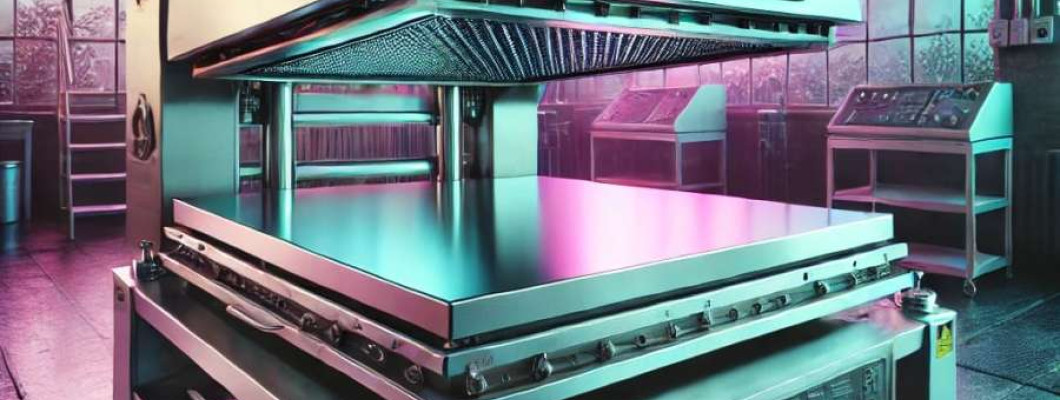
The Industrial Reality of Scaling Heat Press Operations
In a mid-sized workshop focused on customized apparel production, the transition from a hobbyist or DIY heat press solution to an industrial-grade 40*60CM Heat Press Machine represents a decisive turning point. The challenge lies not only in throughput but in the hidden operational bottlenecks that limit scale. Small-format, consumer-level presses typically handle 30 x 30 cm or smaller substrates, constraining the maximum printable area and forcing operators to segment designs into multiple passes. This approach increases cycle times and introduces alignment errors, directly impacting productivity and quality.
Moreover, the inconsistent temperature and pressure controls found in lower-end machines cause uneven substrate heating and print quality variation, leading to increased waste and rework. As demand rises, the unreliable duty cycles and thermal management of consumer presses result in frequent downtime and accelerated component wear, creating an unpredictable production pipeline and escalating maintenance costs.
Conversely, the industrial 40*60CM Heat Press Machine is engineered to sustain longer duty cycles with consistent, repeatable heat distribution across a significantly larger platen. This reduces per-piece cycle time by consolidating designs into a single pressing operation. The larger format also enables businesses to diversify product offerings, from T-shirts and hoodies to tote bags and large-format textile prints, without investing in multiple machines.
For scalable business owners, these operational advantages translate into enhanced throughput, predictable output quality, and the capacity to optimize labor deployment. However, integrating such equipment requires precise infrastructure planning: stable power delivery, ventilation for heat dissipation, ergonomic workstation design for operator safety, and compatible workflow software for batch processing. Failure to anticipate these factors can produce hidden bottlenecks that undermine the benefits of industrial-grade equipment.
Technical Deep-Dive into the 40*60CM Heat Press Machine
Heat Distribution and Thermal Dynamics
The 40*60CM Heat Press features a platen surface significantly larger than typical consumer models, offering 2400 cm² of heated area. Uniform temperature across this surface is critical. Using embedded thermal sensors and advanced PID controllers, the machine maintains ±1°C temperature stability at operating temperatures up to 220°C. The platen’s composition typically includes high-grade aluminum with a PTFE coating to optimize heat conduction and prevent substrate sticking.
Heat transfer efficiency can be modeled via Fourier’s law. Considering platen thickness (d), thermal conductivity (k), and temperature gradient (ΔT), the conductive heat flow Q is:
Q = k * A * (ΔT / d)
Where A is platen area. Increasing platen area without proportionally increasing heating elements can dilute heat flux, so this machine incorporates multiple parallel heating elements with distributed power ratings summing to 1500 Watts. The balance ensures rapid heat-up times (~5 minutes) and uniform heat delivery, essential for substrate integrity and print consistency.
Pressure Mechanism and Mechanical Engineering
The press employs a robust pneumatic or manual lever system capable of delivering 5-7 kg/cm² pressure across the platen. This force range is ideal for transferring heat-applied inks and vinyl without damaging textiles. Pressure application must be evenly distributed to avoid localized overcompression, which could cause print defects or fabric distortion.
Key mechanical components include durable bearings, hardened steel pressure plates, and ergonomic handles designed to reduce operator fatigue during repetitive tasks. The machine’s structural frame typically comprises welded steel for rigidity and minimal deflection under pressure, preserving platen flatness over prolonged use.
Cycle Time Optimization and Throughput
A typical pressing cycle involves substrate placement, closing, heat application for 15-25 seconds depending on material, opening, and removal. With the 40*60CM platen size, operators can process larger items or multiple smaller pieces simultaneously, effectively multiplying throughput per cycle.
Assuming a 20-second press time plus 15 seconds for placement and removal, a single operator can expect approximately 100 presses per hour. In batch production with optimized workflows and automation integration, this throughput scales linearly, limited primarily by substrate cooling times and operator efficiency.
Comparative Analysis with Small-Format DIY Heat Presses
| Feature | DIY Small-Format Press (30x30cm) | 40*60CM Heat Press Machine |
|---|---|---|
| Platen Area (cm²) | 900 | 2400 |
| Heating Power (Watts) | 700-900 | 1500 |
| Temperature Stability (±°C) | ±5 | ±1 |
| Pressure (kg/cm²) | 2-4 | 5-7 |
| Cycle Time (sec) | 15-25 per small item | 15-25 per large item or batch |
| Duty Cycle (hours) | 1-2 (with cooldown) | 6-8 continuous |
Maintenance and Longevity Considerations
Main wear points include the heating elements, pressure plate coatings, and mechanical linkage joints. The industrial model supports modular replacement of heating elements, simplifying maintenance and reducing downtime. Scheduled calibration of thermal sensors is essential for peak performance. With proper maintenance, the machine’s mean time between failure (MTBF) exceeds 10,000 operational hours.
Scenario Analysis of the 40*60CM Heat Press Machine in Business Use-Cases
High-Volume Apparel Customization Facility
A business processing 500 garments daily benefits immensely from the larger platen by printing multi-garment batches per cycle. The improved temperature stability reduces reprint rates by 30%, while longer duty cycles minimize unscheduled downtime, enabling efficient labor scheduling and achieving a 20% reduction in operational bottlenecks.
Specialty Product Manufacturer Expanding into Large Textile Items
This enterprise leverages the 40*60CM platen to create printed tote bags and cushion covers, previously infeasible with small presses. The machine’s pressure and uniform heat application ensure consistent transfer quality on thicker and varied substrates, enabling product diversification and revenue growth.
Print Shop Integrating Automation for Rapid Turnaround
By coupling the heat press with automated material feeders and batch process software, this operation achieves tight cycle synchronization resulting in continuous run modes. The machine’s thermal management supports this higher duty cycle without overheating risks, maintaining quality across 10+ hour shifts.
Expert FAQ on Industrial Heat Press Operations
What material substrates are best suited for the 40*60CM Heat Press?
The machine supports cotton, polyester blends, nylon, and coated polyester substrates. Heat-resistant materials like leather or vinyl require adjusted temperature and pressure settings to prevent surface damage.
How does platen size affect heat penetration depth in textiles?
Larger platen size enables uniform heat application but heat penetration depends on thermal conductivity and pressing time. The 40*60CM platen’s uniform temperature profile reduces cold spots, ensuring deeper and consistent transfer across the substrate thickness.
Are there safety features to prevent operator injuries during manual pressing?
Yes, ergonomic handles with locking mechanisms prevent accidental opening under pressure. Some models include emergency release levers and thermal insulation on handles to protect against burns.
What are common failure modes for the heating elements?
Failure often arises from electrical surges, insulation breakdown, or mechanical wear. Regular voltage stabilization and periodic element replacement mitigate these risks.
Can this heat press integrate into a fully automated production line?
With available retrofit kits, the 40*60CM Heat Press can be adapted for automated pneumatic actuation and interfaced with production management software, supporting Industry 4.0 workflows.
Strategic Verdict and Recommendation on the 40*60CM Heat Press Machine
The 40*60CM Heat Press Machine distinctly bridges the operational gap between low-capacity, consumer-grade systems and industrial printing demands. Its scalable heating capacity, consistent temperature control, and larger pressing surface directly impact throughput, quality, and operational predictability—parameters critical to rapidly growing garment decoration and specialty textile businesses.
Considering the mechanical robustness and advanced thermal management detailed herein, this product stands as a definitive solution for scalable business owners aiming to optimize labor, expand product variety, and minimize hidden operational bottlenecks. It aligns well with both manual and semi-automated workflows, offering longevity that justifies investment through reduced downtime and maintenance costs.
For enterprises evaluating industrial heat press solutions, the 40*60CM Heat Press Machine emerges as a thoroughly engineered, reliable asset to improve scalable production capabilities.